You can share your car key with family three ways: copy a physical key ($100 to $500 for modern transponder keys), use your manufacturer’s digital key sharing if your new car supports it, or add an aftermarket system like MoboKey that works on any car. Digital sharing wins on control: you send a key to a family member’s phone in seconds, set the hours it works, and revoke it instantly; no copies floating around. For teen drivers, time windows and engine control add supervision a metal key never offered.
Every family runs on shared cars, and on the small chaos that comes with them. Who has the key? Who copied it? Why is the spare in someone’s jacket across town? Digital key sharing ends that entire category of problem. Here is how to share your car key with family in 2026, and why the digital route beats the locksmith.
How can you share a car key with family?
Three methods exist, and they differ more than most people expect.
| Method | Upfront cost | Control | Works on |
|---|---|---|---|
| Copy a physical key | $100–$500 per copy | None — permanent access | Any car |
| Manufacturer digital key sharing | Free with the car | Good — limited slots, same brand | Newer connected models |
| Aftermarket digital keys (MoboKey) | One-time hardware | Full — time windows, instant revocation | 90%+ of vehicles |
Copying a modern key is the expensive, blunt option. A transponder key with programming runs $100 to $500, the copy grants permanent access, and getting it back requires an awkward conversation. Lose track of one and the car’s security depends on hope.
Manufacturer sharing — through brand apps and phone wallets — works well on supported new cars. However, slots are limited, both phones often need specific models, and the whole feature stays inside one brand’s ecosystem.
The aftermarket route brings digital sharing to the car you already own. A digital car key system installs in almost any vehicle — including the family’s older second car — and turns every approved phone into a key.
New to the technology? Start with how a digital car key works.
How does digital key sharing work?
With MoboKey, sharing a key takes under a minute and no hardware changes hands.
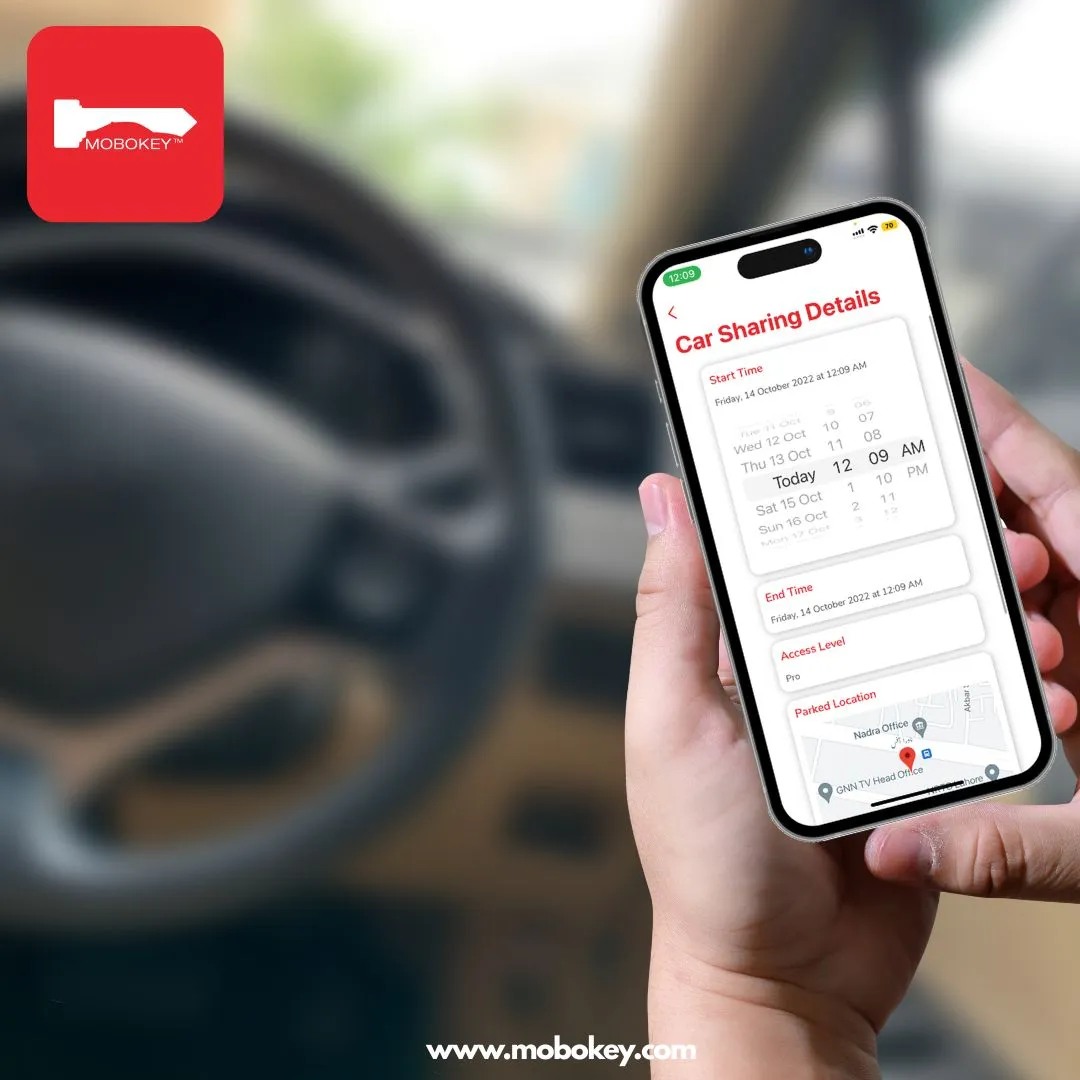
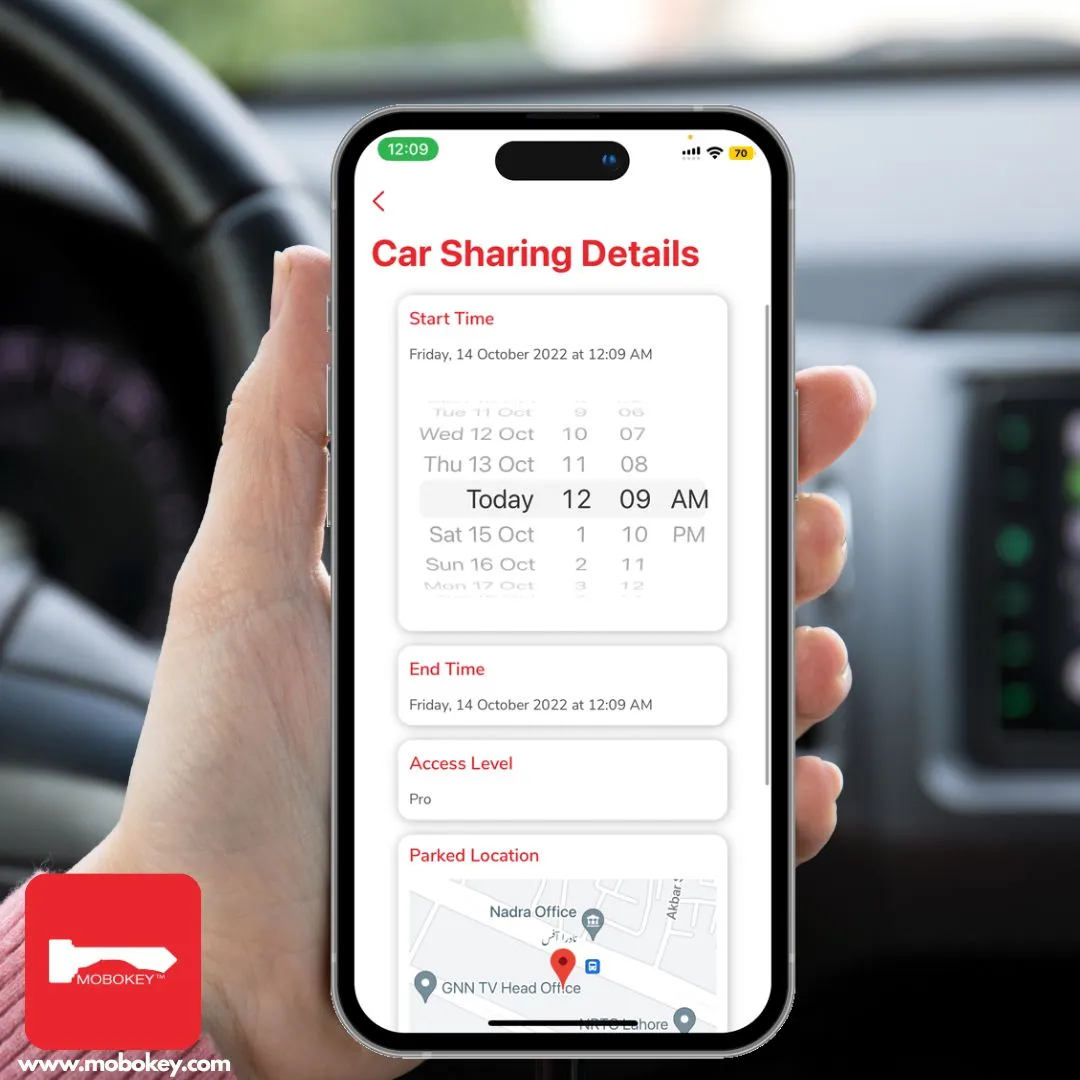
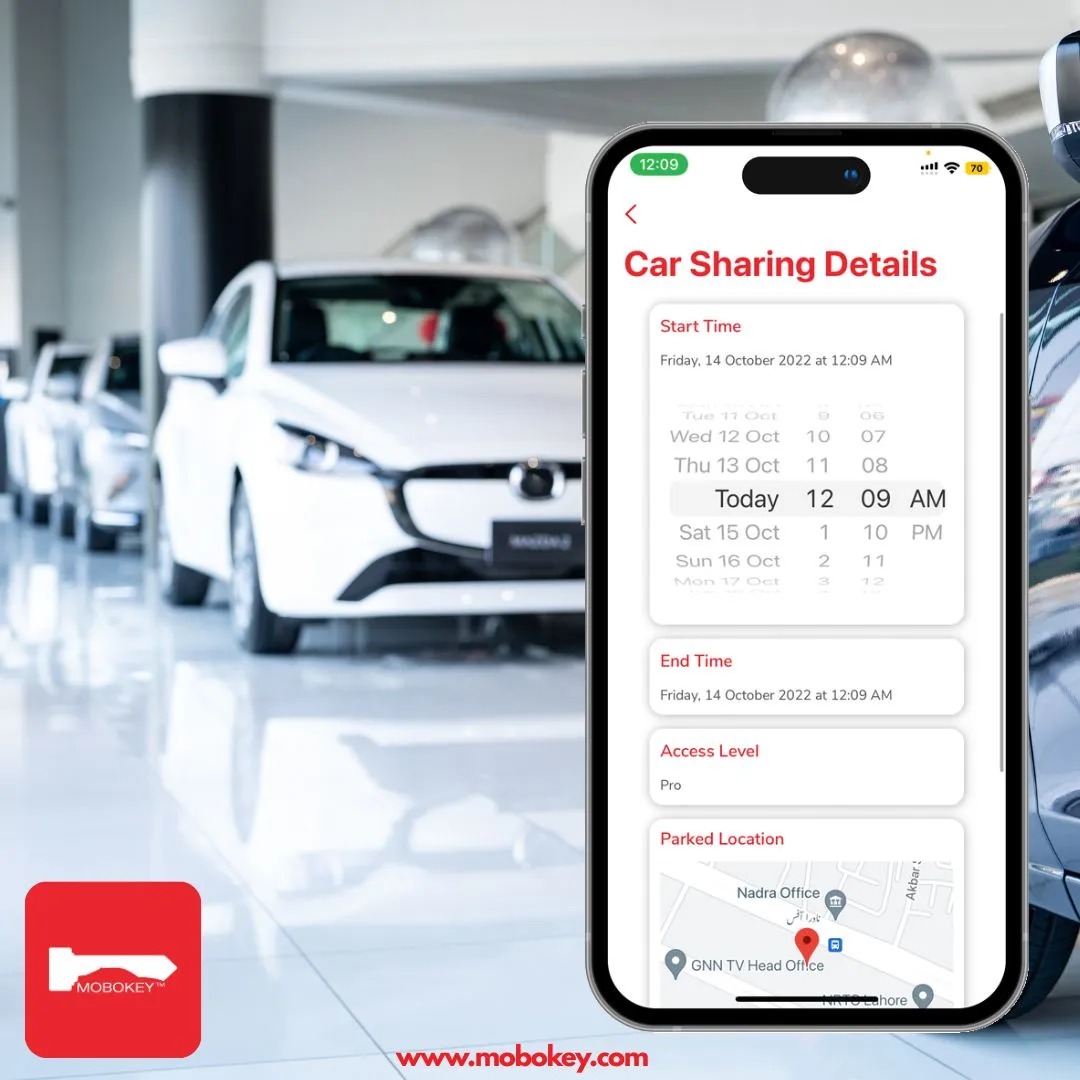
You open the app, choose the family member, and issue a key to their phone. You decide its shape: permanent access for a spouse, weekday evenings for a teen, a single weekend for a visiting relative. The key appears on their phone immediately — even if they are across the country when you send it.
At the car, their phone works exactly as yours does. Doors unlock over encrypted Bluetooth as they approach, the engine starts, and everything works with zero internet at the vehicle. When the key’s window closes, access ends by itself. Furthermore, you can revoke any key instantly from your phone — no chasing physical keys, ever.
One more family-friendly detail: the last parked location is shared knowledge. Whoever parked the car last, the app knows where it sits — which ends the second-most-common family car argument.
Is digital key sharing safe for teen drivers?
For most parents, this is the real question — and digital keys offer more supervision than metal ones, not less.
Teen driving risk is concentrated and well-documented: CDC data consistently shows crash risk is highest in the first months of licensure and during nighttime driving. Graduated licensing laws exist for exactly this reason. A digital key lets your house rules match the law’s logic.
Set the access window to match your rules — weekdays until 9 PM, weekends until 10. Outside the window, the key sleeps and the car does not start for it. If plans change, extend access from your phone in seconds; if trust is broken, revoke it the same way. Additionally, parked location tracking answers “where is the car?” without a phone call, and the engine-level control means a grounded teen is actually grounded.
None of this requires confrontation or key confiscation. The rules live in the system, applied consistently — which is easier on both sides of the conversation.
What happens if a family member’s phone is lost?
The scenario that worries people is the one digital keys handle best.
A lost phone with a digital key is not a lost car key. The key works only from that specific device, behind its lock screen. Meanwhile, you revoke the key from your own phone in seconds, and reissue it when the replacement phone arrives. Compare that with a lost physical key: locksmith, reprogramming, and days of wondering who might have it. The full breakdown is in our guide to what happens if a digital car key is lost or stolen.
The original keys stay untouched throughout. MoboKey adds phone access alongside the factory keys — the family fob drawer still works, it just stops being the bottleneck.
MoboKey installs on over 90% of vehicles at a one-time cost with no subscription — every shared key included. Hardware details are at MoboKey Shop.
Ready to put the family’s car keys on their phones? Visit mobokey.com or contact us today to get started.
Frequently asked questions: sharing car keys with family
Install a digital key system like MoboKey in the car, then issue a key from your app to their phone — it takes under a minute. Their phone then unlocks and starts the car over Bluetooth. You control when the key works and can revoke it anytime.
Yes — the key transfer happens remotely, so you can issue a key to anyone, anywhere. Using the key requires being near the car, since access works over Bluetooth at the vehicle. This makes airport pickups easy: send the key today, they drive the car when they land.
With MoboKey, you can issue digital keys to every driver in the family — each with its own permissions and schedule. There is no per-key fee. Manufacturer systems typically cap shared keys at a handful of slots.
Usually, yes. One modern transponder key copy costs $100 to $500. MoboKey is a one-time hardware cost that covers unlimited shared keys — and unlike copies, every key can be scheduled, monitored, and revoked.
Yes. Set an access window on their digital key — school nights until 9 PM, for example — and the car simply will not start for them outside it. You can extend or revoke access from your phone in seconds, and parked location tracking shows where the car is.
Yes. MoboKey retrofits digital keys onto over 90% of vehicles, including 1990s models and manual stick shift cars — often the exact cars families hand down to new drivers. The original keys keep working as backup.