When your car won’t start, the sounds and lights tell you which system failed. Total silence with dead dash lights points to the battery or its connections. One loud click with working lights points to the starter. Rapid clicking means a weak battery. If the engine cranks normally but never fires; or refuses to crank while the security light flashes, suspect the immobilizer or fuel delivery. Run this 30-second check before calling anyone: it usually names the fix, and often the fix is free.
Few moments deflate a morning like a car that won’t start. The good news: the car is telling you what is wrong, loudly and specifically, in the first three seconds of the attempt. You just need the translation. Here is how to tell whether the battery, the starter, or the immobilizer is the problem — before you pay for the wrong repair.
How do you tell why your car won’t start?
Turn the key or press the button once, then listen and look. The combination of sound and dashboard behavior identifies the culprit:
| What you hear and see | Most likely cause | First move |
|---|---|---|
| Silence, dash dead or dim | Battery or terminals | Check connections; jump start |
| Rapid clicking | Weak battery | Jump start |
| One solid click, dash normal | Starter or solenoid | Try again; then starter check |
| Cranks strong, never fires | Fuel, spark, or immobilizer | Check security light |
| No crank, security light flashing | Immobilizer not recognizing key | Key battery; second key |
| Cranks, starts, dies immediately | Immobilizer or fuel supply | Check security light; spare key |
Furthermore, note what changed recently. A new phone, a dropped key fob, parking outdoors in a cold snap, or an aftermarket install last week — the recent change is the suspect more often than coincidence allows.
Is it the battery?
The battery is the most common culprit and the cheapest to confirm.
The signature is electrical weakness everywhere: dim or dead dash lights, no door chime, sluggish power locks, and either silence or rapid clicking at the start attempt. The rapid clicking is the starter relay trying repeatedly with too little current.
Confirm it in two steps. First, check the terminals — corrosion or a loose clamp mimics a dead battery and costs nothing to fix. Second, jump start the car. If it fires immediately and runs, the battery (or something draining it) is your answer. Typical battery replacement runs $100 to $250; cost estimators like RepairPal can price it for your exact model.
One modern note: a nearly dead battery can also confuse the electronics, triggering security warnings that look like immobilizer faults. Resolve power first, then re-judge any remaining symptoms.
Is it the starter?
The starter announces itself with one solid click and nothing else — while the dash stays bright and confident.
That click is the solenoid engaging without the motor turning. Sometimes a worn starter has a dead spot: several attempts, or the old mechanic’s trick of tapping the starter housing while someone holds the key, produces one more start. Treat that start as a tow to the shop, not a cure — a starter with dead spots fails permanently soon. A whirring sound without engine movement points the same direction: the starter spins but no longer engages the engine.
Starter replacement typically runs $300 to $700 depending on the vehicle and labor access. Before paying it, rule out the cheap impostors: a battery too weak to spin the motor, and a faulty neutral safety switch — try starting in Neutral instead of Park.
Is it the immobilizer?
The immobilizer is the modern culprit that older diagnostic habits miss — and it has a tell: the security light.
The pattern is distinctive. The battery is strong, the dash is normal, but the car either refuses to crank or cranks perfectly and never fires — while a key-or-padlock symbol flashes. That flash means the car’s immobilizer did not recognize the key’s code, so it blocked the engine on purpose. Nothing is broken; the guard simply said no.
The fixes run from trivial upward. Replace the key fob battery — the most common cause costs five dollars. Try your second key; if it starts the car, the first key’s chip has failed. Lock and unlock the driver’s door with the physical key, or leave the ignition on for a few minutes — both reset several systems. Our full guide to the flashing immobilizer light walks through all six steps in order.
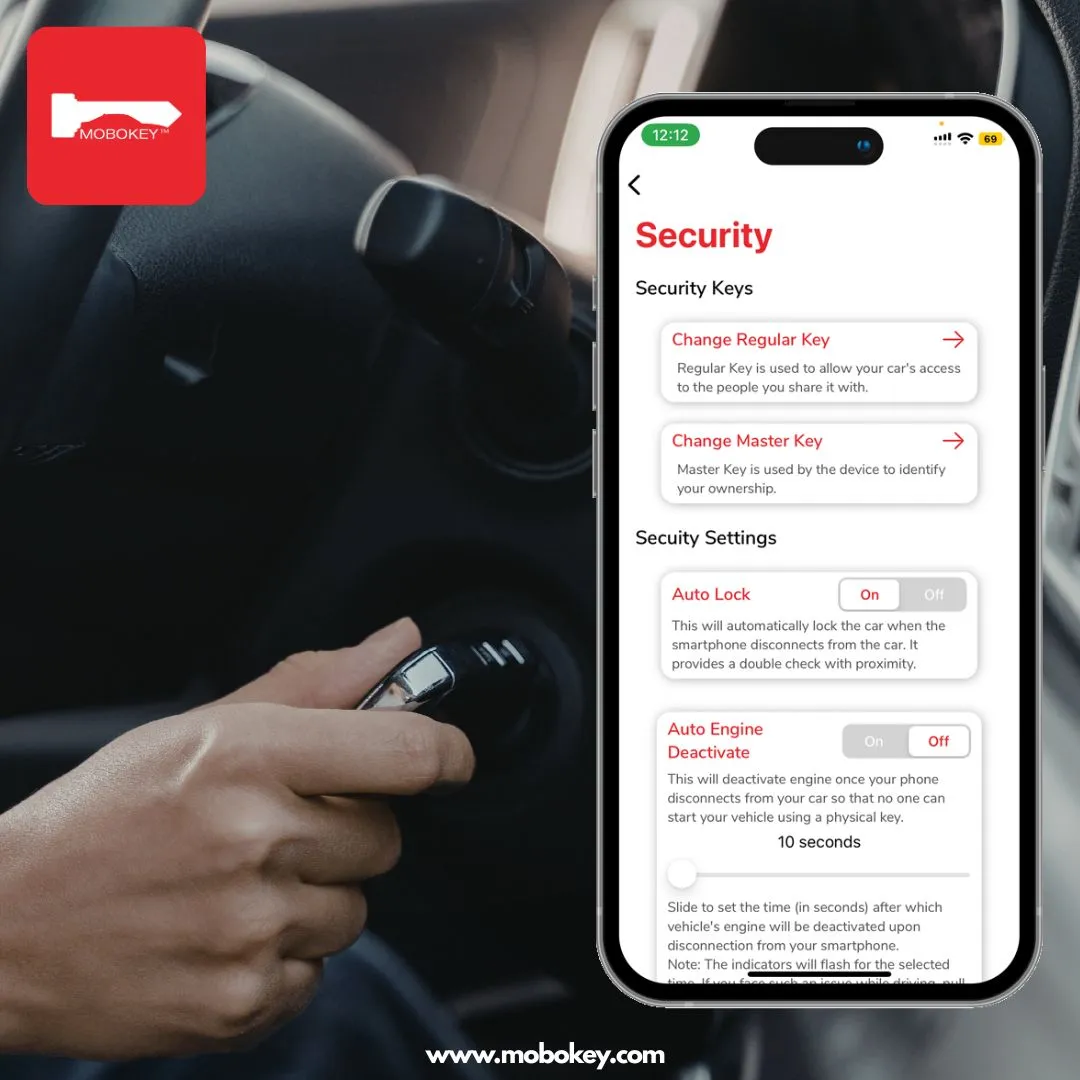
One more check for modified cars: an aftermarket kill switch that is switched off produces exactly these symptoms by design. If your car has one — or a previous owner may have hidden one — verify it before paying a mechanic to find it for you. MoboKey owners can simply confirm in the app that engine access is enabled; the app showing the engine authorized while the car stays dead rules the access system out in seconds.
Ready for a car key that lives on your phone, with engine control you can actually see? Visit mobokey.com or contact us today to get started.
Frequently asked questions: car won’t start
Working lights rule out a fully dead battery. One solid click points to the starter; no crank with a flashing security light points to the immobilizer; strong cranking without firing points to fuel, spark, or the immobilizer. Match your exact symptom to the table above before spending anything.
Rapid clicking means the battery is too weak to spin the starter, jump start it. One single click with normal dash lights means the starter or solenoid, try again, try Neutral, and plan a starter check if it repeats.
Look for the key-or-padlock light flashing while the car refuses to crank or fires and dies instantly. Replace the fob battery first, then try the spare key. If the spare works, the original key’s transponder chip failed, a locksmith can replace and program it.
Yes, that is its entire job. If your car has an aftermarket remote kill switch and it is off, the car will not start regardless of key or battery. Check the switch before diagnosing anything else. MoboKey users can verify engine authorization from the app in seconds.
Yes, when done correctly: correct polarity, connections in the right order, and both batteries of similar voltage. Follow your manual’s grounding point. If the car starts and dies repeatedly after jumping with a security light flashing, the issue is the immobilizer, not power.
The range is wide because the causes are. Fob battery: under $5. Terminal cleaning: free. Car battery: $100–$250. Starter: $300–$700. Immobilizer key replacement: $100–$300. Diagnosing by symptom first — the point of this guide — keeps you from paying starter money for a fob battery problem.