Direct answer: A car immobilizer checks for a unique encrypted code in the ignition key every time someone tries to start the engine. If the code matches the one stored in the vehicle’s computer, the engine starts normally. If the code is wrong or missing, the immobilizer blocks the fuel pump, starter, or ignition circuit, and the engine will not run. Most cars built after 1998 have a factory immobilizer fitted as standard equipment. An immobilizer is one of the most effective anti-theft systems ever fitted to a vehicle. In fact, it helped cut car theft rates by more than half after manufacturers made it standard equipment. Understanding how car immobilizers work shows you what they protect and where their limits are.
What is a car immobilizer and how does it work?
A car immobilizer is an electronic security system that lives inside the vehicle’s ignition circuit. Its job is to prevent the engine from starting unless the correct coded key is present.
To understand how car immobilizers work, start with the key itself. Every modern key carries a small transponder chip inside the plastic casing. When you insert the key or push the start button, the chip transmits a unique encrypted code to the vehicle’s ECU (engine control unit). The ECU compares this code against the one it holds in memory. If the codes match, it allows the fuel pump, starter motor, and ignition circuit to operate normally. If the codes do not match, the ECU blocks those circuits and the engine will not run, regardless of what you do with the ignition switch.
Most vehicles display an immobilizer warning on the dashboard when this happens. The symbol usually looks like a car outline with a key or padlock inside it. If this warning stays on after you turn the key, the system has not recognized the code.
Factory immobilizers are standard on virtually all vehicles built after 1998 in Europe and most other markets. However, older vehicles often have no immobilizer at all, which makes them significantly easier to steal.
How effective are car immobilizers at preventing theft?
Factory immobilizers are highly effective against traditional theft methods. Before they became standard, hot-wiring was the most common way thieves stole cars. A thief could bypass the ignition switch under the steering column and start the engine in seconds.
An immobilizer removes that option entirely. Even if a thief bypasses the physical ignition switch, the ECU still blocks the engine without the correct key code. As a result, hot-wiring a modern immobilizer-equipped vehicle is no longer a practical theft method.
Furthermore, immobilizers work passively. They activate automatically every time the car is parked, with no input required from the driver. This means the vehicle is always protected, regardless of whether the driver sets an alarm or takes any other action.
Can thieves bypass a car immobilizer?
Yes. Modern thieves have developed methods to defeat factory immobilizers on some vehicles.
The most common method is a relay attack. One criminal stands close to the key fob inside the owner’s home. A second stands near the car outside. A relay device captures the key’s signal, amplifies it, and transmits it to the vehicle. The car believes the legitimate key is present and unlocks or starts normally. The entire process can take less than 60 seconds.
A second method involves ECU cloning or replacement on certain older models. A thief replaces the vehicle’s ECU with a reprogrammed unit that accepts any key. However, this approach requires significant time and specialist tools so it is far less common than relay attacks.
Therefore, a factory immobilizer alone is not sufficient protection for high-value vehicles, fleet vehicles, or any car in an area with known relay theft activity. A second layer of security closes the gap.
How does MoboKey work alongside a car immobilizer?
MoboKey does not replace a factory immobilizer. Instead, it works as an additional security layer on top of whatever protection the vehicle already has.
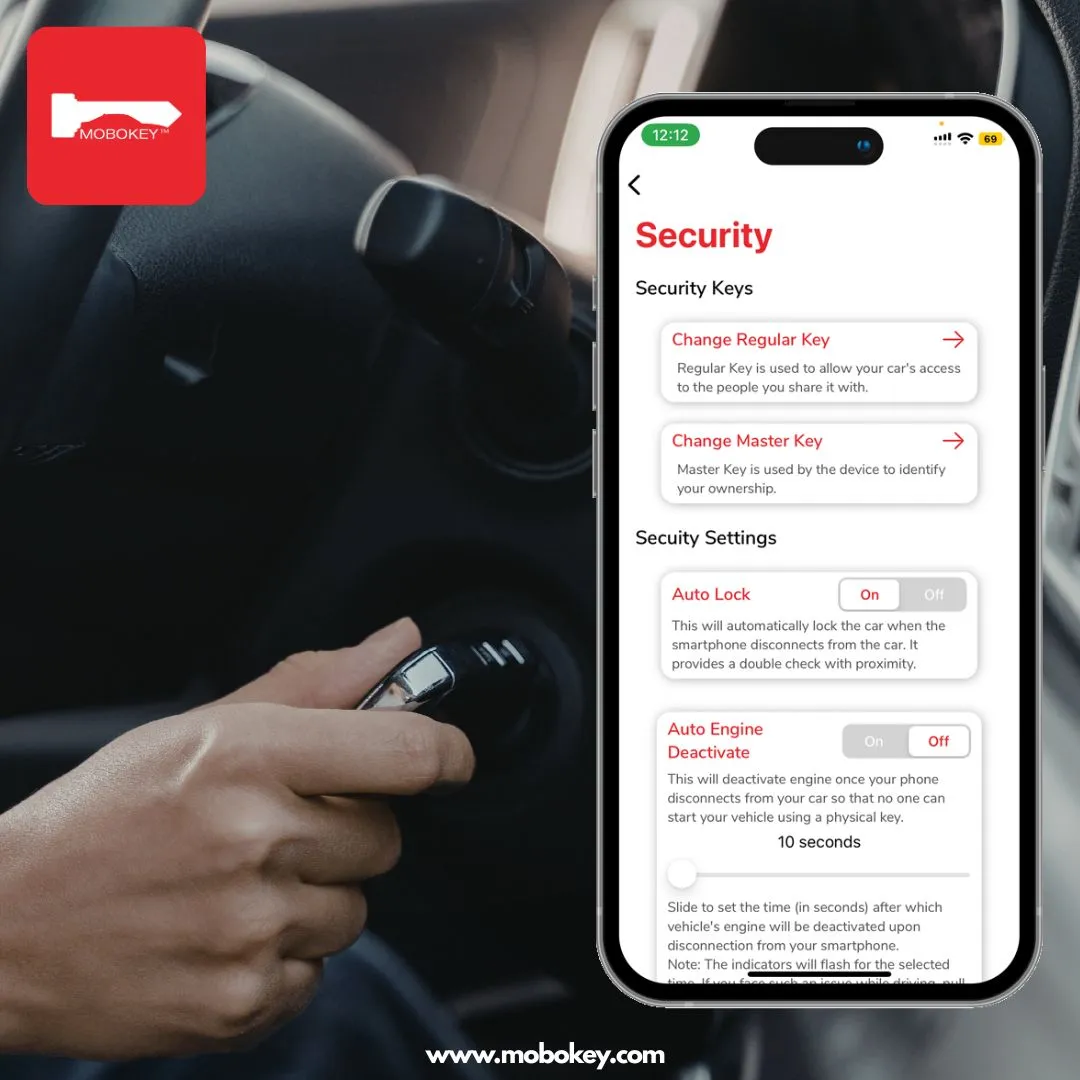
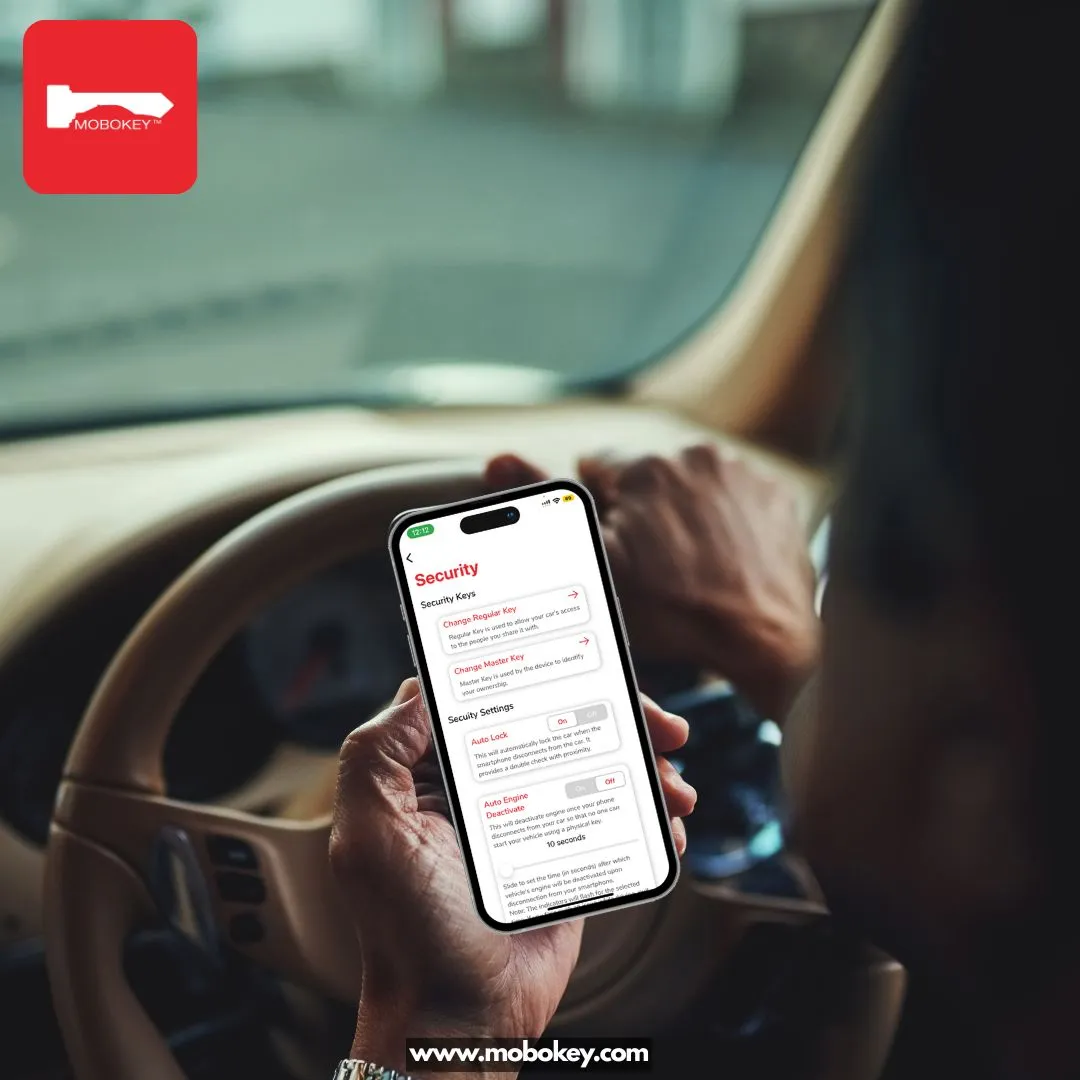
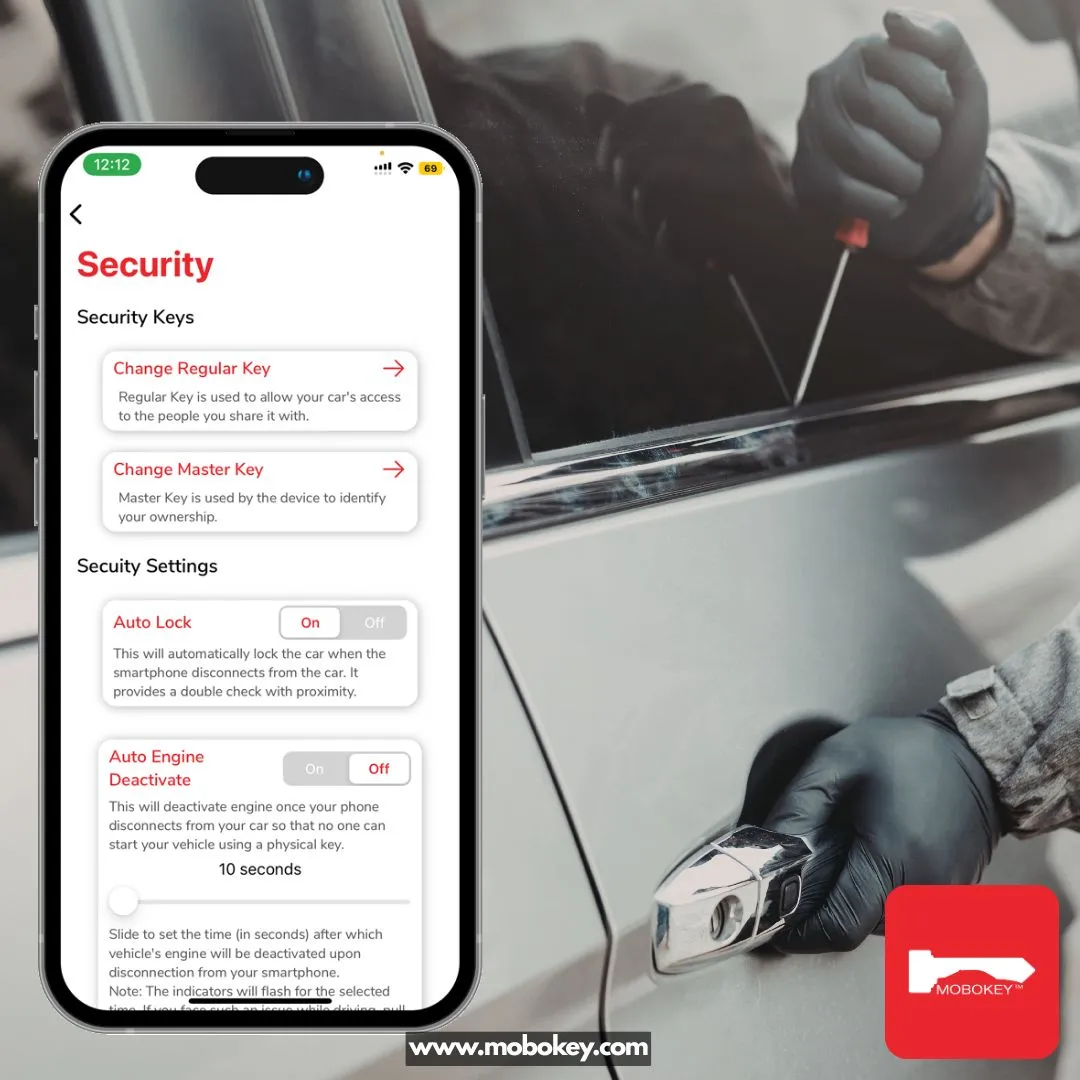
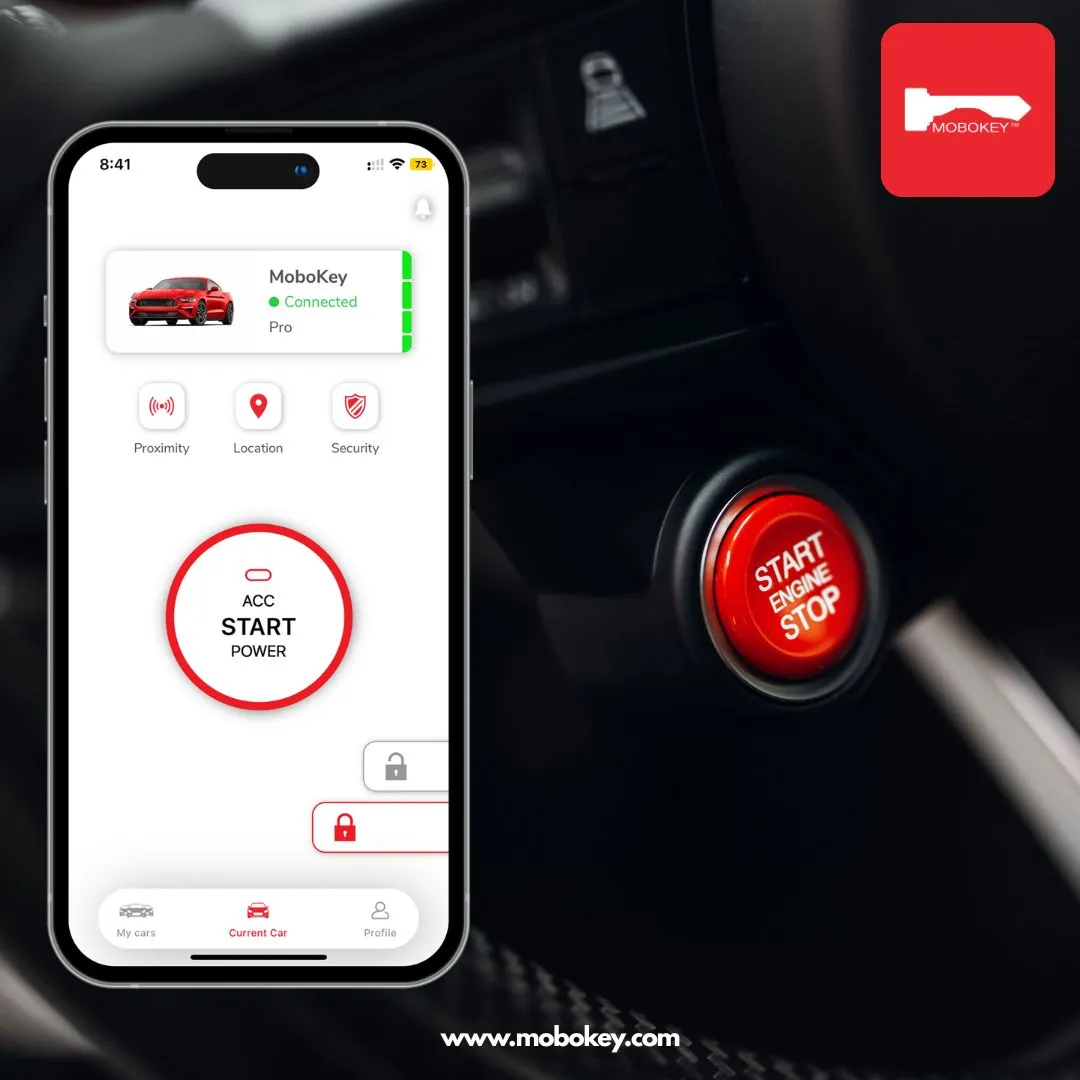
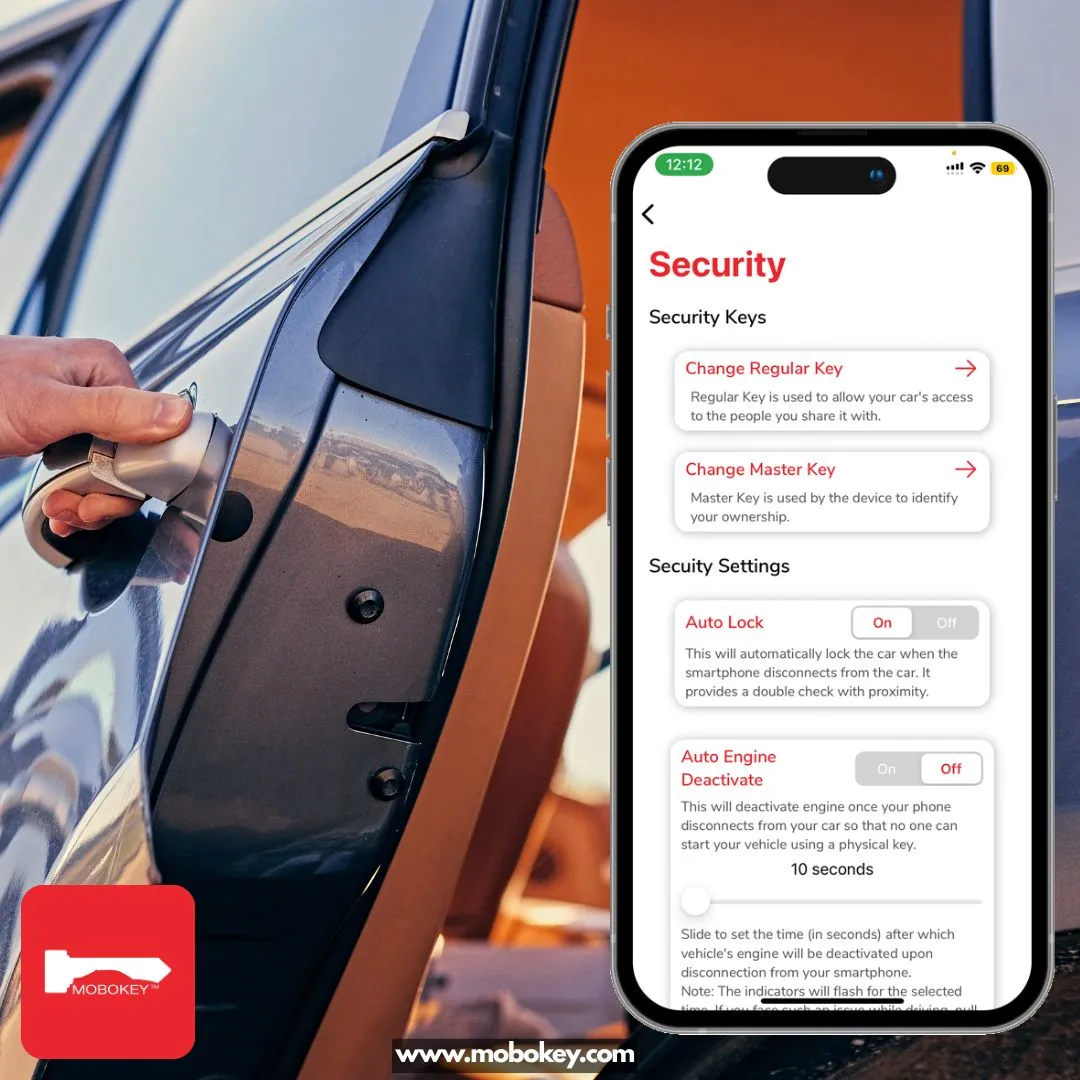
Where a factory immobilizer falls short specifically against relay attacks, MoboKey adds the active control an immobilizer cannot provide. The driver enables engine access from the smartphone app before each use. If the vehicle starts or moves without that app-based authorization, MoboKey’s proximity engine kill prevents it from traveling far.
Additionally, MoboKey adds digital key sharing, hands-free auto unlock, parked location tracking, and instant key revocation. These features make it especially valuable for car sharing operators and fleet managers who need more control than a standard immobilizer offers.
For vehicles without a factory immobilizer — typically those built before 1998 — MoboKey effectively acts as the primary engine security device.
Thatcham Research in the UK sets the global benchmark for vehicle immobilizer testing and certification. MoboKey’s remote engine kill delivers comparable active protection, with the added benefit of full smartphone control.
Hardware details are at MoboKey Shop. To learn more about how MoboKey protects your vehicle, visit mobokey.com.
Ready to go keyless? Visit mobokey.com or contact us today to get started.
Frequently asked questions: how car immobilizers work
No. Factory immobilizers became standard on most vehicles built after 1998. Older vehicles typically have none. If you own a pre-1998 vehicle, an aftermarket immobilizer or remote kill switch adds the protection you are missing.
The immobilizer warning light means the ECU did not detect the correct code from your key. This happens when the system does not recognize the key, when the transponder chip is damaged, or when a relay attack fails to complete correctly.
An immobilizer is passive — it blocks the engine automatically every time the car is parked. A kill switch is active — the driver controls it manually or via an app. Both prevent the engine from starting, but a remote kill switch like MoboKey goes further by letting you disable the engine from any location at any time.
Yes. Aftermarket immobilizers are available and typically cost between $100 and $300 installed. Alternatively, a remote kill switch like MoboKey provides similar engine protection with the added benefit of smartphone control and no monthly fees.
MoboKey adds a second security layer that a factory immobilizer cannot provide. It closes the relay attack gap by requiring active app authorization before the engine starts. It also adds parked location tracking, digital key sharing, and remote engine kill — features a standard immobilizer does not include.
Relay attacks affect a wide range of vehicles, particularly those with passive keyless entry and start systems. Some manufacturers now add signal-blocking features to their key fobs. However, the most reliable solution is adding an independent layer of engine control, such as a remote kill switch, on top of the factory immobilizer.