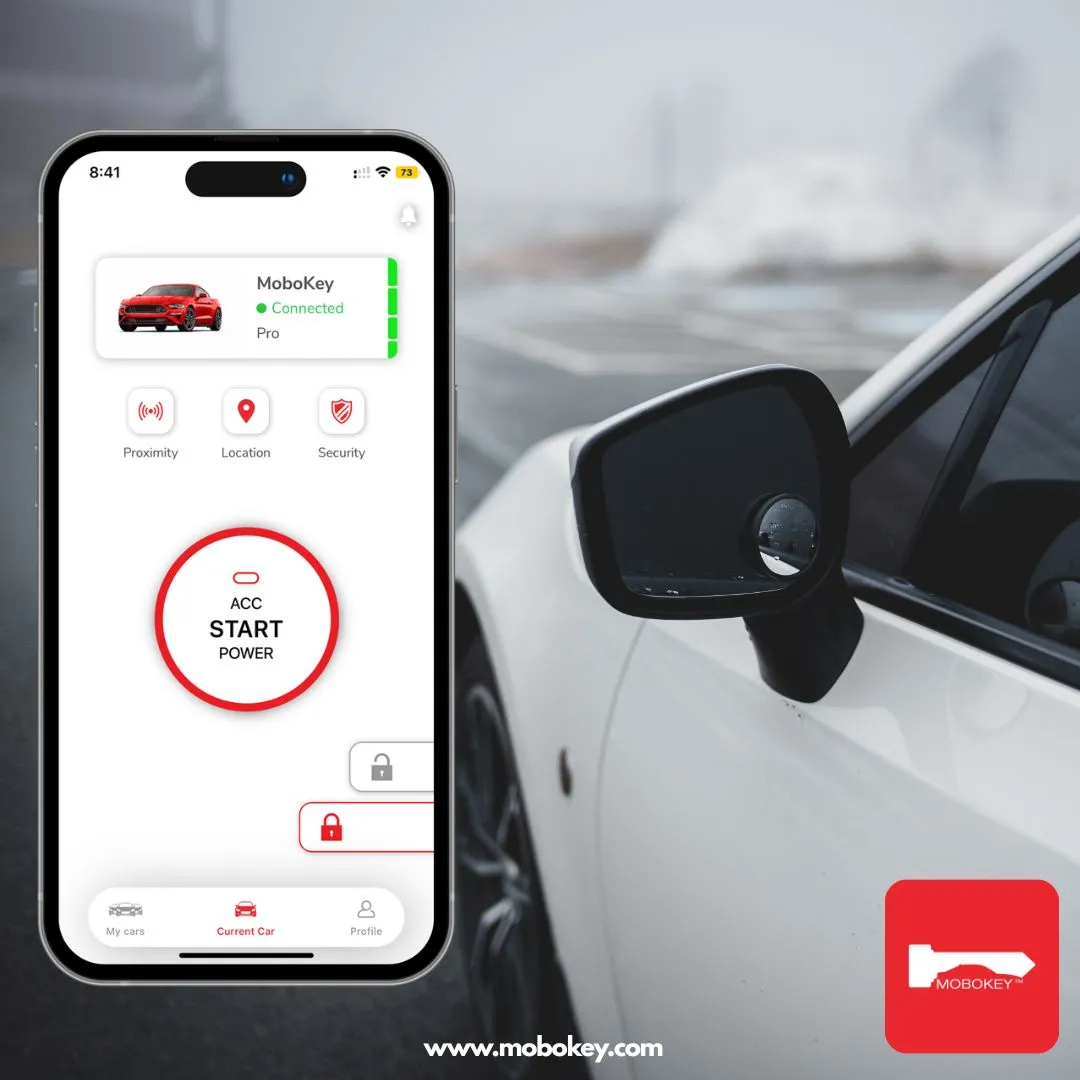
You should warm up your car for about 30 seconds before driving, even in freezing weather. Modern fuel-injected engines lubricate fully within half a minute. After that, gentle driving warms the engine faster than idling ever will. So why does remote start matter in winter? Because warm-up was never really about the engine. It is about the cabin, the frozen windshield, and not scraping ice in the dark. Remote start handles all three from inside your home — and with MoboKey, your phone does it with no subscription.
How Long Should You Warm Up Your Car in Winter?
Thirty seconds is enough for almost every car built since the 1990s. In that time, oil circulates and reaches every moving part. The US Department of Energy says the same thing: modern engines need no more than 30 seconds of idling, even on cold days.
After that, the best warm-up is driving. Under light load, the engine reaches operating temperature roughly twice as fast as it does at idle. Just keep the first five minutes gentle. Avoid hard acceleration until the temperature gauge starts moving.
There is one honest exception. In extreme cold, below roughly 0°F, an extra minute or two helps oil flow. Diesel trucks also play by different rules, with glow plugs and block heaters in the mix. For everything else, long idling does nothing for the engine.
Why Do People Think Cars Need 10 Minutes to Warm Up?
Because it used to be true. Cars with carburetors genuinely needed several minutes of idling. Otherwise, the fuel mixture stayed too rich or too lean, and the engine would stall at the first stop sign.
However, carburetors disappeared from new cars decades ago. Electronic fuel injection adjusts the mixture instantly, in any temperature. The advice survived the technology by thirty years. As a result, millions of drivers still burn fuel every winter morning for a problem that no longer exists.
What Does Idling Too Long Actually Cost?
More than most drivers expect. Here is what extended winter idling adds up to:
| Idle time | What it costs you |
|---|---|
| 30 seconds | Nothing — this is all the engine needs |
| 5 minutes daily | Roughly a quarter gallon of fuel, every single day |
| 10+ minutes daily | Fuel waste, oil dilution, and extra engine wear |
| Unattended idling | Theft risk — and a fine in many states |
That last row deserves attention. An idling car with keys inside is the classic winter theft, and police call it “puffing.” Many states ban unattended idling for exactly this reason. We cover the laws and the theft angle in a separate guide.
What Is Remote Start Actually For in Winter?
Cabin comfort and safety — not engine care. This distinction matters, because it changes how you use the feature. The engine needs 30 seconds. You, however, benefit from five warm minutes.
During that time, remote start does four things a cold start cannot. It heats the cabin before you leave the house. It clears frost from the windshield without scraping. It defogs the glass, so you drive off with full visibility. Most importantly, it does all this with the doors locked and no key in the car. Your car warms up; a thief gets nothing.
That is the real winter case for remote start. Not a mechanical necessity — a comfort and safety upgrade you feel every single morning from November to March.
How Do You Remote Start Your Car from Your Phone?
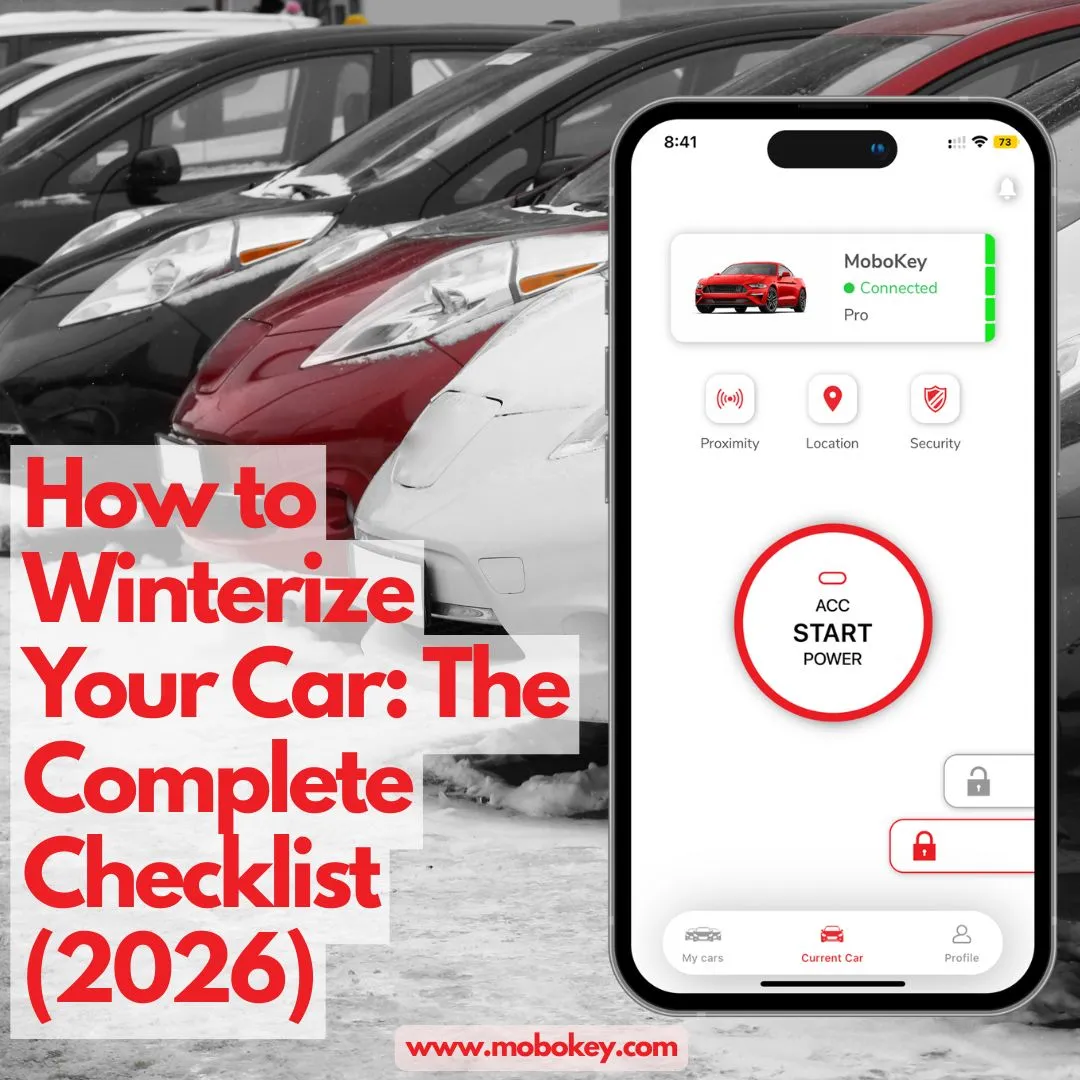
With MoboKey, you tap once in the app and the engine starts. The device connects to your car and talks to your phone over encrypted Bluetooth. The range covers 100 to 350 feet, so it works from inside most homes and offices. There are no monthly fees, because there is no cellular subscription behind it.
The system fits over 90% of vehicles, including push-button start cars and older key-start models. Beyond starting, it unlocks the doors hands-free as you walk up with your morning coffee. If you are comparing systems first, see the remote start smartphone app options for any car. Ready to install before the first freeze? The remote car starter installation guide walks through the whole process.
Frequently Asked Questions: Warming Up Your Car
About 30 seconds. Modern fuel-injected engines lubricate fully within half a minute, even in freezing weather. After that, gentle driving warms the engine faster than idling. Save longer run times for cabin comfort, not engine care.
Long idling wastes fuel and adds engine wear without real benefit. Five minutes of daily idling burns roughly a quarter gallon of fuel. Worse, fuel can wash oil off cylinder walls during extended cold idling. Thirty seconds, then gentle driving, treats the engine better.
No. A remote-started engine idles exactly as it would with you in the seat. Keep pre-drive run times to five or ten minutes for comfort and defrosting. The engine itself only ever needed the first 30 seconds.
Slightly. In extreme cold, below roughly 0°F, one to two minutes helps thick oil circulate. Diesel engines may also need glow plugs or a block heater. Even then, gentle driving remains the fastest path to full operating temperature.
Not with keys inside and doors unlocked — that is how winter thefts happen. Remote start solves this: the engine runs while the doors stay locked, with no key in the car. Many states actually ban unattended idling with keys in the ignition.
Almost any. MoboKey retrofits remote start to over 90% of vehicles, key-start and push-start alike, over encrypted Bluetooth with no subscription. One-time hardware cost, lifetime of warm mornings.
Ready to go keyless? Visit mobokey.com or contact us today to get started.