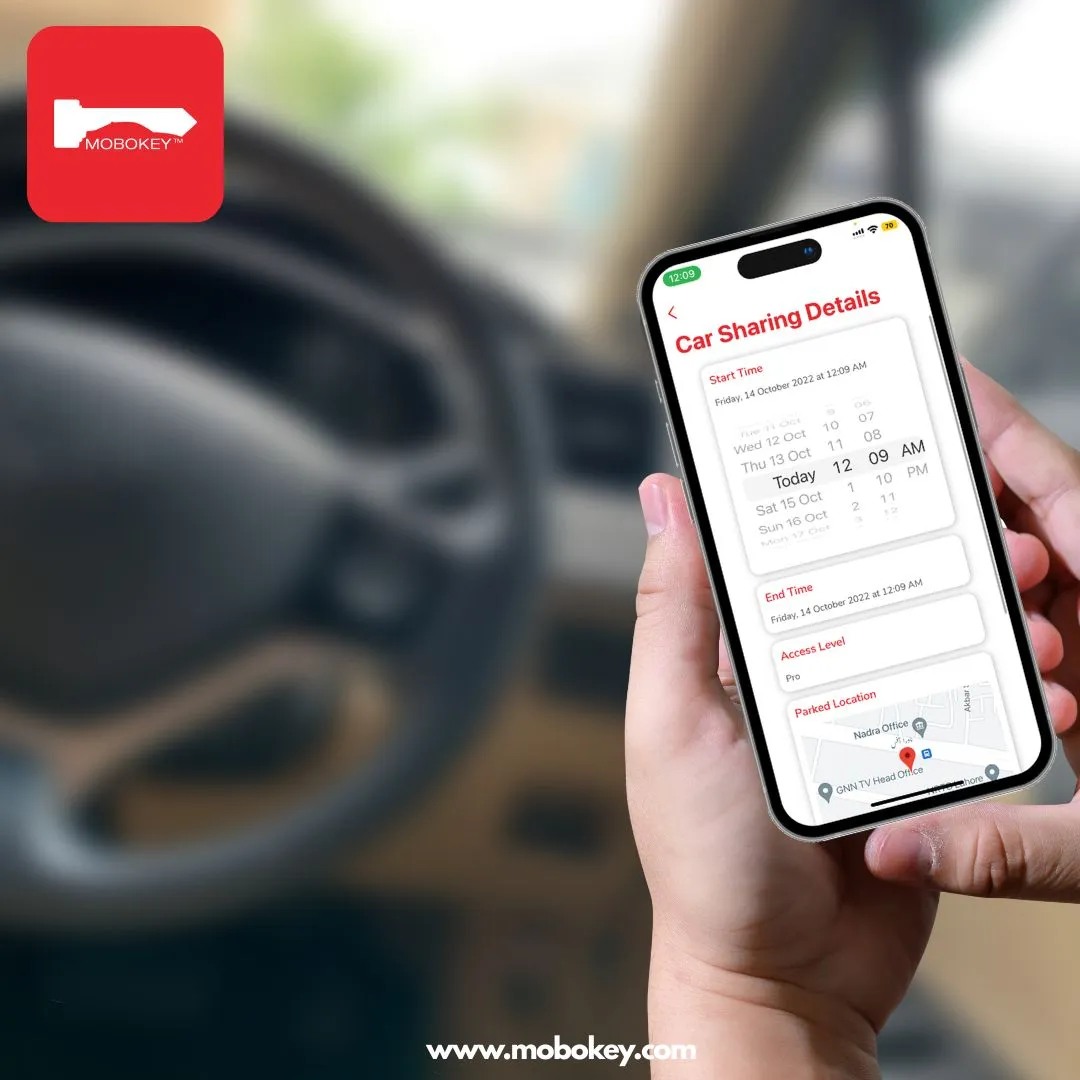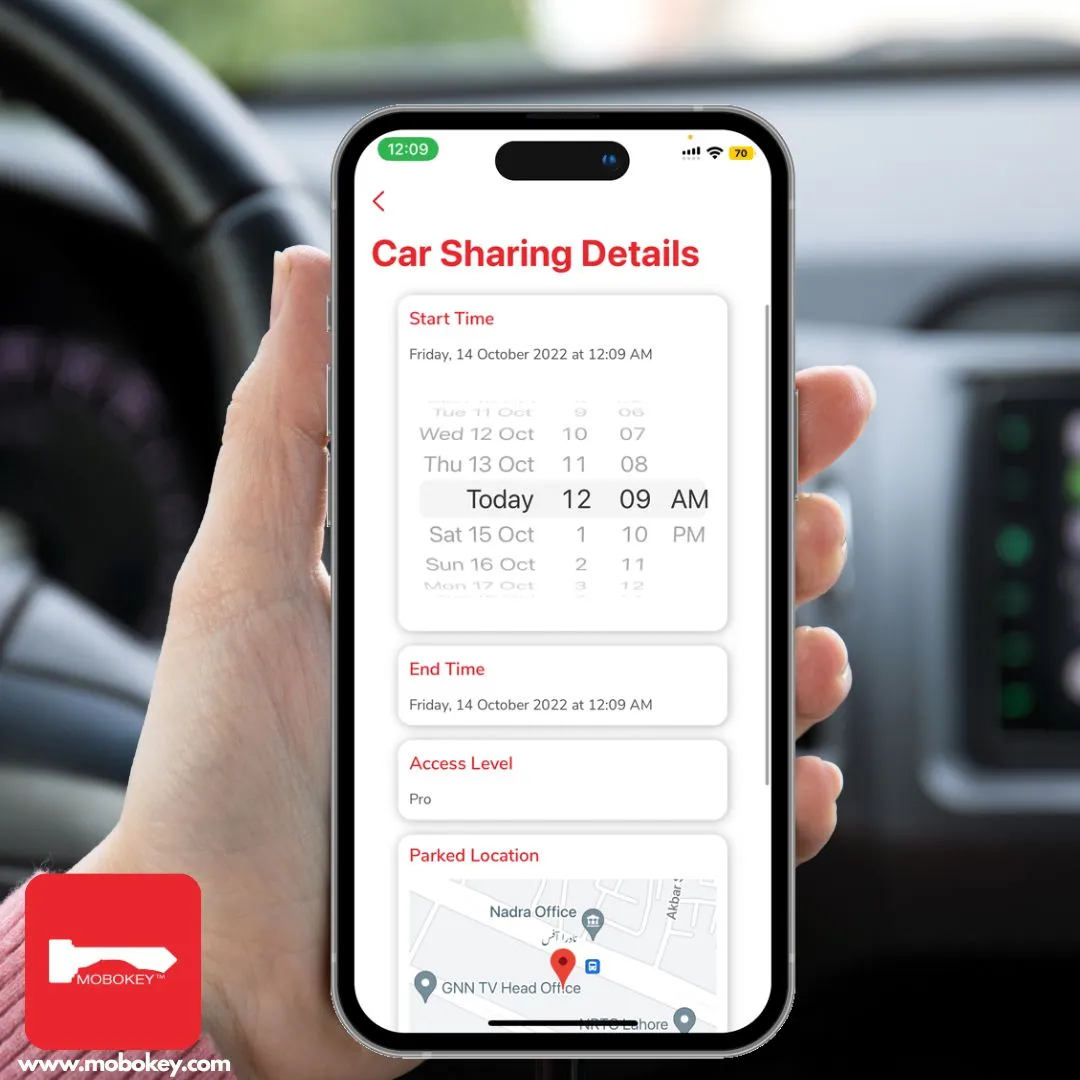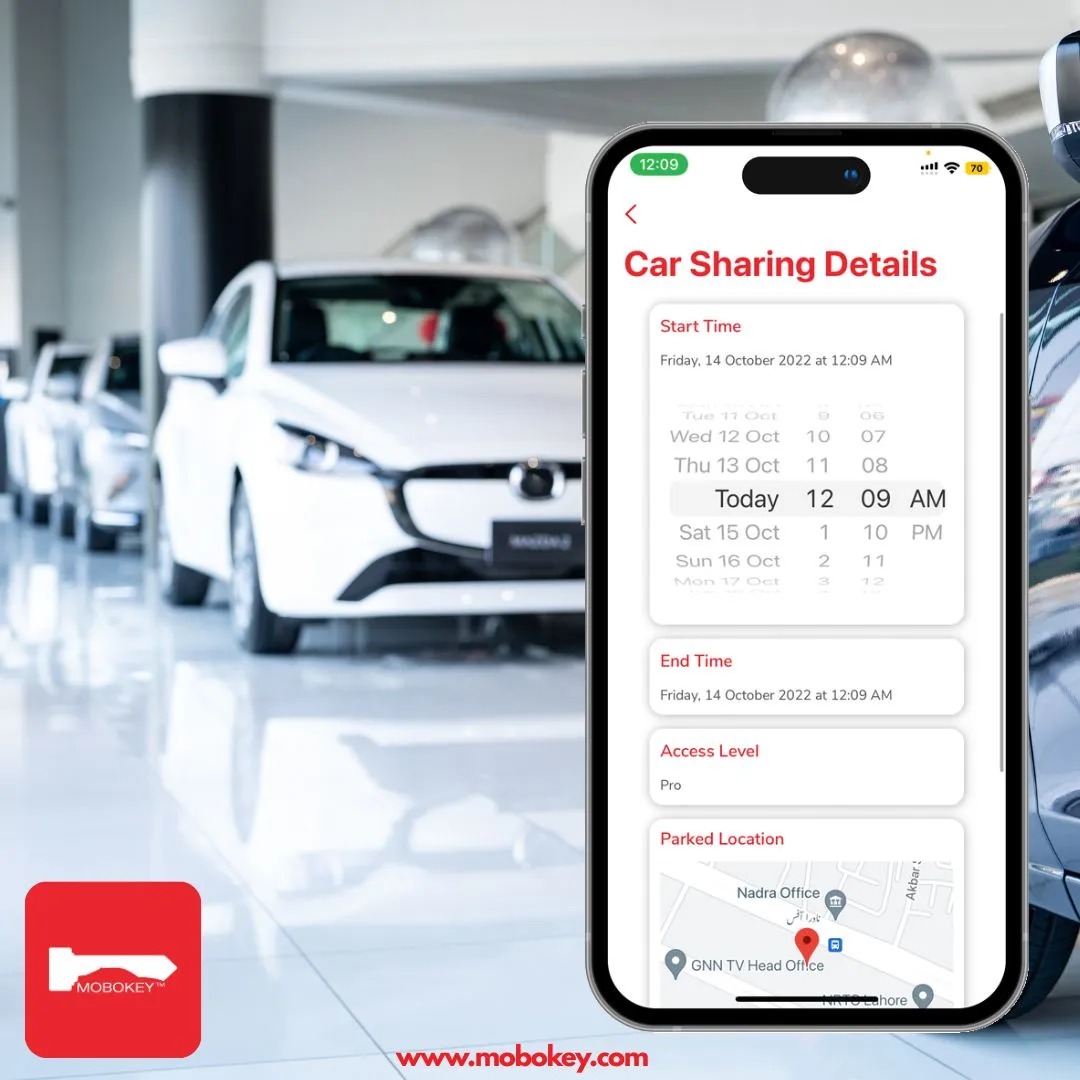
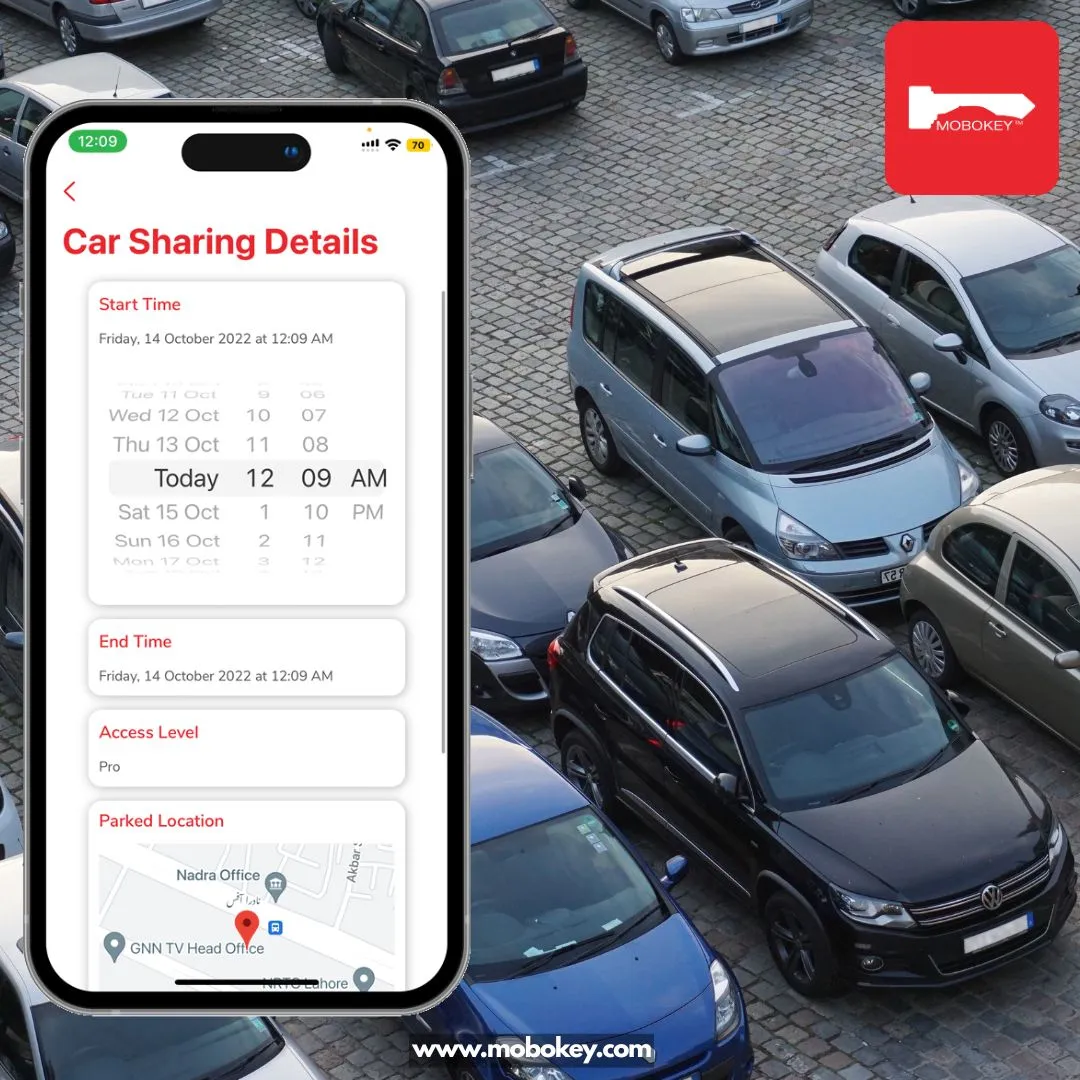
Small fleet management comes down to five jobs: controlling who can access each vehicle, securing them between rentals, knowing where every car sits, handling booking turnover, and keeping records. One app now covers all five. With MoboKey installed in each vehicle, you issue time-bound digital keys per renter, kill any engine remotely, see every parked location, and review access logs — from your phone, with no office, no key cabinet, and no per-vehicle subscription fees.
Somewhere between two cars and twenty, rental operators hit the same wall: the fleet outgrows the founder’s pockets. Keys multiply, handovers stack up, and nobody knows where car number six is parked. The old answer was enterprise fleet software and a desk. The 2026 answer fits in your hand. Here is how small fleet management works from one app.
What does managing a small rental fleet actually involve?
Strip away the software jargon and fleet management is five recurring jobs.
Access: getting the right renter into the right car at the right time, and nobody else, ever. Security: making sure a parked fleet stays parked overnight and between bookings. Location: knowing where each vehicle sits without driving around to check. Turnover: moving a car from one booking to the next — return, inspection, cleaning, re-release. Records: who drove what, when, and in what condition.
Traditional operations solve each job with a separate tool: a key cabinet, an alarm vendor, a GPS subscription, a whiteboard, and a binder. Trade publications like Automotive Fleet have tracked the industry’s answer for years — consolidation into connected platforms. The change in 2026 is that consolidation now scales down to a two-car operation.
How does one app replace fleet software?
Map the five jobs onto a connected access device and the software layer mostly disappears:
| Fleet job | The old way | From one app (MoboKey) |
|---|---|---|
| Renter access | Key handovers, lockboxes, key cabinet | Time-bound digital key sent to renter’s phone |
| Between-booking security | Alarms, hope | Remote kill switch; keys expire automatically |
| Vehicle location | GPS subscription per car | Parked location saved per vehicle, no fees |
| Turnover | Meet, inspect, re-key | Key expires; next renter’s key activates on schedule |
| Records | Binder and memory | Access logs per vehicle and driver |
The mechanism behind every row is the same: each car carries a MoboKey device, and every credential is digital. A digital key exists only on the phone you issued it to, only for the window you set. Consequently, the fleet enforces your rules by itself — no staff standing in parking lots.
For owners still weighing this against spreadsheets and lockboxes, our guide on running a car sharing business entirely from your phone covers the operational side in depth.
What does a day running a fleet from one app look like?
Follow a ten-car operator through a normal Tuesday.
Morning coffee, first check: the app shows all ten parked locations. Nine are where they should be; one renter parked a street over — noted, no phone calls. Two bookings start today, so two digital keys are already scheduled: they activate at pickup time and die at return time. Nothing to do.
Midday, a renter requests an extension. Approving it takes one tap — the key’s window stretches to the new return time. Meanwhile, a returning car hits its booking end; the key expires on its own, and the cleaning contractor’s key activates for the afternoon slot. The contractor unlocks with a phone, cleans, locks, and their access ends too.
Evening, one alert matters: a vehicle moved outside its booking window. Proximity engine kill has already prevented the engine from restarting. The operator checks the parked location, resolves it, and revokes the key involved — all before dinner. That is the whole management day: minutes of taps, spread across a phone the operator carries anyway. It is the same system that scales from 5 to 50 vehicles without adding staff.
Here is the full breakdown of GPS tracker subscription costs and the no-fee alternatives.
Work trucks in the fleet? See the kill switch for trucks guide.
What does small fleet management cost in 2026?
The cost question splits into recurring versus one-time — and it decides your margins.
The subscription stack adds up fast. Fleet GPS tracking at $10 to $40 per vehicle per month, fleet software seats, and marketplace commissions on every booking. A ten-car fleet can burn $3,000 to $6,000 per year on subscriptions before anyone drives anywhere.
The one-time stack replaces most of it. MoboKey is a one-time hardware cost per vehicle — access, kill switch, parked location, and logs included, with no monthly fees. Additionally, MoboKey GO adds your own branded booking app on the same hardware, cutting marketplace commissions out of repeat bookings entirely. The savings compound with every car you add, which is exactly when subscription models punish you hardest.
MoboKey installs on over 90% of vehicles — sedans, SUVs, and work trucks alike. Hardware details are at MoboKey Shop.
Ready to run your fleet from your pocket? Visit mobokey.com or contact us today to get started.
Frequently asked questions: small fleet management
Consolidate the five jobs — access, security, location, turnover, records — into one connected system. MoboKey handles all five from a single app with a one-time hardware cost per vehicle, which beats juggling key cabinets, GPS subscriptions, and spreadsheets.
MoboKey manages fleets from two vehicles to fifty and beyond from one account. Each vehicle gets its own device, keys, schedule, and logs. Operators typically add cars without adding staff, because access and turnover run automatically.
Usually not. Parked location tracking answers the daily question — where is each car — with no monthly fees. Continuous live tracking only matters for vehicles in constant motion, like delivery logistics. Most rental fleets never need it.
Each booking issues a time-bound digital key to the renter’s verified phone. It unlocks the car over Bluetooth during the booking window and expires at return time. Cleaning crews and staff get their own scheduled keys the same way.
Yes. MoboKey is platform-independent, so the same device serves marketplace bookings and direct rentals through MoboKey GO. Many operators run both channels: marketplaces for discovery, their own app for commission-free repeat business.
The key expires at booking end regardless, and proximity engine kill prevents the engine from restarting outside authorization. The parked location shows where the vehicle sits. Combined, overdue returns become a resolvable event instead of an emergency.