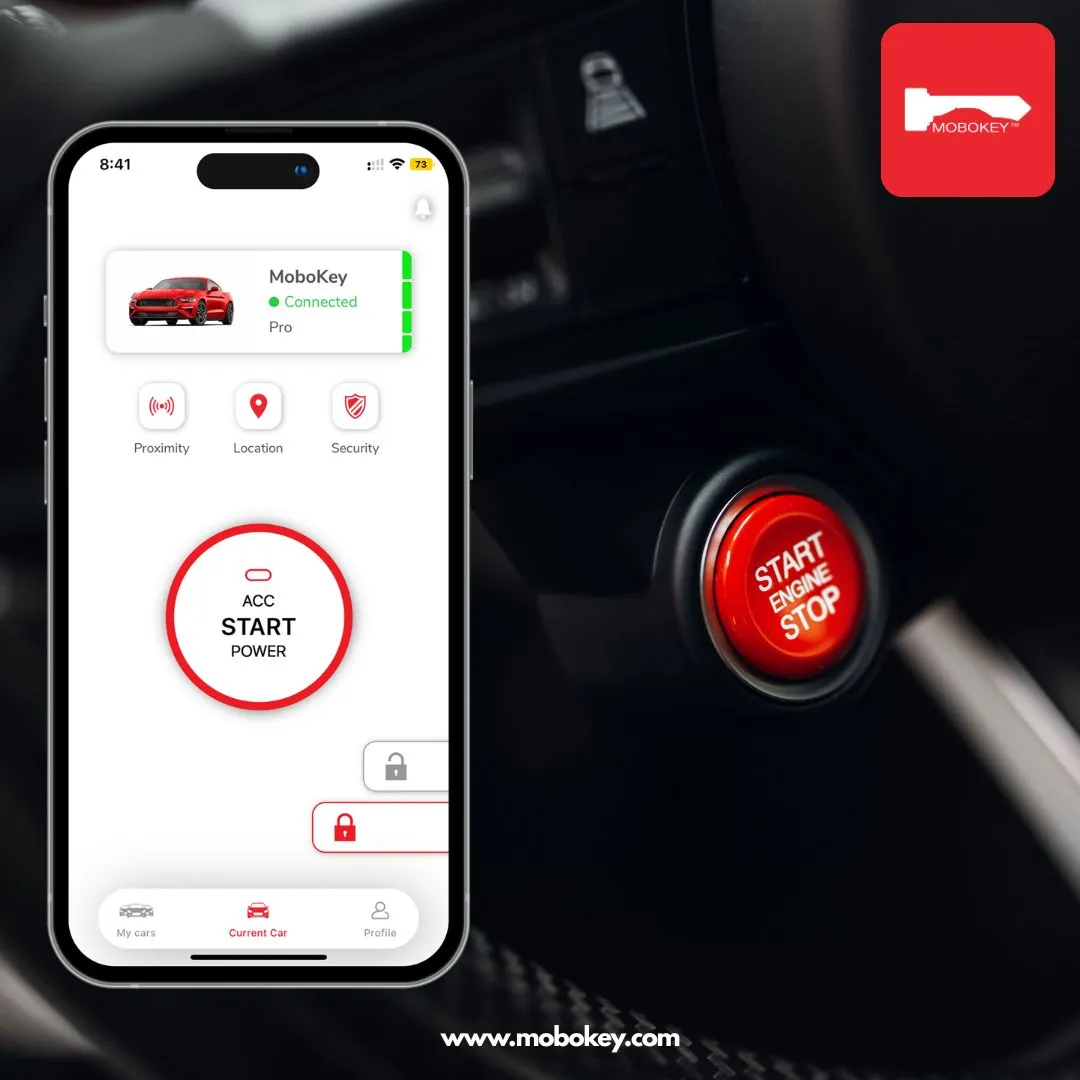
A kill switch for a car is a device that stops the engine from starting or running without your permission. It works by interrupting a critical circuit, usually the ignition, starter, or fuel pump. Kill switches range from simple hidden toggles costing under $50 to smartphone-controlled remote systems. They are legal in the US and most countries, and many insurers offer discounts for installing one. For most drivers, a kill switch is the single most effective aftermarket theft protection available.
Car thieves have modernized. Relay attacks and key cloning now defeat many factory security systems in under a minute. A kill switch for a car answers this problem with something no signal attack can bypass: a broken circuit. This guide covers everything — how kill switches work, the types, the cost, the law, and how to get one installed.
What is a kill switch for a car and how does it work?
A kill switch is a device wired into one of your vehicle’s critical circuits. When the switch is off, that circuit stays open. As a result, the engine cannot start no matter what key, fob, or signal a thief uses.
Most kill switches interrupt one of three circuits. The ignition circuit stops the engine from cranking. The starter circuit blocks the starter motor. The fuel pump circuit lets the engine crank but stalls it seconds later.
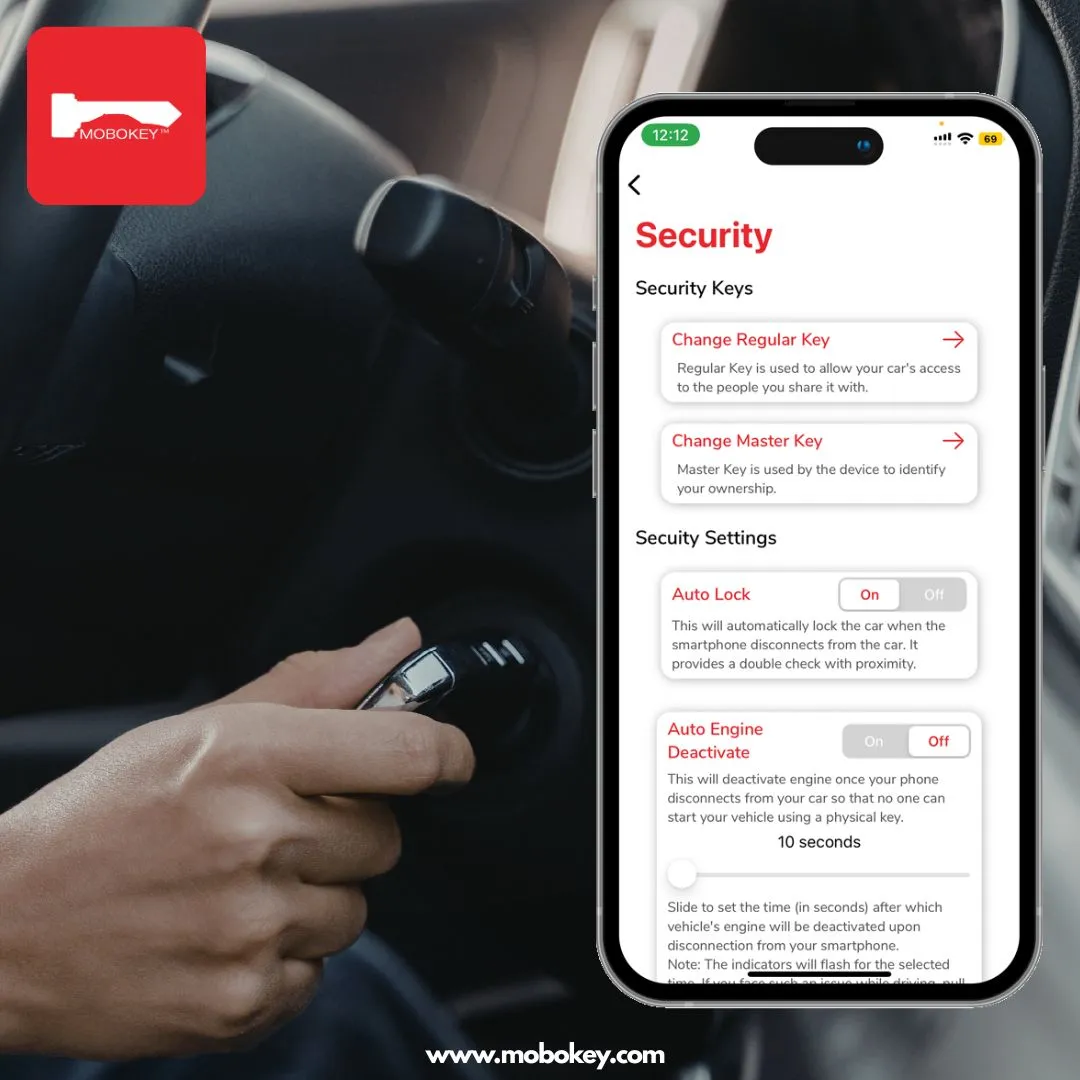
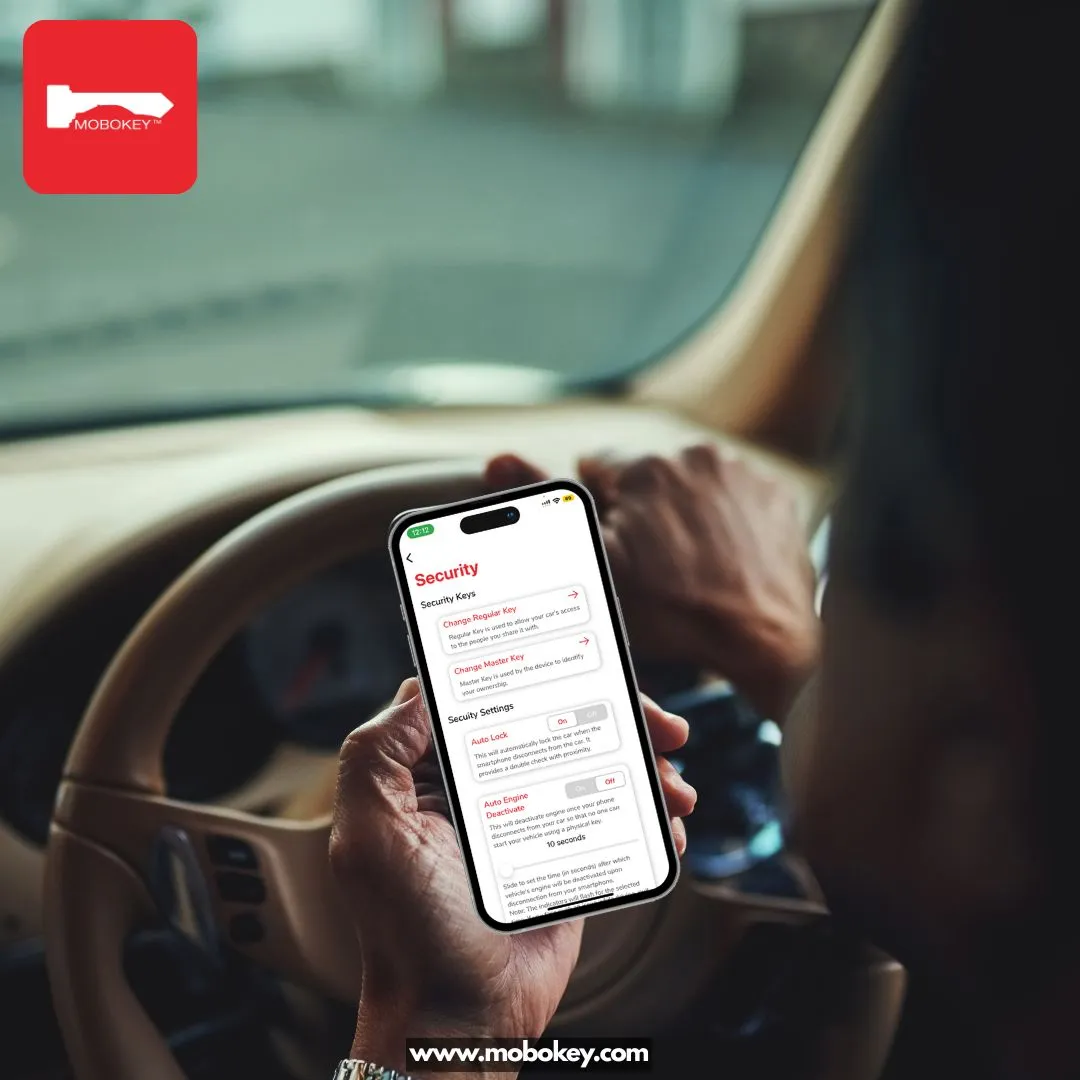
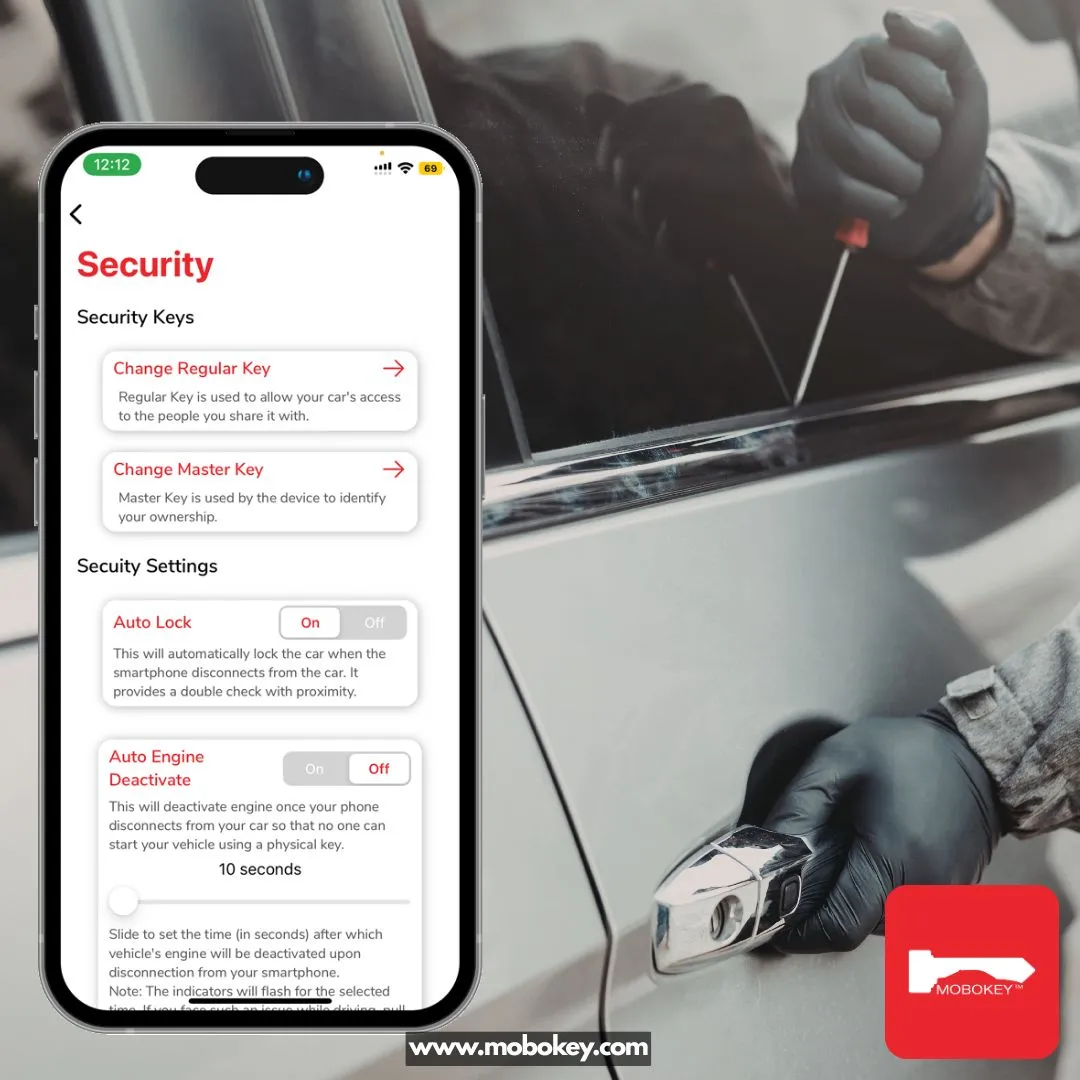
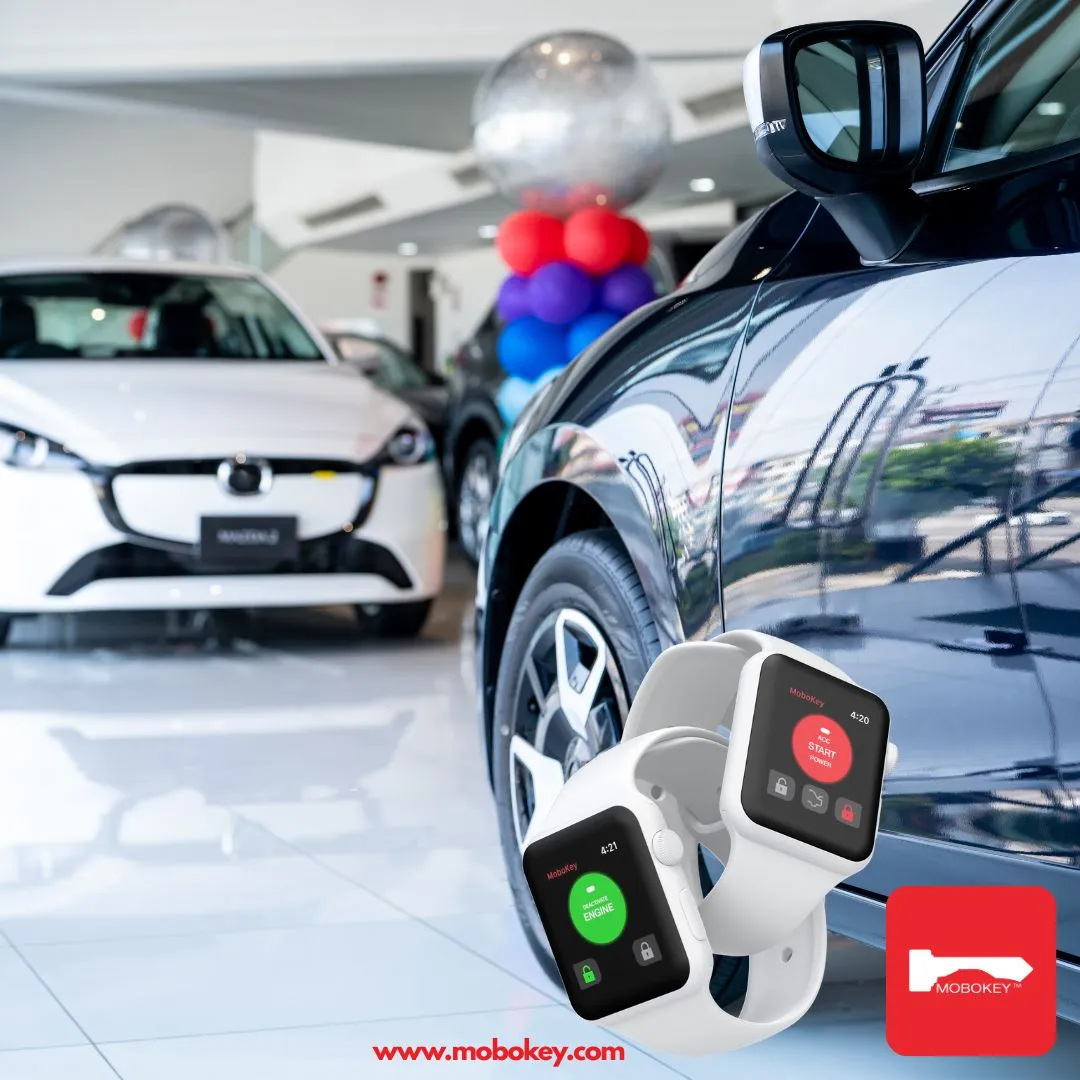
A manual kill switch is a hidden physical toggle inside the cabin. Only the driver knows its location. A remote kill switch replaces the hidden toggle with smartphone control. For example, MoboKey lets you enable or disable the engine from an app over Bluetooth — no internet required at the vehicle.
What are the main types of kill switches for a car?
There are five main types. A fuel pump switch stalls the engine right after it starts, which confuses thieves. An ignition switch prevents any cranking at all. A battery disconnect cuts all power, which suits stored and classic vehicles. A hidden relay switch conceals the entire mechanism. Finally, a remote kill switch adds full smartphone control on top of relay-based protection.
| Type | Best for | Remote control? |
|---|---|---|
| Fuel pump switch | Daily drivers in high-theft areas | No |
| Ignition switch | Simple DIY installs | No |
| Battery disconnect | Classic and stored cars | No |
| Hidden relay switch | Most everyday vehicles | No |
| Remote kill switch (MoboKey) | Fleets, rentals, car sharing | Yes — via app |
For a deeper comparison of all five, including how each stops a thief, see our full guide to the types of car kill switches.
How much does a kill switch for a car cost?
A basic manual kill switch costs $10 to $50 for the hardware. Professional installation adds $75 to $150. Therefore, a fully installed manual switch typically lands between $100 and $200.
A remote kill switch costs more upfront but includes far more capability. MoboKey carries a one-time hardware cost per vehicle — no annual fees, no monthly subscription, no booking commissions. In contrast, GPS-based security systems charge $10 to $40 every month just to stay active.
Additionally, many insurers offer anti-theft device discounts for vehicles with a professionally installed kill switch. Over time, that discount offsets part of the installation cost.
Is a kill switch worth it for car theft prevention?
Yes — and the data supports it. The Insurance Institute for Highway Safety tracks vehicle theft trends and consistently finds that vehicles without engine-disabling security are stolen at far higher rates. Thieves target easy wins. A car that will not start is not an easy win.
A kill switch outperforms most alternatives on prevention. Here is how every option ranks in our best anti-theft devices for cars roundup. A car alarm only makes noise, and most people ignore alarms. A GPS tracker only locates the car after it is gone. A steering lock slows a thief down but yields to bolt cutters. However, a kill switch stops the theft itself — the vehicle simply does not run.
A factory immobilizer provides similar protection but has a known weakness: relay attacks can defeat it on many models. A kill switch works independently of the key signal, so a relay attack cannot touch it. Together, an immobilizer plus a kill switch covers both attack paths. The full kill switch vs immobilizer vs GPS tracker comparison breaks down each layer.
How do you get a kill switch installed in your car?
You have two routes: DIY or professional installation.
A basic manual switch is a manageable DIY job. You cut one wire, connect the switch across the gap, and hide it well. The job takes 30 to 60 minutes with basic tools and a wiring diagram. Our step-by-step guide to how to install a kill switch walks through every wire.
A remote kill switch should be installed professionally. The device connects to multiple circuits, and on manual cars it also wires into the handbrake sensor for safe remote start. Most professional installations take one to two hours.
MoboKey installs on over 90% of vehicles — automatic and manual, key-start and push-start. Beyond the kill switch, it adds digital key sharing, hands-free auto unlock, parked location tracking, and instant key revocation. For hardware details, visit MoboKey Shop. To find an installer or learn more, visit mobokey.com.
Ready to go keyless? Visit mobokey.com or contact us today to get started.
Frequently asked questions: kill switch for a car
A kill switch interrupts a circuit the engine needs to start or run — usually the ignition, starter, or fuel pump. When the switch is off, the vehicle will not start regardless of what key or signal a thief uses.
A basic manual kill switch costs $100 to $200 fully installed. A remote kill switch like MoboKey carries a one-time hardware cost with no monthly fees. Many insurers offer anti-theft discounts that offset part of the cost over time.
Yes. Installing a kill switch on a vehicle you own is legal in the United States and most other countries. It qualifies as an anti-theft device. Lender-installed starter interrupters on financed cars follow separate rules that do not apply to private installations.
Only if they find it and understand the wiring. A well-hidden relay switch gives them nothing to find. A remote kill switch like MoboKey goes further — there is no physical switch in the cabin at all, and only the app can enable the engine.
No. A properly installed kill switch draws no meaningful current when idle. Bluetooth-based systems like MoboKey use extremely low standby power, comparable to a parked car’s normal electronics.
For most private owners, a hidden relay switch offers the best value in a manual device. For anyone who wants remote control — and for every fleet, rental, or car sharing operator — a smartphone-based remote kill switch is the strongest option. MoboKey combines the kill switch with digital key access and location tracking in one device, with no subscription.
Pickup owner? Trucks top the theft charts — see the dedicated kill switch for trucks guide