
The best time to install a remote starter is early fall; September through October, before your area’s first freeze. Installers have open calendars, you can schedule at your convenience, and the system is tested and ready when the first cold morning arrives. Wait until winter and everything flips: shops book out for weeks, demand peaks, and you scrape windshields while you wait. The rule is simple. Buy the coat before the snow.
Why Is Early Fall the Best Time to Install a Remote Starter?
Three reasons, and availability leads. Remote starter demand follows the thermometer. In September, installers can usually fit you in within days. By December, the same shops quote waits of several weeks, because everyone decided they needed remote start on the same freezing Monday.
Timing also buys you a testing window. Installing in fall means you learn the system casually, range from inside your house, run times, app settings; with nothing at stake. Consequently, when the first hard frost hits, the routine already works.
Finally, fall installation captures the full value of the season. A starter installed in January serves you for half a winter. Installed in October, it earns its keep from the very first cold snap through March.
What Happens If You Wait Until Winter?
You join the queue. The first freeze triggers a predictable surge, and shops work through it in order. Waits of two to six weeks are common in cold states. Meanwhile, the mornings you bought the starter for keep coming.
Winter also complicates the work itself. DIY wiring in a freezing garage tests anyone’s patience, and rushed seasonal demand leaves less room for schedule flexibility at shops. In short, waiting costs time, comfort, and often money, and delivers the product after you needed it most.
When Is Your First Freeze?
Earlier than most people plan for. Average first-freeze dates vary widely across the US:
| Region | Typical first freeze |
|---|---|
| Mountain West and Upper Midwest | Late September to mid October |
| Northeast, Midwest, Plains | Mid to late October |
| Mid-Atlantic and inland South | Late October to November |
| Gulf Coast and coastal South | November to December, if at all |
These are averages, and any given year can run weeks early. NOAA’s National Weather Service publishes freeze outlooks and first-freeze climatology for your exact area. Work backward from that date, subtract shop lead time, and the conclusion lands in September for most of the country.
What Should You Decide Before Installation?
Three choices shape the quote. First, the system type: cellular systems (Viper, DroneMobile) offer unlimited range but bill a yearly subscription, while Bluetooth systems like MoboKey are a one-time purchase with 100 to 350 feet of range — enough to reach the driveway from inside most homes. The best remote starter with phone app comparison covers the trade-offs.
Second, your ignition type: key-start and push-button cars both work, but they use different wiring approaches. Third, your budget: hardware plus installation typically lands between $320 and $680 for traditional kits, less for Bluetooth systems. The full remote starter kit pricing comparison breaks down every line item.
How Does MoboKey Installation Work?
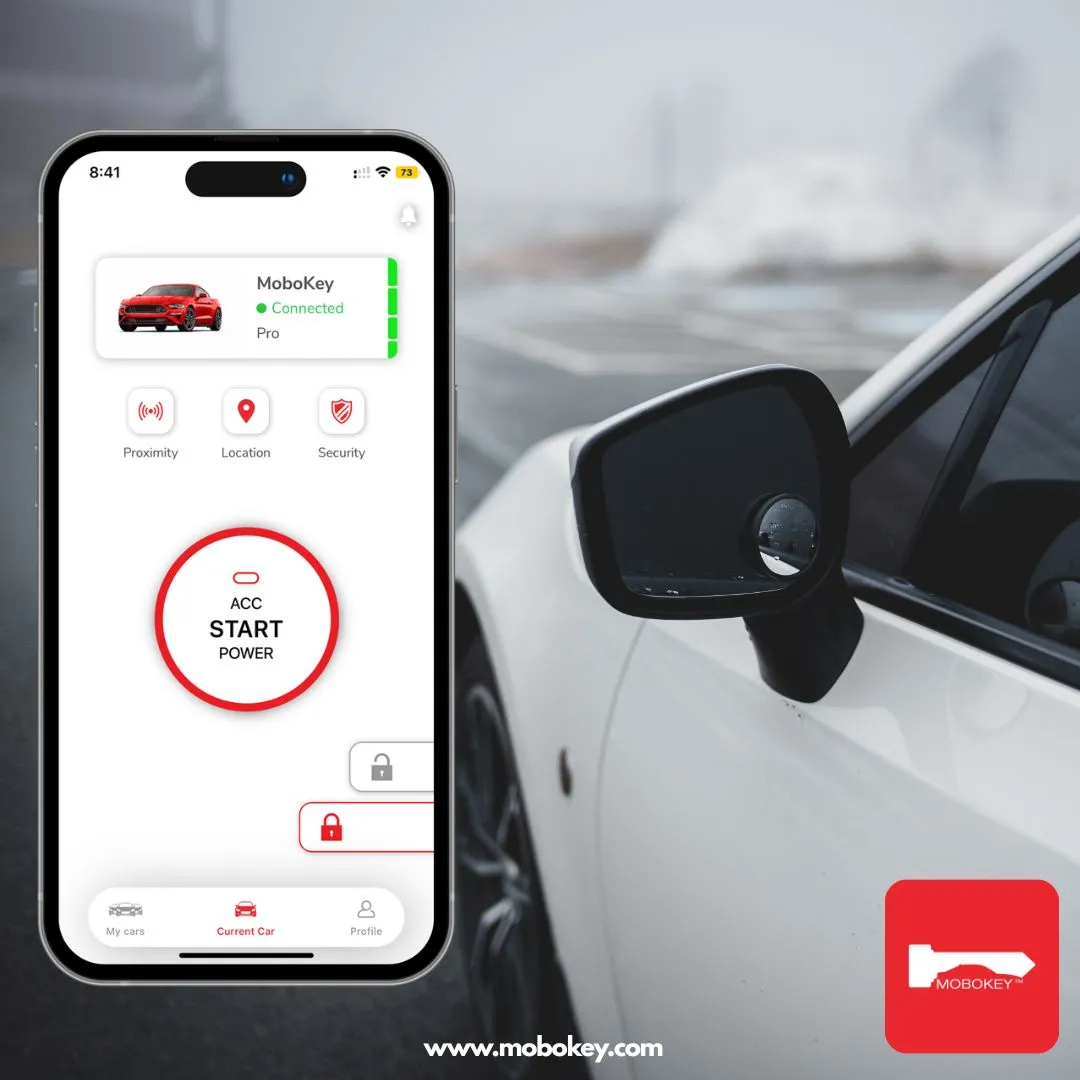
One device, one professional visit, no subscription afterward. The MoboKey device wires into your vehicle and pairs with your phone over encrypted Bluetooth. Professional installation typically takes one to two hours, and the system fits over 90% of vehicles — key-start and push-button alike. The step-by-step process is in the remote car starter installation guide.
Beyond starting the engine, the same device unlocks your doors hands-free, shares digital keys with family, and adds a remote engine kill for theft protection. Booked in September, it is warming your mornings by October. And once it is in, use it right: our guide to how long you should warm up your car covers the 30-second truth.
Frequently Asked Questions: Remote Starter Timing
When is the best time of year to install a remote starter?
Early fall — September through October. Installer calendars are open, you beat the first freeze, and the system serves the entire winter. Demand surges after the first cold snap, and waits stretch to weeks.
How long does remote starter installation take?
Typically one to two hours for professional installation on most vehicles. Complex wiring, luxury makes, push-button ignitions, and manual transmissions can add time. In peak winter season, the wait for an appointment often exceeds the installation itself.
Can you install a remote starter in winter?
Yes — nothing technical prevents it. The problems are practical: booked-out shops, long waits, and freezing DIY conditions. Fall installation avoids all three and delivers the starter before the mornings that justify it.
How much does a remote starter cost installed?
Traditional kits run roughly $320 to $680 installed, plus yearly subscription fees for cellular smartphone control. Bluetooth systems like MoboKey cost $110 to $160 for hardware plus installation, with no subscription at all.
Do remote starters work on push-button start cars?
Yes. Push-button vehicles use a different wiring method than key-start cars, so professional installation is recommended. MoboKey supports both types, covering over 90% of vehicles on the road.
Is a remote starter worth it if winter is short where I live?
Often, yes — because the same hardware does more than start the engine. MoboKey adds keyless entry, digital key sharing, and remote engine kill year-round. The starter is the winter feature; the security works every day.
Ready to go keyless? Visit mobokey.com or contact us today to get started.