As the automotive world shifts toward a smartphone-centric experience, two wireless technologies have emerged as the frontrunners for digital access: Bluetooth Low Energy (BLE) and Near-Field Communication (NFC). While both allow you to leave your physical keys at home, they offer vastly different experiences in terms of range, convenience, and security. Understanding the nuances between a bluetooth vs NFC car key is essential whether you’re a tech-savvy driver or a fleet manager looking for the most reliable access solution.
Bluetooth Low Energy (BLE) Explained
Bluetooth Low Energy is the “long-range” hero of digital keys. Unlike the Bluetooth used for your headphones, BLE is designed to stay active in the background without draining your phone’s battery.
How it works: Your car and phone establish a secure, encrypted “handshake” as soon as you are within range (up to 300 feet for high-performance systems like MoboKey).
-
Pros: Enables true “hands-free” entry; the car can unlock automatically as you approach.
-
Cons: More susceptible to signal interference in crowded areas compared to NFC.
NFC (Near-Field Communication) Explained
NFC is the technology behind “tap-to-pay” services like Apple Pay. It is a short-range communication method that requires two devices to be within a few centimeters of each other.
How it works: You must physically tap your phone against a specific reader (usually on the door handle or the dashboard) to trigger a command.
-
Pros: Extremely secure because it requires physical proximity; can often work even if your phone’s main battery is dead.
-
Cons: Less convenient for daily use as it requires you to take your phone out and physically touch the vehicle.
Bluetooth vs. NFC: At a Glance
| Feature | Bluetooth Low Energy (BLE) | Near-Field Communication (NFC) |
| Operating Range | Up to 10–100 meters (300 ft) | Less than 4 centimeters (1.5 in) |
| User Experience | Hands-free; proximity-based | Tap-to-unlock; manual contact |
| Dead Battery Support | Generally no | Yes (via power reserve) |
| Security Risk | Vulnerable to relay attacks (if no UWB) | Highly resistant due to short range |
| Setup Process | Requires manual pairing/app setup | Instant connection upon contact |
Use Cases: When to Use Which?
Why Choose Bluetooth?
Bluetooth is the gold standard for daily convenience. It is ideal for drivers who want a seamless experience where the car recognizes them before they even reach the door handle. It also supports advanced features like Remote Start, allowing you to warm up the engine from inside your house.
Why Choose NFC?
NFC is best utilized as a backup or high-security layer. Many manufacturers include an NFC “Key Card” for valets or as an emergency method to enter the vehicle if your phone’s battery dies. Because it requires a “physical tap,” it is nearly impossible for a thief to intercept the signal from a distance.
The MoboKey Choice: Why We Lead with Bluetooth
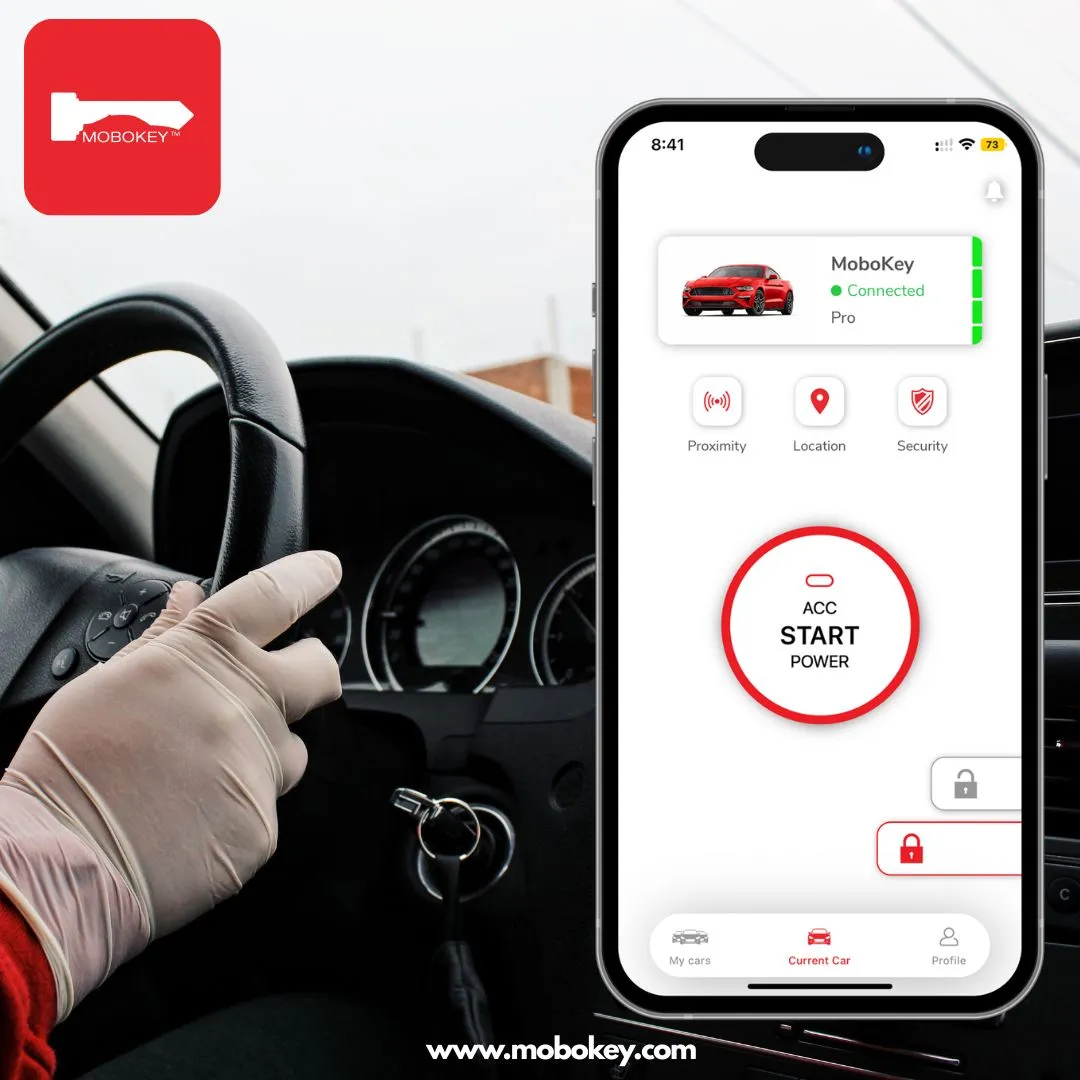
At MoboKey, we believe the ultimate digital car key should be hands-free and powerful. While many manufacturers are moving toward a hybrid BLE+NFC solution, MoboKey prioritizes Bluetooth Low Energy for its unmatched versatility.
Our system is specifically designed to overcome common Bluetooth limitations:
-
Extended Range: While standard BLE is limited, MoboKey provides stable control from up to 300 feet away.
-
Internet-Free Access: Unlike cloud-based NFC keys that may require a data connection to verify credentials, MoboKey’s Bluetooth link is entirely offline, ensuring you’re never locked out in a remote area.
-
Customizable Security: We use high-level AES encryption to ensure your Bluetooth signal is just as secure as a physical tap.
Experience the Future of Access
Why settle for tapping your phone against a door when you can have a car that greets you as you arrive? Modernize your vehicle with the most advanced Bluetooth-based digital key on the market.
Ready to upgrade your car?
Download the MoboKey App from the App Store or Play Store.