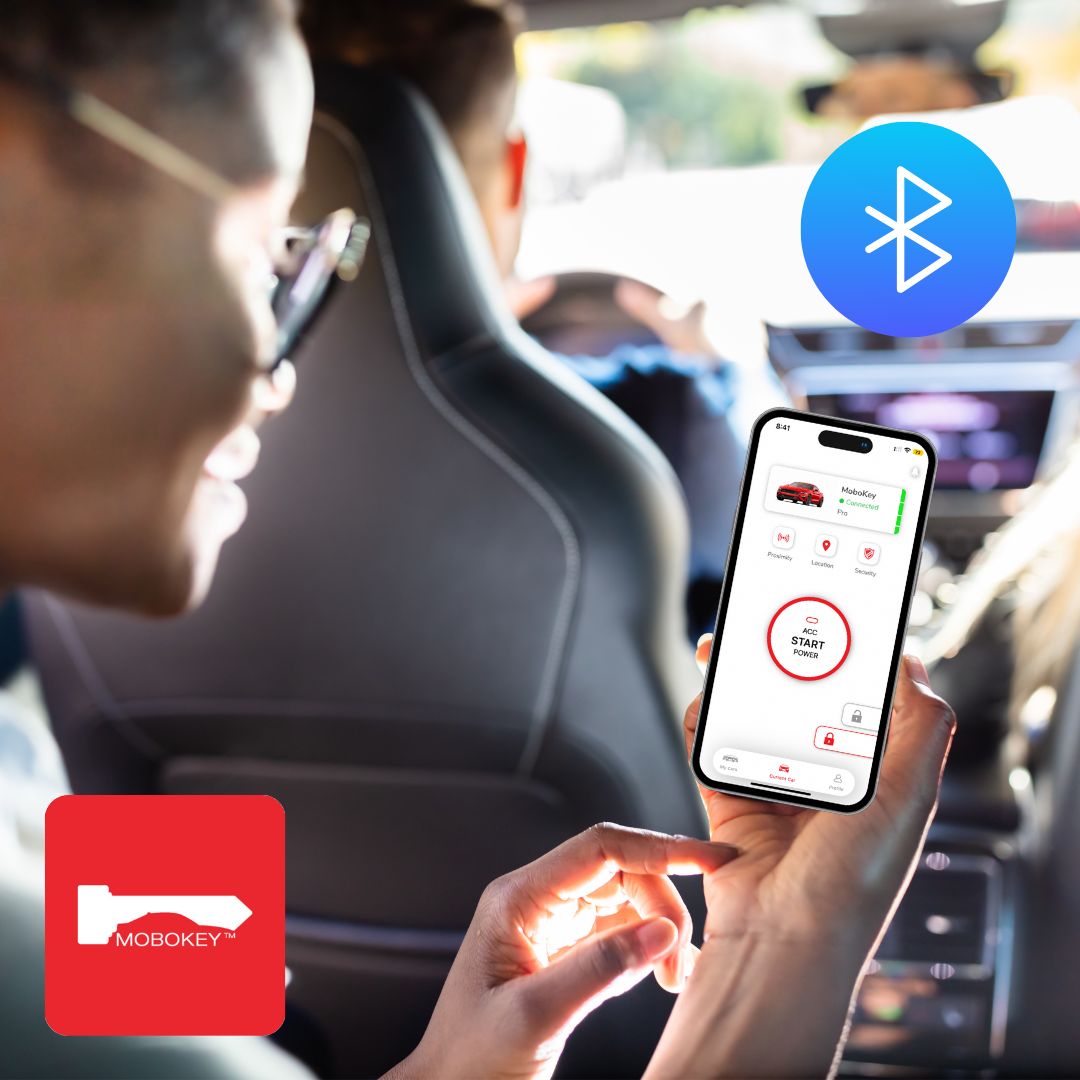
Smart car access means using your smartphone as the car’s key: unlocking, locking, starting, and sharing the vehicle digitally instead of with metal or a fob. MoboKey builds this on Bluetooth Low Energy rather than cellular, and the choice matters — Bluetooth works with zero internet at the car, responds instantly at short range, uses almost no battery, and carries no monthly data fees. The result is smart car access that works in underground garages, dead zones, and anywhere else a connected-car app gives up. update date to August 2026
The evolution of car access systems has led to innovative solutions that enhance convenience, security, and functionality. Among these advancements, Bluetooth technology has emerged as the foundation of MoboKey’s smart car access platform. It offers seamless car sharing, remote start capabilities, and robust security features, making it indispensable for modern mobility solutions.
What Is Smart Car Access?
Smart car access replaces the physical key with a digital credential on your phone. Instead of a chip inside plastic, your authorization lives in an encrypted app — which means it can do things metal never could: expire on a schedule, transfer to another person in seconds, and revoke itself instantly.
Three technologies power smart access systems in 2026, and they differ where it counts:
| Technology | How it connects | Needs internet at the car? | Monthly cost |
|---|---|---|---|
| Bluetooth Low Energy (MoboKey) | Phone talks directly to the car | No | None |
| Cellular / GSM systems | Phone → servers → car | Yes | Data plan fees |
| NFC tap-to-unlock (some OEMs) | Tap phone on the door | No | Tied to brand |
Cellular systems offer unlimited range but fail exactly where cars park — concrete garages and low-signal areas — and bill for a data plan per vehicle. Bluetooth trades unlimited range for reliability at the moments that matter: arriving at the car and driving away. For the full comparison, see GSM or Bluetooth: choosing the right remote car access system.
The Advantages of Bluetooth Technology in Smart Car Access
1. Seamless Connectivity
Bluetooth is the ideal choice for car access due to its reliable short-range communication. Unlike traditional keys or Wi-Fi-based systems, Bluetooth enables instant pairing between the MoboKey device and a smartphone, ensuring hassle-free access. This is the same principle behind how a digital car key works. This technology works without the need for constant internet connectivity, making it a practical solution even in areas with limited network coverage.
2. Enhanced Security Features
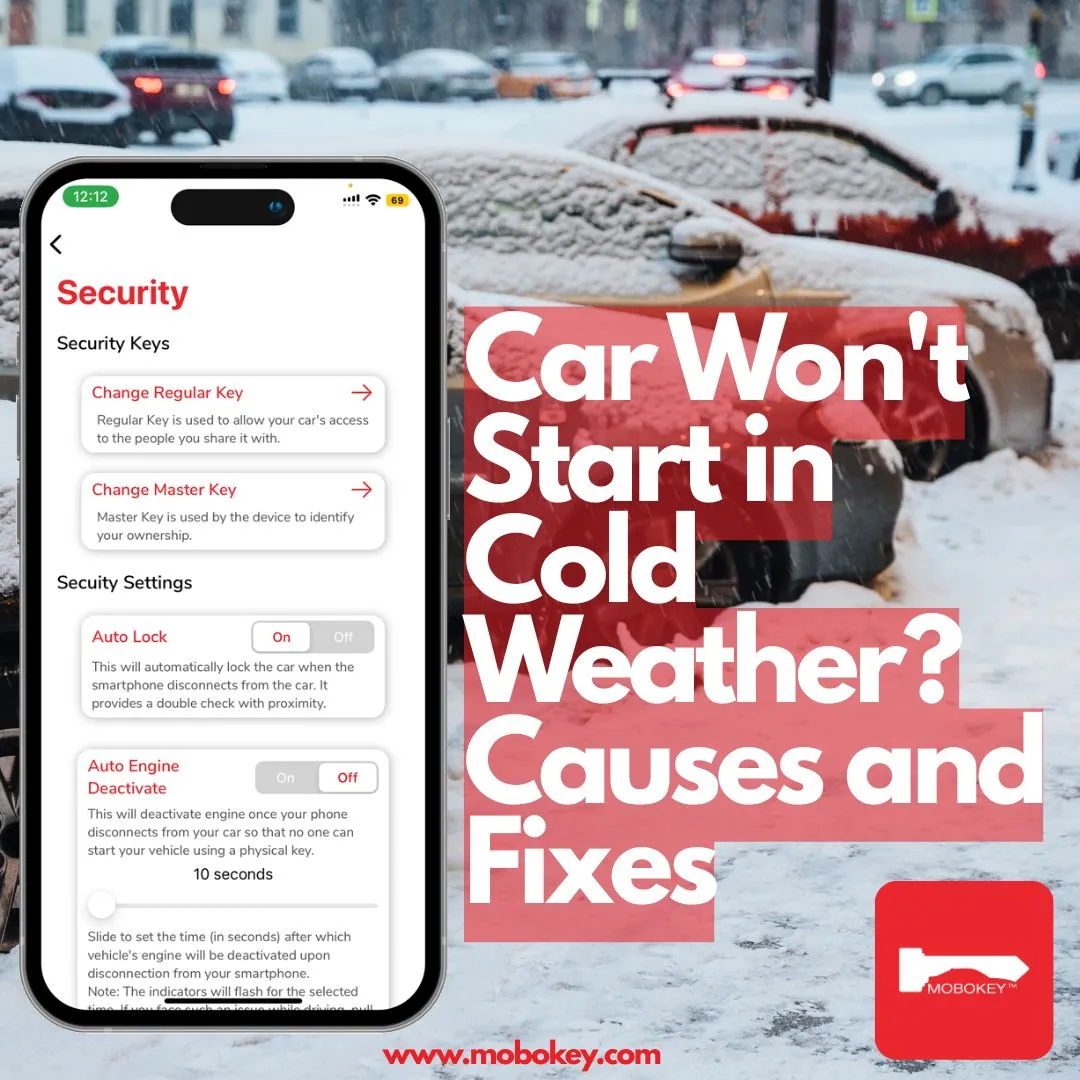
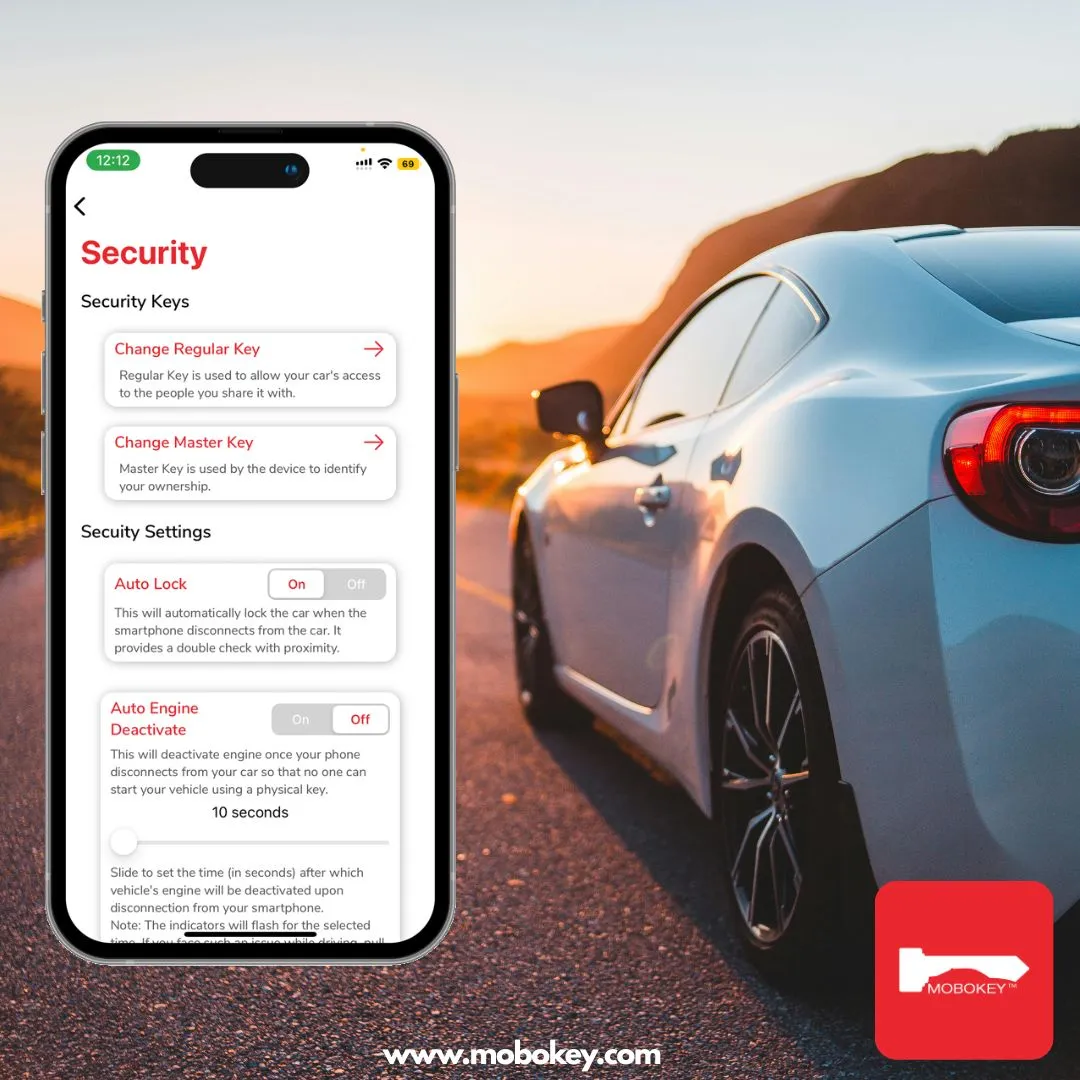
Bluetooth communication is encrypted, ensuring that only authorized devices can interact with the car. MoboKey employs advanced encryption protocols to prevent hacking attempts and unauthorized access, offering peace of mind to car owners and fleet managers.
3. Low Energy Consumption
Bluetooth Low Energy (BLE) technology powers MoboKey’s system, ensuring minimal battery usage. This is essential for devices that require constant connectivity without draining the car or smartphone’s battery.
Why MoboKey Chooses Bluetooth Technology
Smart Car Access and Control
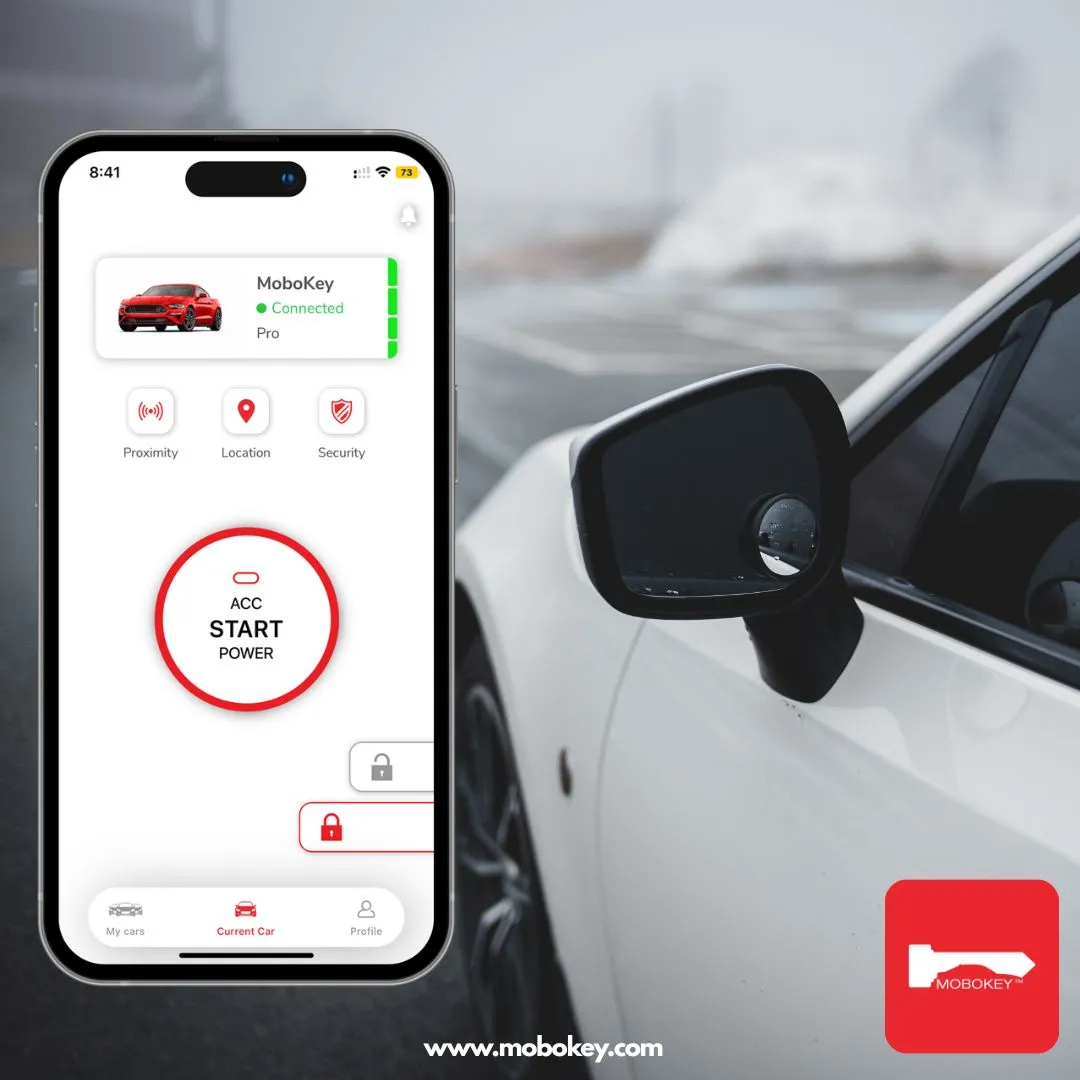
Bluetooth technology allows MoboKey users to unlock, lock, and start their vehicles remotely. With proximity detection, the car automatically unlocks when the authorized user approaches, adding another layer of convenience. See remote lock and unlock in practice.
Compatibility with Smart Devices
MoboKey’s app leverages the ubiquity of Bluetooth-enabled smartphones. Users can manage access levels, track car usage, and even share digital keys through their mobile devices, simplifying operations for car-sharing businesses. Here is the full guide to sharing your car key with family.
Cost-Effective Implementation
Bluetooth technology is both affordable and scalable, reducing the cost of deploying MoboKey’s car-sharing solutions. This affordability makes it accessible for individuals and businesses alike.
The Future of Smart Car Access
In 2026, Bluetooth remains the backbone of smart car access — the Bluetooth SIG’s Low Energy standard now ships in effectively every smartphone, which is precisely why it became the industry’s default for vehicle access. From rental fleets to peer-to-peer car sharing, MoboKey’s Bluetooth-based platform is leading the way in transforming how we interact with our vehicles. With its focus on sustainability, cost-effectiveness, and security, MoboKey is revolutionizing the car-sharing landscape.
By leveraging the power of Bluetooth technology, MoboKey ensures that car sharing, rentals, and secure access are not just efficient but also future-ready.
Take Action Today
Secure your vehicle with MoboKey’s innovative solutions. Learn more at MoboKey Official Website.
Download the application here: Go to Play Store or App Store!
Frequently Asked Questions: Smart Car Access
Smart car access means your smartphone acts as the car’s key; unlocking, locking, starting, and sharing the vehicle through an encrypted app instead of a physical key. Systems like MoboKey add it to over 90% of vehicles, including older models.
Bluetooth-based systems do not. MoboKey’s key exchange happens directly between your phone and the car over encrypted Bluetooth, so access works in underground garages and dead zones. Cellular-based systems, in contrast, need signal at both the phone and the car.
Yes. MoboKey uses AES-encrypted Bluetooth communication, pairs only with authorized devices, and logs every access event. Unlike a key fob, there is no constantly broadcasting signal for relay thieves to capture — and a remote kill switch backs up the access layer.
No. Bluetooth Low Energy is designed for exactly this job — it uses a tiny fraction of the power of cellular or Wi-Fi. The MoboKey device’s standby draw is comparable to the car’s own parked electronics.
MoboKey installs on over 90% of vehicles — key-start and push-start, automatic and manual, from 1990s models to current ones. The original keys keep working as backup.
Bluetooth connects your phone directly to the car: instant, offline, and free to run, within 100 to 350 feet. GSM/cellular systems route commands through servers: unlimited range, but dependent on signal and a paid data plan per vehicle. Most owners and operators only ever need the first.