Yes, but the radio is innocent. Cold weather affects keyless entry through its batteries: the coin cell in your fob, the lithium battery in your phone, and the 12V battery in the car. All three deliver less power as temperatures drop, which shrinks fob range, drains phones faster, and makes keyless systems act erratic. The Bluetooth and radio signals themselves handle cold fine. Keep the batteries healthy and warm, and keyless entry works all winter often better than a frozen metal lock.
Why Do Key Fobs Fail in Winter?
Blame the coin cell. Fobs run on small lithium batteries, and cold temperatures reduce the voltage they deliver. A fob at 50% charge works fine in September, then barely reaches the car in January. The symptoms follow a pattern: shrinking range first, then intermittent response, then nothing.
The fix is cheap and preventive. Replace fob batteries each fall, they cost a few dollars. rather than discovering the weakness on a freezing morning. Meanwhile, a fob that fails completely usually still starts the car: hold it against the start button or steering column, and the immobilizer reads the chip directly, no battery needed.
Does Cold Weather Drain Your Phone Battery?
Dramatically, below freezing. Lithium-ion chemistry slows in the cold, so the battery delivers less of its stored energy. According to Battery University, capacity falls sharply below 32°F, and phones can shut down entirely in extreme cold despite showing charge remaining.
This matters for any phone-as-key system, so build two habits. Carry the phone in an inside pocket, where body heat keeps it warm, rather than an outer coat pocket or bag. Additionally, start winter days above half charge. A warm phone at 60% will outlast a cold phone at 90%.
What About the Car’s 12V Battery?
It runs the whole keyless show. The receivers that listen for your fob or phone draw from the car’s main battery and cold cuts that battery’s output by a third or more. A weak 12V battery therefore causes strange keyless symptoms: slow lock response, ignored unlock commands, or a system that works at noon but not at dawn.
If keyless entry gets flaky in winter, test the car battery before replacing fobs. The starting side of this story, slow cranks, clicking, cold no-starts — is covered in car won’t start in cold weather, and the general diagnosis path lives in immobilizer, battery, or starter: how to tell.
What Actually Freezes on the Car?
The mechanical parts, not the electronics. Door seals freeze to frames after freezing rain. Lock actuators stiffen. Handles ice over. Ironically, the oldest components on the car fail before the newest ones do.
Prevention takes five minutes in the fall. Wipe door seals with a silicone-based rubber protectant, so water cannot bond the rubber to the frame. Keep a de-icer sprayer at home not in the glovebox of the car you cannot open. And if one door freezes shut, try the others; the sunny side of the car usually opens first.
How Does MoboKey Handle Winter?
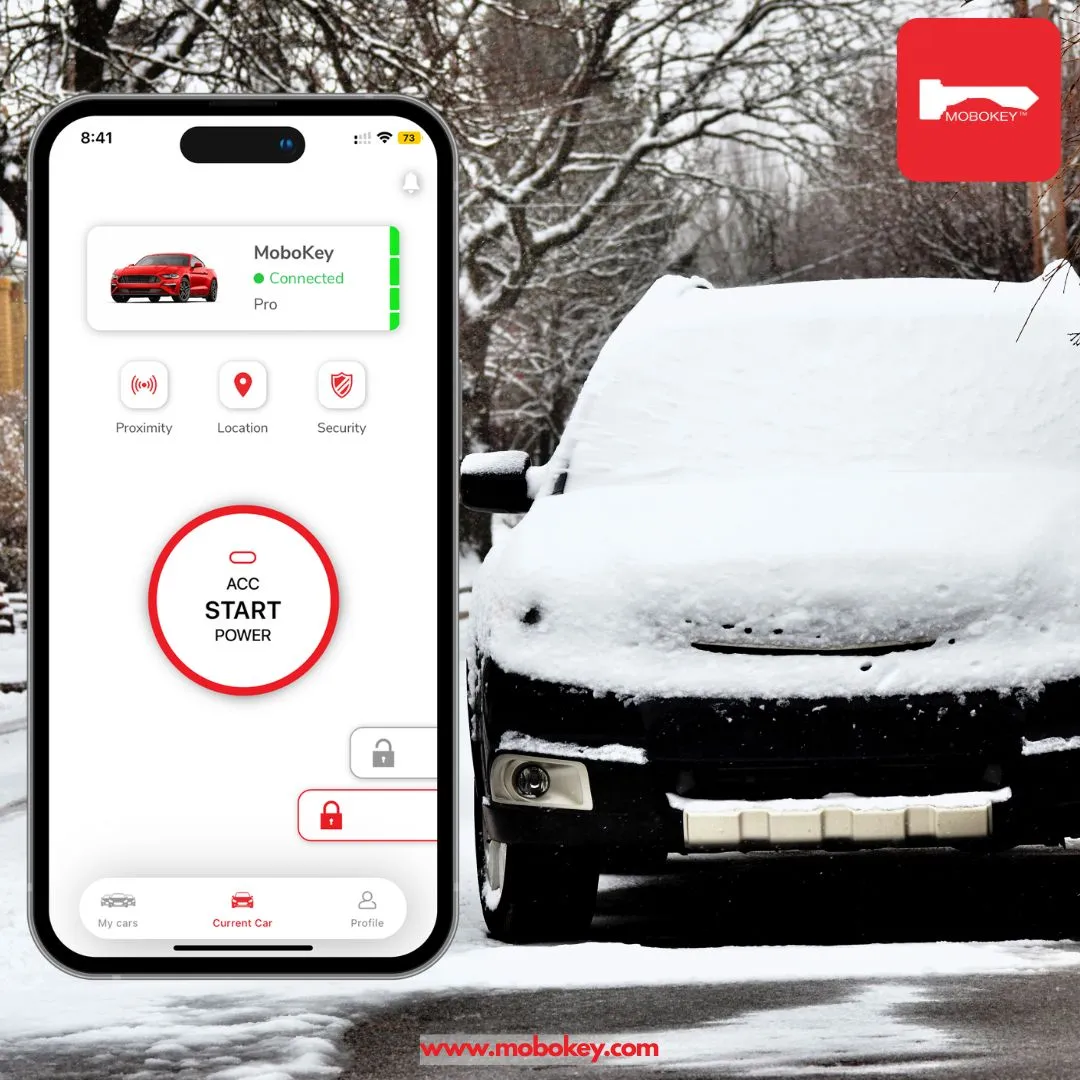
By removing the weakest links. The MoboKey device draws power from the car itself, so there is no coin cell to die in the cold. Your phone is the key, and hands-free proximity unlock means it stays in your warm inside pocket — the doors unlock as you approach, no glove-fumbling with buttons or touchscreens required.
The backup story is stronger than a fob’s, too. If your phone dies in the cold, anyone you have shared a digital key with can unlock the car from their own phone, anywhere. Bluetooth Low Energy sips phone battery even in winter, and the encrypted connection works the same at 0°F as at 70°F. New to the concept? Start with how a digital car key works.
Frequently Asked Questions: Keyless Entry in Cold Weather
Yes, through batteries rather than signals. Cold weakens fob coin cells, drains phone batteries faster, and cuts the car’s 12V battery output — all of which make keyless systems sluggish or unresponsive. The radio and Bluetooth signals themselves are unaffected.
Its coin cell delivers less voltage in freezing temperatures, so a half-worn battery effectively fails. Replace fob batteries each fall. If the fob dies completely, hold it against the start button the chip still works without battery power.
Yes, sharply below freezing. Lithium-ion batteries deliver less energy when cold, and phones can shut down early despite showing charge. Carry your phone in an inside pocket and start winter days above half charge.
Absolutely. The keyless receivers run off the car’s 12V battery, so a cold-weakened battery causes slow or ignored lock commands — often before it fails to start the engine. Erratic winter keyless behavior is a reason to test the battery.
Yes. The radio link is unaffected by cold within any temperature a person would stand in. The practical limit is the phone’s battery, which is why keeping the phone warm matters more than anything about the signal.
With MoboKey, a family member with a shared digital key unlocks the car from their phone, from anywhere. That remote backup works even when your phone is dead in your pocket a stronger fallback than a frozen spare fob.
Ready to go keyless? Visit mobokey.com or contact us today to get started.