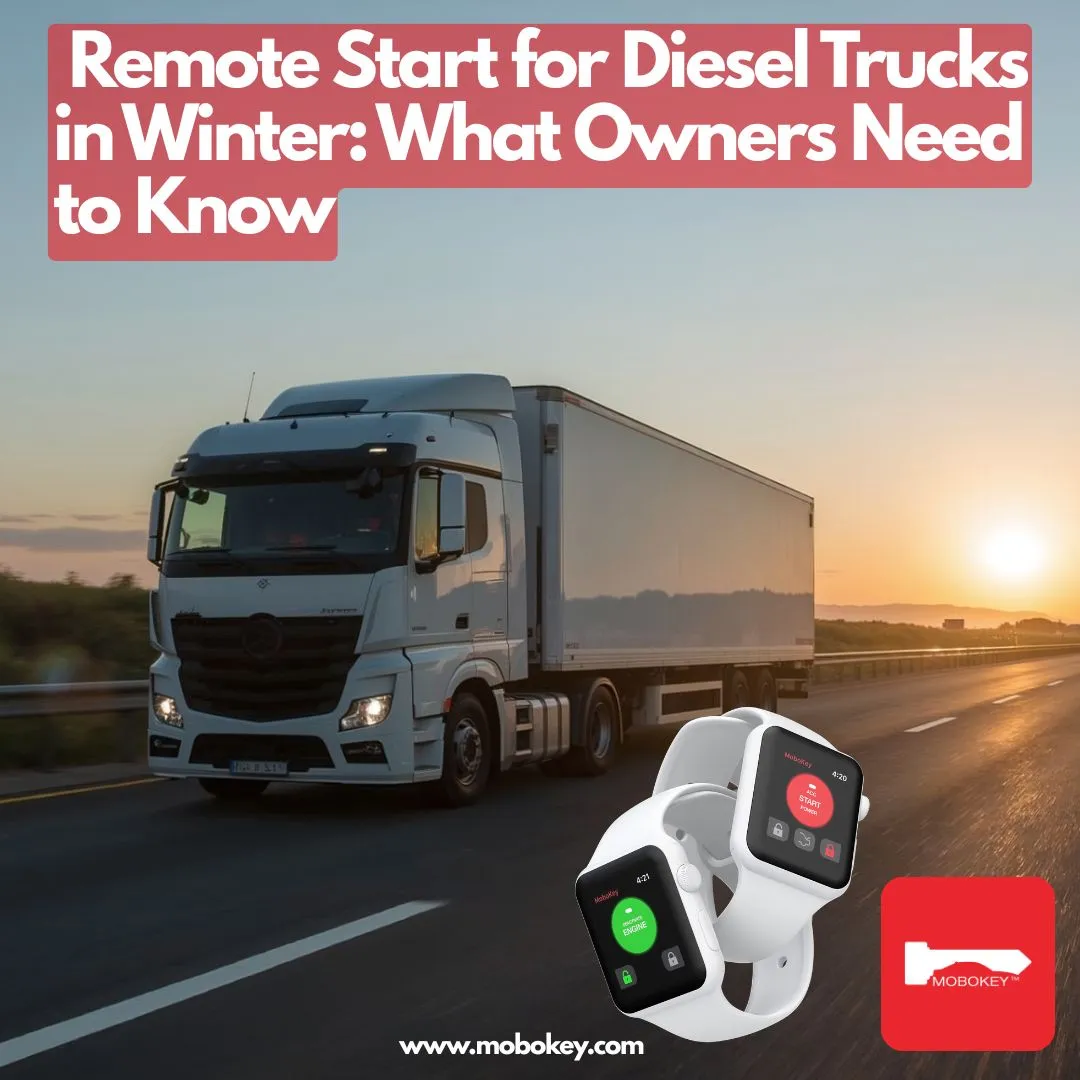
Yes, diesel trucks can use remote start, winter is exactly why owners want it. The catch is the installation: a diesel must complete its glow plug cycle before cranking, so the system needs to honor that wait-to-start sequence rather than turning the engine over cold. Get that right, and remote start becomes the diesel owner’s best winter tool: the engine and cabin warm while you finish your coffee. Just know its limits, it will not replace a block heater in extreme cold, and it cannot un-gel frozen fuel.
Why Are Diesels Harder to Start in the Cold?
Because diesels ignite fuel with heat they have to build themselves. There are no spark plugs; compression alone heats the air enough to ignite the fuel. Cold air fights that process, which is why glow plugs exist, they preheat the combustion chambers for several seconds before cranking. That is the “wait to start” light on your dash.
Cold stacks two more problems on top. First, batteries: diesels demand far more cranking power than gas engines, and many trucks run two batteries because of it, both weakened by cold. Second, the fuel itself: standard diesel begins clouding with wax crystals in the teens and can gel solid below that, starving the engine entirely. Winter blends and anti-gel additives exist for exactly this reason.
What Makes a Diesel Remote Start Installation Different?
The start sequence. A gas engine can crank the moment the command arrives. A diesel must wait for the glow plugs, so the remote start system needs a crank delay that respects the wait-to-start cycle. Quality installations handle this; rushed ones produce hard starts and premature wear.
So ask your installer three questions. Does the system honor the glow plug cycle before cranking? Is it configured for the truck’s battery setup? And does it verify the transmission is in park with the parking brake logic intact? The general process is covered in the remote car starter installation guide — diesel adds the timing layer on top.
Do You Still Need a Block Heater?
Below roughly 10°F, yes. Remote start and block heaters solve different problems, and serious cold needs both:
| Temperature | What your diesel needs |
|---|---|
| Above freezing | Remote start alone — normal glow plug cycle |
| 32°F to ~10°F | Remote start, healthy batteries, winter fuel blend |
| Below ~10°F | Block heater (plugged in 2–4 hours) plus remote start |
| Extreme cold | Block heater, anti-gel additive, sheltered parking |
The logic is simple. A block heater warms the engine before starting; remote start warms everything after. Cummins’ cold-weather operation guidance reflects the same layered approach: preheat, start properly, then load the engine gently. If the truck cranks but will not catch on a frigid morning, work through our cold weather no-start guide before blaming the starter.
Should Diesels Idle to Warm Up?
Briefly — then drive gently. Extended idling is actually worse for modern diesels than for gas engines. Diesel particulate filters (DPF) load up with soot during long idles, forcing more regeneration cycles, and older engines risk wet stacking — unburned fuel washing into the exhaust. A few minutes of warm-up idle is useful; twenty minutes is counterproductive.
For work trucks that must idle on site, use the manufacturer’s high-idle mode, which keeps temperatures where the engine wants them. For everyone else, the gas-engine rule applies with a diesel accent: short warm-up, then light throttle until the gauge climbs. Our guide to how long you should warm up your car covers the idle myth in full.
How Does MoboKey Work on Diesel Trucks?
As a one-time purchase with the installation done right. MoboKey adds phone-based remote start to key-start and push-button start vehicles over encrypted Bluetooth — no subscription, no cellular module. Professional installation configures the start sequence for your truck, glow plug cycle included.
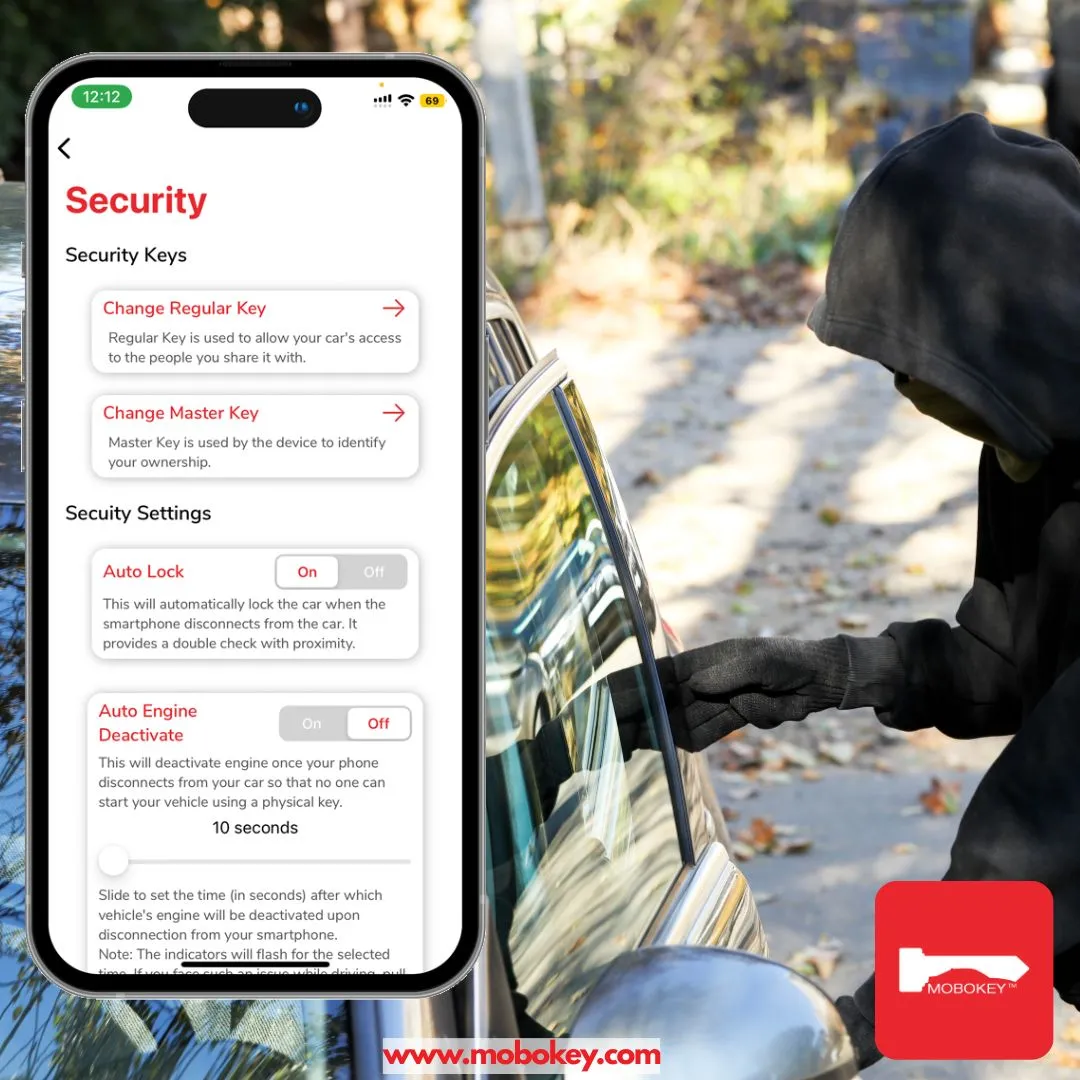
The security half matters even more for diesel owners. Full-size pickups sit at the top of vehicle theft lists year after year, and winter’s idling season makes them easier targets. The same MoboKey device adds a remote engine kill and proximity immobilization — the full picture is in the kill switch guide for trucks. One device warms the truck legally and makes it far harder to steal.
Frequently Asked Questions: Diesel Remote Start
Yes. The system must honor the glow plug cycle — a crank delay that waits for the preheat before turning the engine over. With that configured, remote start works as reliably on diesels as on gas engines.
Properly installed, yes. The start sequence triggers the glow plug preheat first, waits out the cycle, then cranks — the same order you follow with the key. Confirm this configuration with your installer before winter.
Below roughly 10°F, yes. A block heater preheats the engine so it can start; remote start warms the engine and cabin after it starts. In serious cold, the two work together rather than replacing each other.
A few minutes at most, then drive gently. Extended idling loads the particulate filter with soot and risks wet stacking on older engines. Work trucks that must idle should use the manufacturer’s high-idle mode.
The usual order: weakened batteries, gelled fuel, or glow plug problems. Diesels need heavy cranking power, cold cuts battery output sharply, and standard fuel gels in the teens. Winter blends, battery tests, and a block heater prevent most of it.
For winter mornings alone, most owners say yes — and the same hardware adds theft protection. Pickups top the stolen-vehicle lists, so MoboKey’s remote engine kill and proximity immobilization often justify the device before the first cold start does.
Ready to go keyless? Visit mobokey.com or contact us today to get started.