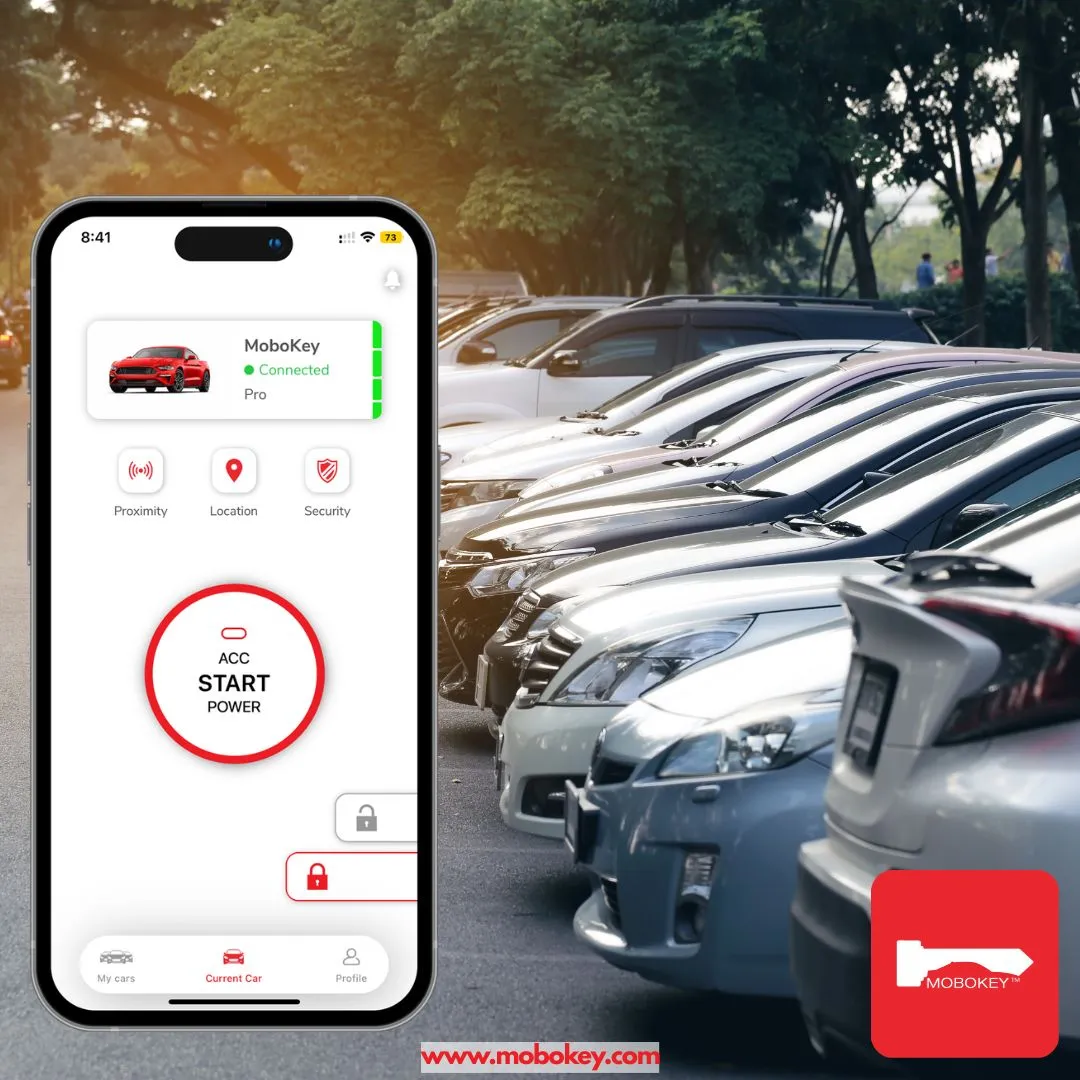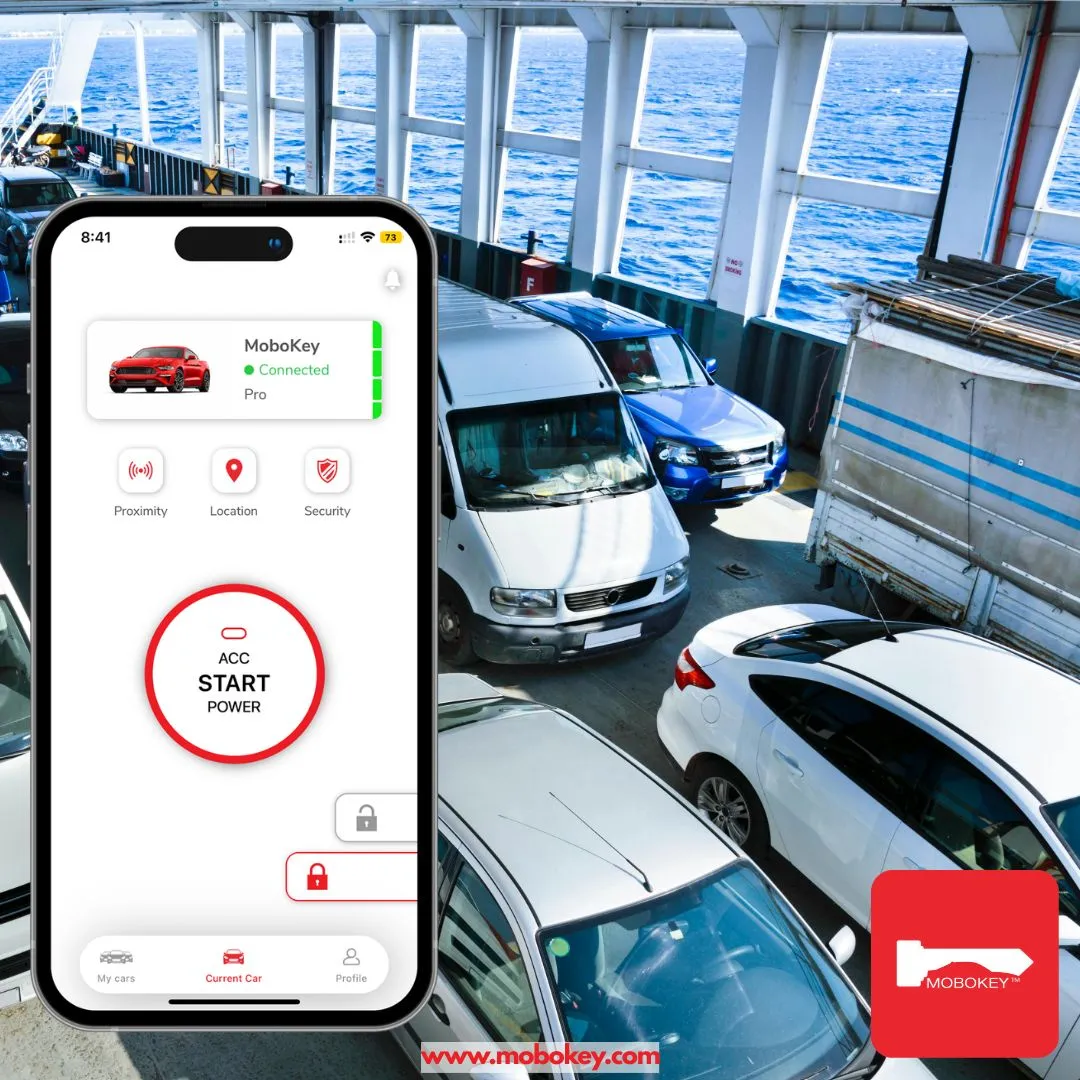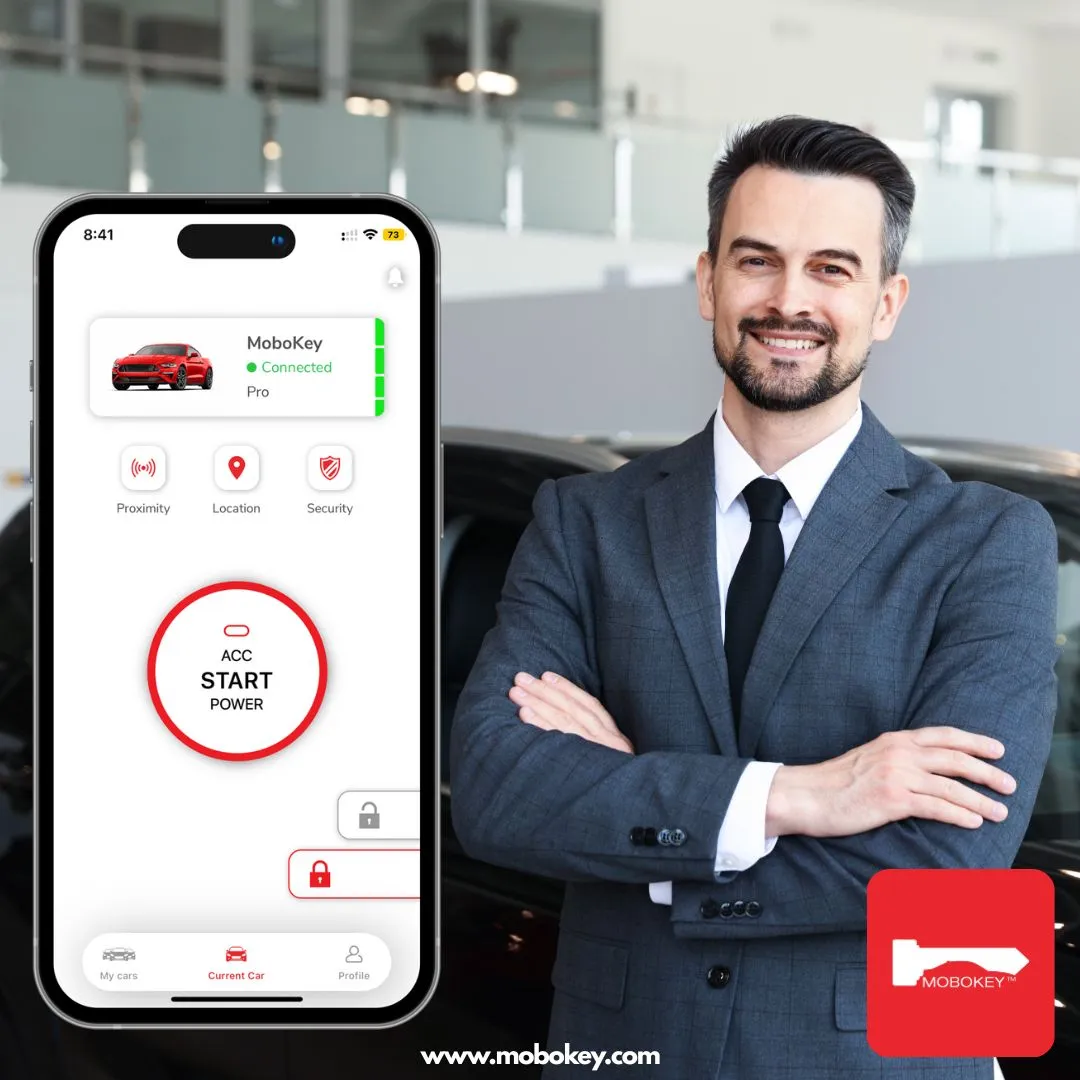
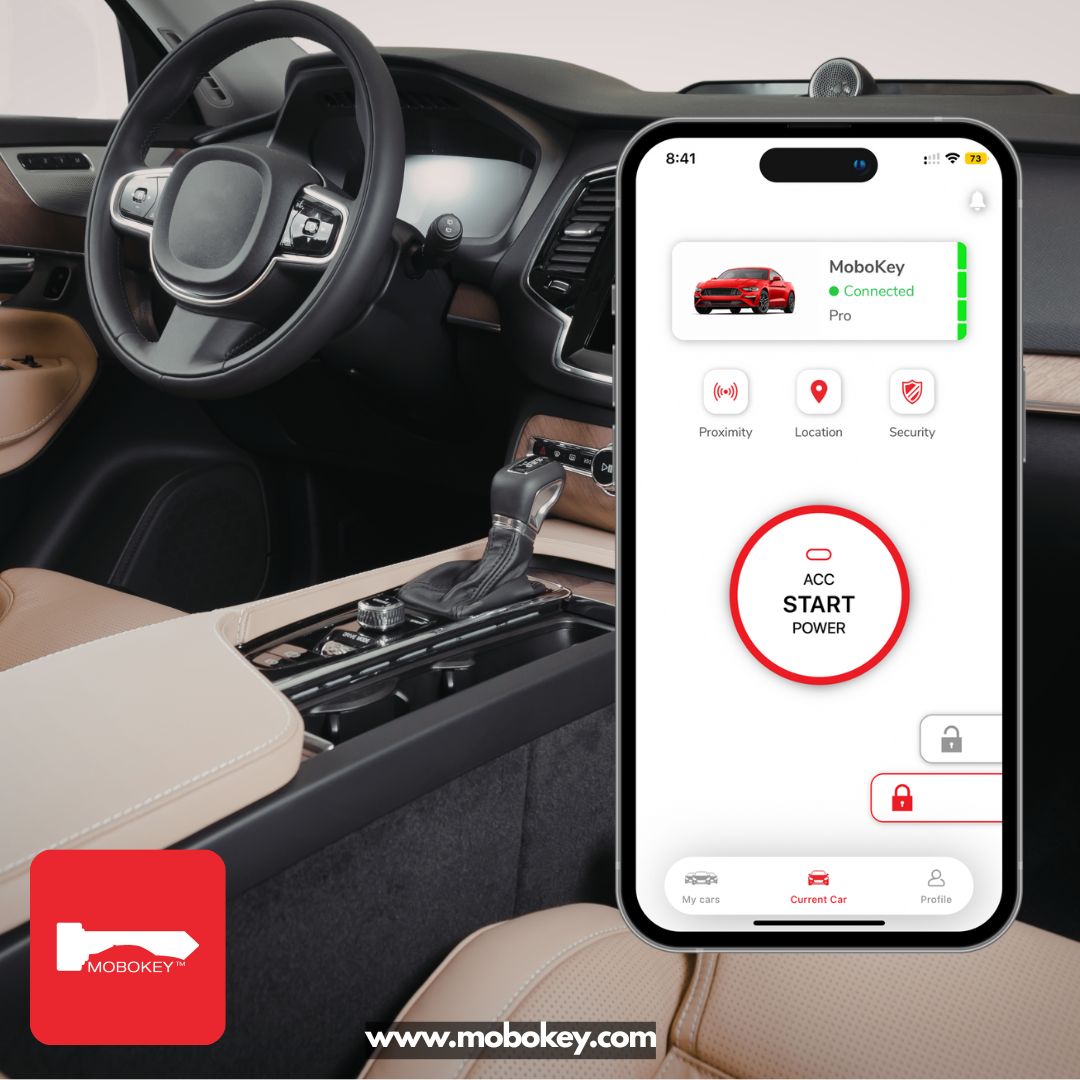
For over a century, the ritual of driving has started the same way: you reach into your pocket, pull out a piece of metal or plastic, and physically engage the vehicle. Whether it was the jagged metal keys of the 90s or the bulky plastic fobs of the 2000s, the “key” has always been a physical object—something you can lose, break, or forget. But today, the device you use for banking, communication, and navigation is taking over the role of vehicle access. Digital car key technology is rapidly becoming the new standard for vehicle security and convenience.1 It promises a future where your smartphone is the only tool you need to drive. But for many drivers and fleet managers, the concept raises questions. Is it safe? How does it actually connect to the car? Do you need a brand-new luxury vehicle to use it?
In this educational guide, we will break down exactly what a digital car key is, the difference between Bluetooth (BLE) and NFC technologies, and how aftermarket solutions like MoboKey are democratizing this technology for every car on the road.
What is a Digital Car Key?
At its simplest, a digital car key is a virtual credential stored on your smartphone or wearable device that allows you to lock, unlock, start, and share your vehicle without a physical key. Unlike a traditional key fob, which broadcasts a simple radio frequency (RF) signal, a digital key utilizes the advanced computing power and connectivity of your smartphone. It communicates with a receiver inside the car to authenticate your identity.
OEM vs. Aftermarket Solutions
There are generally two ways to get a digital key:
-
Factory Installed (OEM): High-end vehicles (like Tesla, BMW, or the latest Hyundai models) come with digital key hardware built-in.
-
Aftermarket Solutions (MoboKey): This is where the real revolution is happening. By installing a smart module inside the car, MoboKey allows virtually any vehicle—whether it’s a 2005 Toyota or a brand-new Ford fleet truck—to accept digital keys.
This distinction is vital because it means digital key technology isn’t just for the wealthy buying the latest EVs; it is an accessible upgrade for anyone wanting to modernize their current vehicle or fleet.
The Technology Behind Digital Keys (BLE vs. NFC)
Not all digital keys work the same way. There are two primary technologies used to bridge the gap between your phone and your car: Near Field Communication (NFC) and Bluetooth Low Energy (BLE).
Understanding the difference is crucial because it dictates the “user experience” you will have every day.
1. Near Field Communication (NFC)
NFC is the same technology used for contactless payments like Apple Pay or Google Pay.
-
How it works: It uses short-range radio waves. To unlock your car, you must physically take your phone out of your pocket and tap it against the door handle (specifically, near the NFC reader embedded in the handle).
-
The Pros: It works even if your phone has a dead battery (for a limited time on some devices) and is very secure due to the short range.
-
The Cons: It is not truly “hands-free.” You still have to fumble for your phone, which can be inconvenient if you are carrying groceries or if it is raining.
2. Bluetooth Low Energy (BLE): The MoboKey Standard
Bluetooth Low Energy is the technology of choice for most advanced aftermarket systems, including MoboKey.
-
How it works: Your phone broadcasts an encrypted, low-power signal that the car can detect from a distance (up to 300 feet).
-
The Pros: BLE allows for a Passive Keyless Entry experience. You can keep your phone in your pocket or purse. As you approach the vehicle, the system recognizes the encrypted signal and automatically unlocks the doors. When you walk away, it locks them.
-
Offline Capability: A common misconception is that you need cellular data (4G/5G) to use a digital key. With BLE, the communication happens directly between your phone and the car. This means you can unlock and start your car in an underground parking garage with zero cell service.
Why MoboKey Uses BLE:
We prioritize BLE because it offers the most seamless experience. The “Proximity” feature, where the car wakes up as you approach, is only possible with the range capabilities of Bluetooth. It transforms the car from a passive machine into a smart device that reacts to your presence.
How to Set Up a Digital Key on Your Smartphone
For many users, the idea of “installing” a digital key sounds complex. However, the process is streamlined into two phases: the one-time hardware installation and the app setup.
Here is how the process works for a system like MoboKey:
Step 1: The Hardware Installation
Because most cars on the road today did not come with Bluetooth receivers for locking mechanisms, a small hardware module is required.
-
Connection: The MoboKey device is installed inside the dashboard. It is wired into the car’s electronic control unit (ECU) to manage the locking, unlocking, and ignition circuits.
-
Security: This device essentially acts as a gatekeeper. It waits for the correct encrypted command from your phone before it triggers the car’s physical locks or starter.
Step 2: The App “Handshake”
Once the hardware is in, the smartphone setup takes less than two minutes:
-
Download the App: Users download the MoboKey app (iOS or Android).
-
Bluetooth Pairing: Stand near the vehicle with Bluetooth enabled. The app will search for the new module.
-
Claim Ownership: You will enter a unique Master Key provided with your device. This is a critical security step that “binds” that specific hardware unit to your phone account.
-
Calibration: You can customize the “zones.” For example, you can set the app to unlock the car when you are 5 feet away, or 10 feet away, depending on your preference.
Once paired, your phone is the master key. You can now leave your physical keys at home.
Key Features: Remote Locking, Sharing, and Tracking
Moving to digital keys unlocks a suite of features that physical keys simply cannot match. It shifts vehicle access from a mechanical action to a software-defined experience.
1. Instant Digital Key Sharing
This is perhaps the most transformative feature for families and businesses.
-
The Problem: If you want to lend your car to a friend or employee, you have to physically meet them to hand over the key. If they lose it, you are stranded.
-
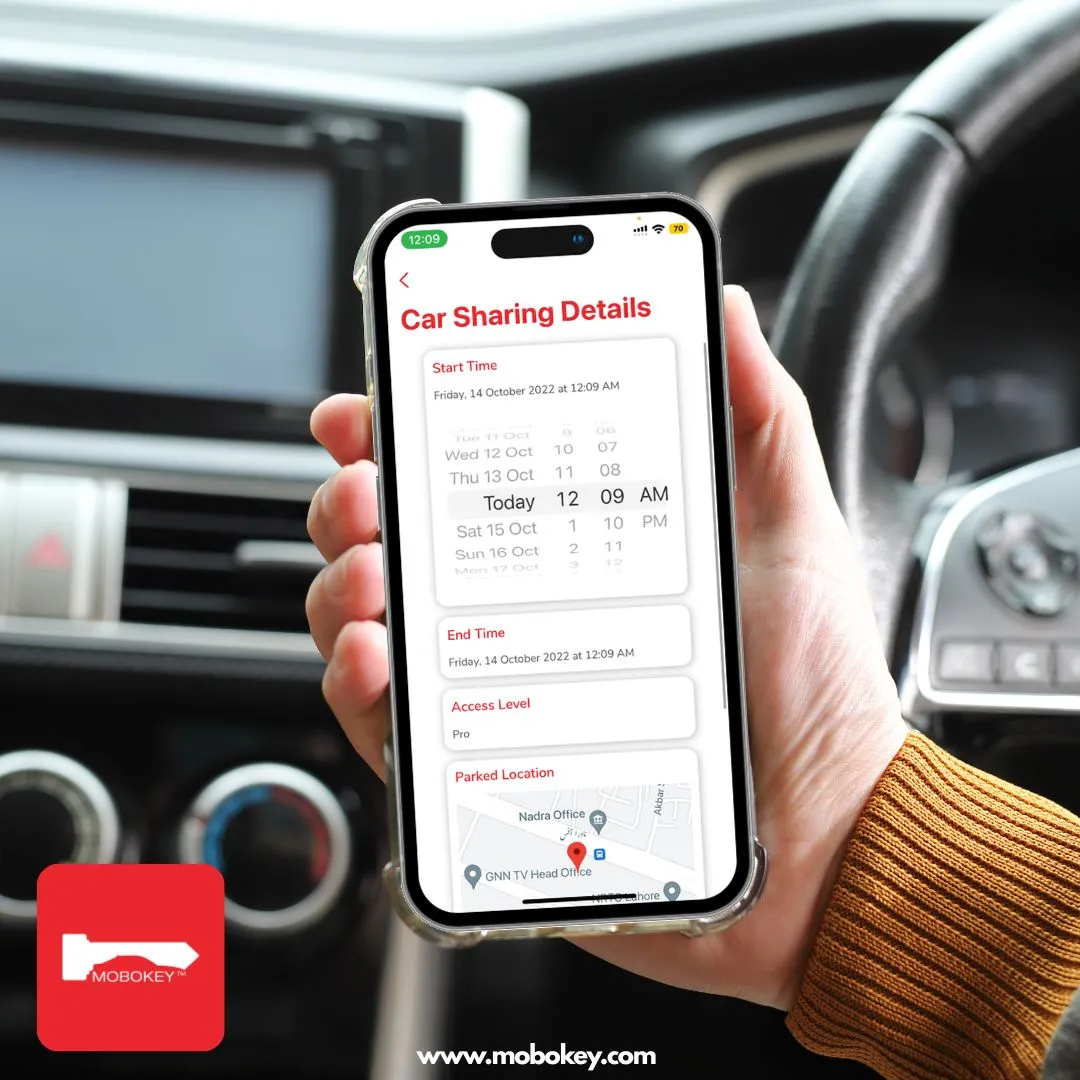
The Digital Solution: With MoboKey, you can “send” a key to anyone’s phone via the app. You simply enter their email or phone number, and they receive a digital credential.
-
Control: You can set strict parameters. For example, you can grant access only from 9:00 AM to 5:00 PM on a specific day. Once the time expires, their digital key stops working. This is a game-changer for car rental businesses (Turo hosts) and fleet managers.
2. Remote Locking and Unlocking
We have all had that moment of panic: “Did I lock the car?”
With a digital key, you don’t need to walk back to the parking lot. If you are within Bluetooth range, you can lock it with a tap. If you are using a version of MoboKey with a cellular bridge, you can lock or unlock the car from anywhere in the world.
3. Advanced Security and Anti-Theft
Physical keys are insecure; they can be stolen or copied at a hardware store. Digital keys use Bank-Grade Encryption.
-
Immobilization: One of the most powerful features of MoboKey is the ability to remotely immobilize the car. If you toggle “Security Mode” in the app, the device cuts the circuit to the engine starter. Even if a thief breaks the window and tries to hotwire the car, the engine simply will not turn over. The car remains dead until you authorize it via your phone.
Future of Car Access: UWB and Beyond
While Bluetooth Low Energy is the current standard for aftermarket accessibility, the industry is already looking toward the next evolution: Ultra-Wideband (UWB).
UWB is a radio technology that offers extreme precision—down to the centimeter. While BLE knows you are near the car, UWB knows you are standing exactly in front of the driver’s door versus the passenger door. This offers a theoretical boost in security against “relay attacks,” where thieves try to amplify a key fob’s signal.
However, UWB currently requires expensive hardware upgrades in both phones and vehicles. For the foreseeable future, BLE remains the most balanced technology, offering the perfect mix of long-range convenience, low battery consumption, and compatibility with the smartphones we already own.
The Verdict
Digital car keys are not a gimmick; they are a fundamental shift in asset management. Whether you are a solo driver tired of carrying bulky keys, or a fleet manager looking to stop key exchanges, the technology is ready, secure, and easy to install.
Ready to ditch your physical keys?
Upgrade your vehicle to the future of access. Download the MoboKey App and get your car connected today.