In the 2026 real estate landscape, the definition of “luxury” has shifted from square footage to operational convenience and sustainability. As urban density increases and the cost of vehicle ownership climbs, real estate developers are discovering that community car sharing is no longer just a perk. It is a powerful tool for value creation. For developers, onsite car sharing offers a unique triple-win: it reduces construction costs, generates recurring revenue, and dramatically increases property desirability.
1. Increasing Asset Value and Marketability
Integrating a dedicated car-sharing fleet directly into a residential or mixed-use development significantly uplifts property value.
-
Premium Rents and Lower Churn: Properties offering onsite mobility solutions report up to 30% lower tenant turnover. Tenants are more likely to renew leases when their lifestyle values. Such as eco-conscious transit and “ownership-free” living are met directly at their doorstep.
-
Market Differentiation: In a competitive market, a branded car-sharing app (like MoboKey Go) sets a building apart from legacy developments, attracting high-value, tech-savvy residents.
2. Radical Cost Savings: The Parking Pivot
The single greatest financial drain for a developer is often the mandated parking-to-unit ratio.
-
Reclaiming Space: One shared vehicle can replace up to 23 private cars. By negotiating with municipal planners to include car sharing, developers can often reduce their parking requirements.
-
Construction ROI: Building a single underground parking spot can cost between $30,000 and $60,000. Reducing a 200-unit building’s parking by just 10% can save millions in capital expenditure funds that can be redirected into higher-margin living spaces or green amenities.
3. The Necessity of 24/7 Keyless Access
The success of residential car sharing hinges on one factor: frictionless access. Tenants expect to use a vehicle with the same ease as their own car, which is why 24/7 keyless technology is non-negotiable.
-
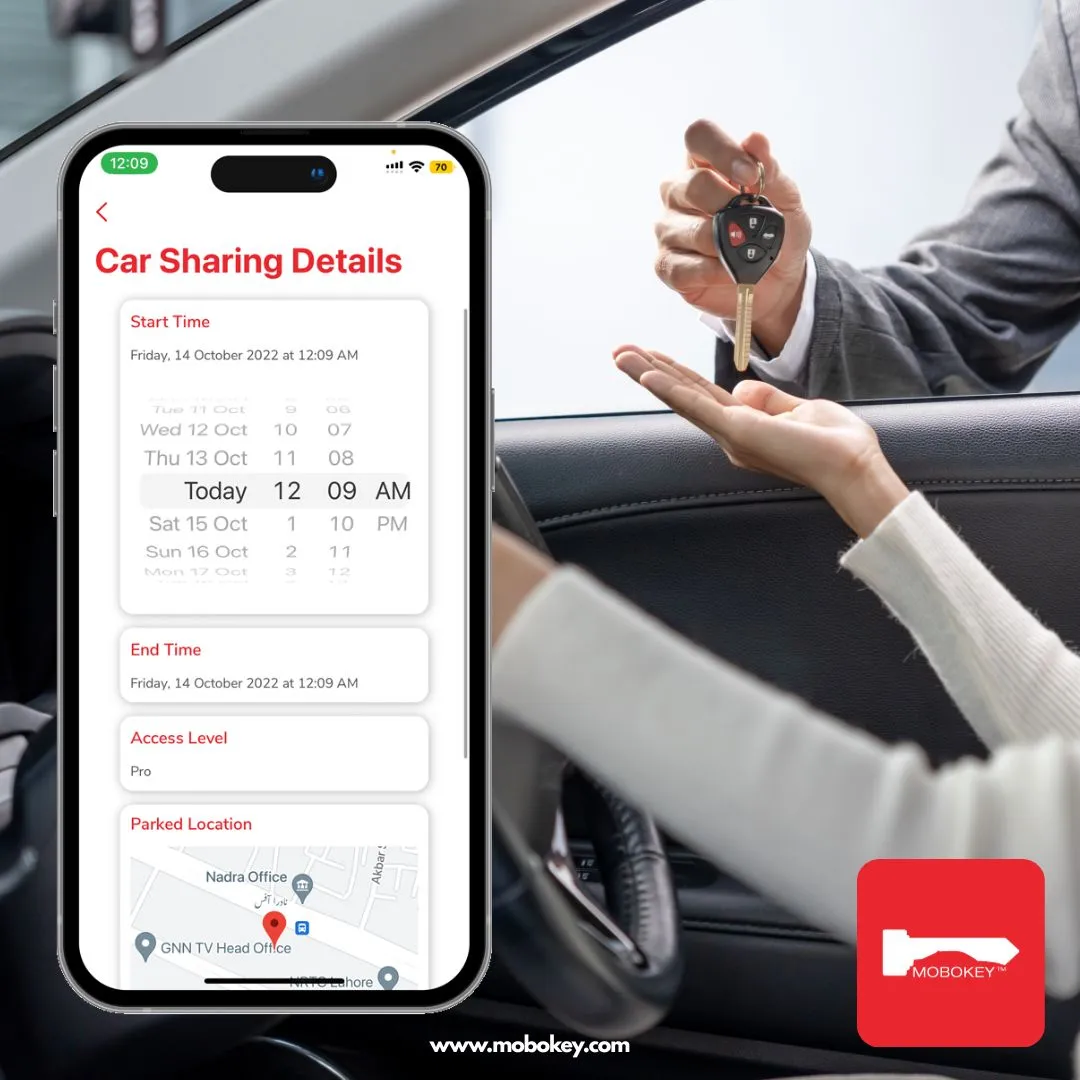
Zero Staffing Overhead: Traditional key handovers are impossible in a residential setting. With MoboKey’s digital keys, tenants use their smartphones to book, unlock, and start vehicles at 2:00 AM or 2:00 PM without any property management involvement.
-
Security and Accountability: Digital keys provide a 100% accurate audit trail. Managers know exactly which tenant accessed which car, and “Remote Engine Kill” features ensure that assets are protected and returned on time.
Comparison: Traditional Parking vs. Community Car Sharing
| Feature | Traditional Parking Focus | Community Car Sharing (MoboKey) |
| Space Efficiency | Low (1 car per 150 sq ft) | High (1 car serves 20+ units) |
| Revenue Model | Static / Low margin | Recurring / Usage-based |
| Construction Cost | $30k–$60k per spot | Minimal (Hardware + Software) |
| Tenant Appeal | Utility only | Lifestyle Perk / Modern Luxury |
| Sustainability | Increases congestion | Reduces Carbon Footprint |
ROI: Future-Proofing Your Investment
By 2026, roughly 10% of the urban population is expected to rely on car sharing as their primary mode of transport. Developers who pivot to an “asset-lite” parking model today are not just saving on concrete; they are building the infrastructure of the future.
Maximize your land use. Explore our Condo Car Sharing solutions or learn how to launch a residential fleet today.
Conclusion: The New Standard for Urban Living
For the modern developer, community-based car sharing is the ultimate hedge against rising construction costs and shifting consumer habits. By providing a secure, 24/7 keyless experience, you offer residents freedom while reclaiming the most valuable part of your property: the space itself.
Ready to increase your property’s value? Talk to our Experts.