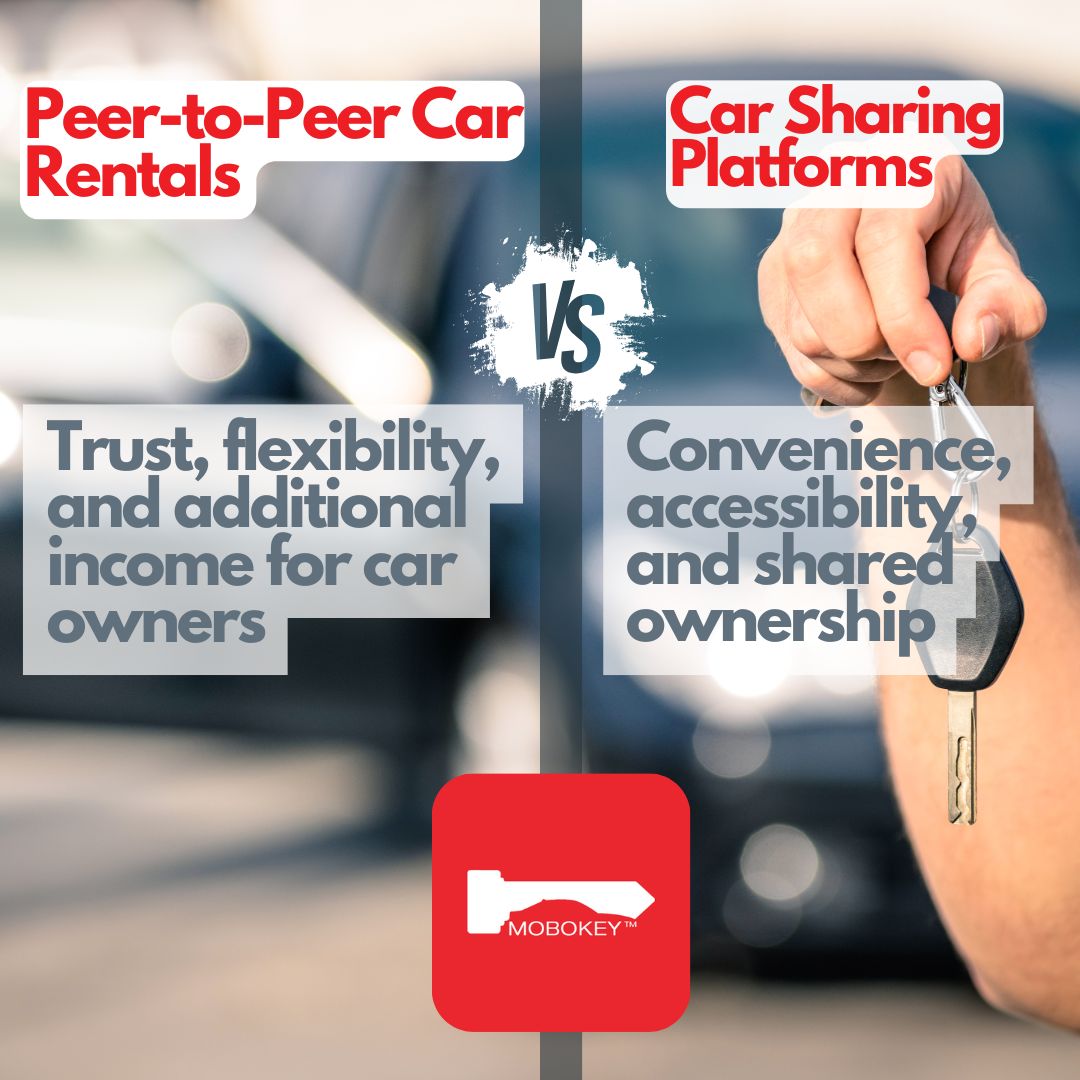
Peer-to-peer car rentals and car sharing platforms both put renters in someone else’s car; the difference is whose. In a P2P marketplace like Turo, individuals list their personal vehicles and earn per booking. A car sharing platform, like Zipcar, owns a company fleet rented by the hour. P2P wins on variety and owner income; fleet sharing wins on short-trip convenience. The operational challenge is identical; getting verified renters into cars without key handovers, which is why both models run on keyless technology like MoboKey. Updated September 2026
As the shared mobility market continues to grow, two models dominate the landscape: Peer-to-Peer (P2P) Car Rentals and Car Sharing Platforms. While they cater to different customer needs, both models face operational challenges that require innovative solutions. Enter MoboKey, a versatile platform designed to streamline operations, enhance security, and elevate user experience for both P2P car rental owners and car-sharing businesses.
Understanding the Differences
Peer-to-Peer Car Rentals
- What It Is: Individuals rent their personal vehicles to others, usually through platforms like Turo.
- Key Focus: Trust, flexibility, and additional income for car owners.
- Challenges: Managing key exchanges, ensuring security, and meeting renter expectations.
Here is how much you can make renting out your car.
Car Sharing Platforms
- What It Is: Businesses provide a fleet of vehicles for short-term use, often in urban areas.
- Key Focus: Convenience, accessibility, and shared ownership.
- Challenges: Fleet management, scalability, and reducing operational costs.
See the current car sharing companies and apps in the USA.
Here is the side-by-side view:
| Factor | Peer-to-peer car rentals | Car sharing platforms |
|---|---|---|
| Who owns the cars | Private individuals | The company |
| Typical booking | Daily to weekly | By the hour |
| Example | Turo (a P2P marketplace) | Zipcar |
| Renter draw | Variety, exact car choice | Grab-and-go convenience |
| Owner/operator draw | Income from an idle asset | Utilization of a fleet |
| Core challenge | Key handovers and trust | Fleet cost and scale |
The models are converging in 2026: many P2P hosts now run multiple cars like a mini-fleet, and shared-mobility research from Deloitte tracks operators blending both — personal vehicles earning P2P income alongside dedicated hourly fleets.
How MoboKey Bridges the Gap
1. Keyless Access for Both Models
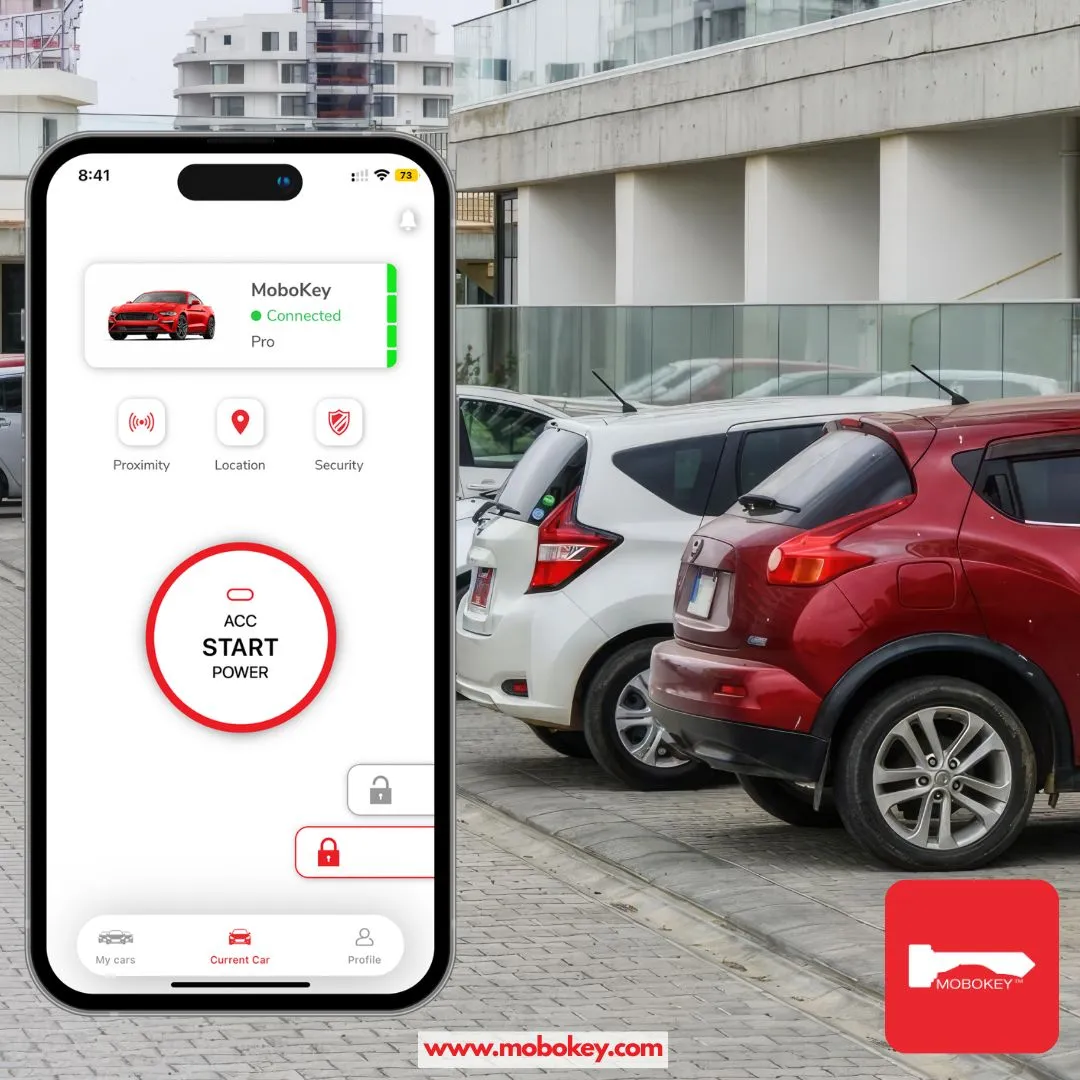
MoboKey’s Bluetooth-based technology eliminates the need for physical keys. Renters or users can unlock, lock, and start vehicles directly through their smartphones.
2. Advanced Security Features
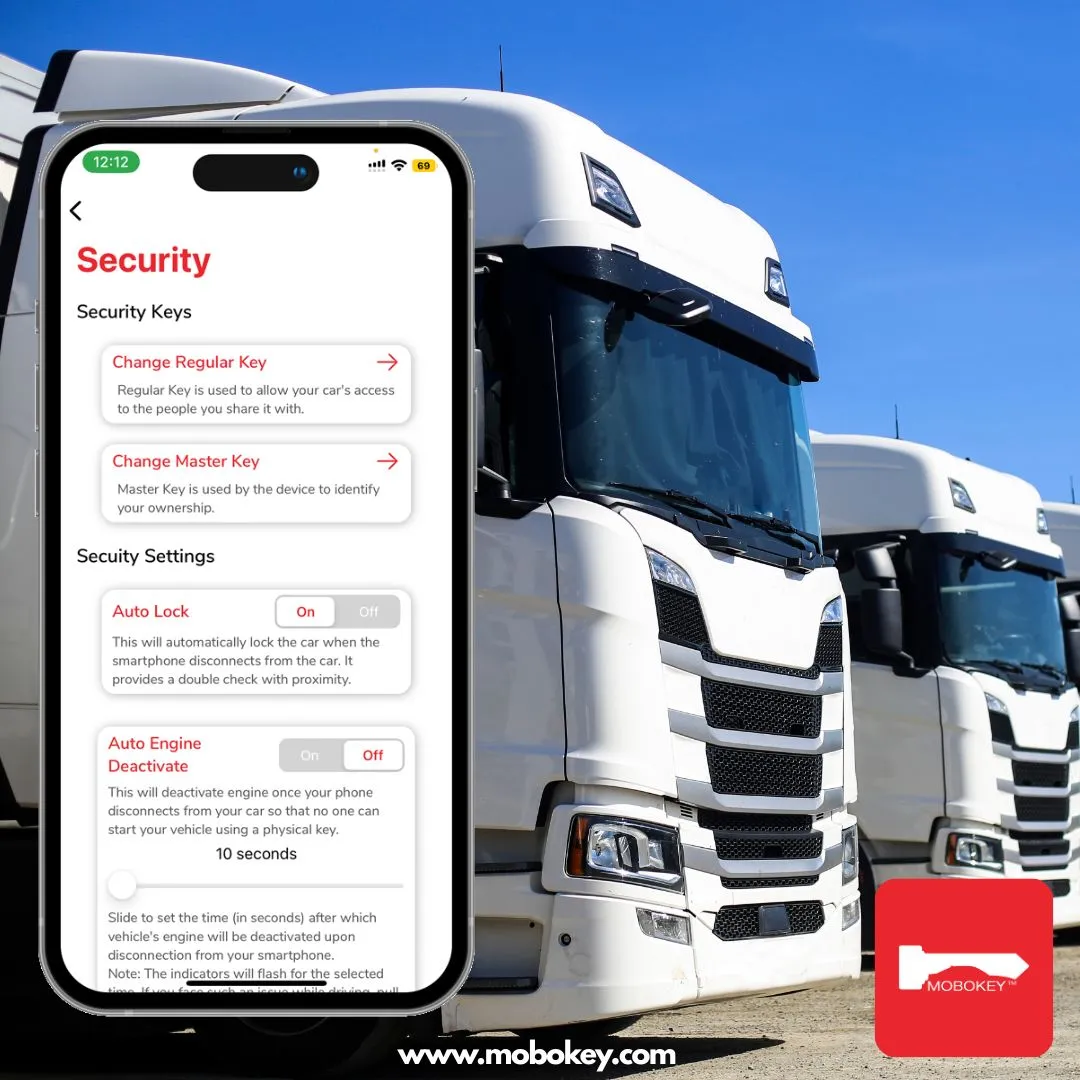
For P2P owners, MoboKey ensures only authorized users can access the vehicle. For car-sharing platforms, real-time access control and tracking provide an extra layer of security for large fleets.
3. Operational Efficiency
- P2P Rentals: Automates key handovers, enabling owners to manage rentals remotely.
- Car Sharing Platforms: Simplifies fleet management with centralized access control and monitoring.
4. Seamless Integration with MoboKey Go
MoboKey Go is ideal for both models, offering a customizable platform where:
- P2P owners can list and manage their vehicles directly.
- Car-sharing platforms can streamline operations without sharing commissions.
New to the model? Start with how to start a peer-to-peer car rental business.
5. Cost-Effective Solution
MoboKey’s affordability makes it accessible for individuals and businesses alike. Starting at just $180, it ensures a quick return on investment.
Why MoboKey Fits Both Models
- Scalability: Whether you manage one car or hundreds, MoboKey adapts to your needs.
- Customer Experience: Keyless access and smartphone-based controls elevate user satisfaction.
- Eco-Friendly Solutions: Supports sustainable mobility by promoting shared vehicle usage.
- Revenue Maximization: P2P owners can earn more, while businesses save on operational costs.
The Future of Shared Mobility with MoboKey
As the shared mobility industry evolves, the lines between Peer-to-peer car rentals and car-sharing platforms are blurring. MoboKey’s versatile technology positions it as the ideal solution for both models, ensuring that operators can meet the growing demand for secure, convenient, and sustainable vehicle access.
Download the application here: Go to Play Store or App Store
Frequently Asked Questions: P2P Rentals vs Car Sharing
What is a P2P marketplace in car rental?
A P2P (peer-to-peer) marketplace connects private car owners with renters directly — the platform handles booking, payment, and protection, while individuals supply the cars. Turo is the largest P2P marketplace in the US. The platform takes a commission from each booking.
What is the difference between P2P car rental and car sharing?
Ownership. P2P rentals use privately owned cars listed by individuals, usually booked by the day. Car sharing platforms own their fleets and rent by the hour in cities. Renters choose based on trip length; owners choose P2P because it turns an idle car into income.
Which is more profitable — P2P rental or running a fleet?
For one or two cars, P2P wins: no fleet overhead, and US hosts average around $10,500 per car per year. As vehicle count grows, operators often shift toward direct bookings and fleet-style management to escape marketplace commissions — the same MoboKey hardware supports both stages.
Can one platform serve both models?
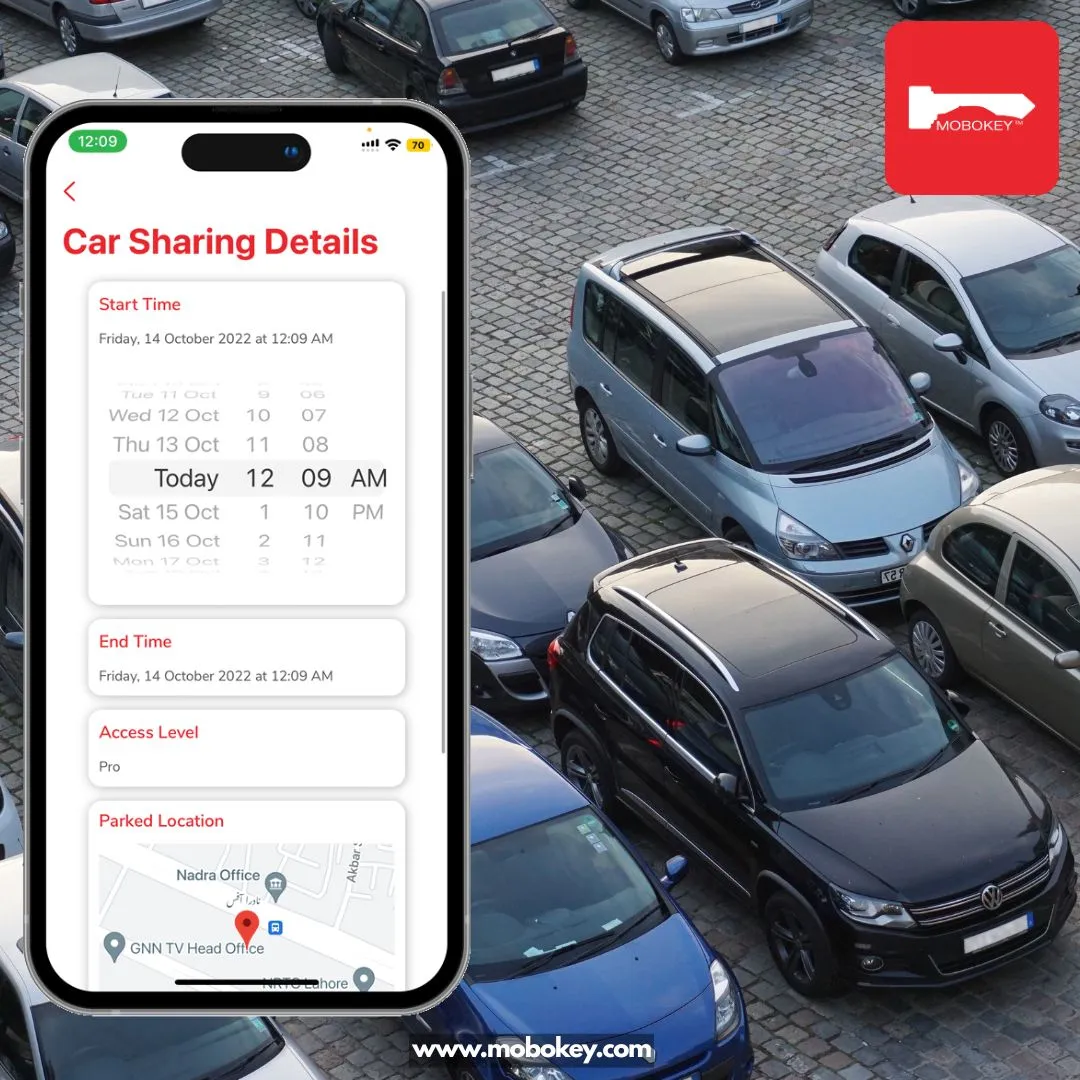
Yes. MoboKey covers P2P hosts and fleet operators with the same device: time-bound digital keys per renter, remote engine kill, parked location tracking, and access logs. MoboKey GO adds a branded booking app with no commissions for operators running their own channel.
Is renting through a P2P marketplace safe?
Yes, with the standard precautions: verified profiles and reviews on both sides, platform protection plans during trips, and photo documentation at pickup and return. Keyless access adds control — keys expire when bookings end, and access can be revoked instantly.