
Setting the right price is one of the most important decisions in car sharing. Too high and bookings fall off. Too low and the business runs at a loss. Most new operators guess at their prices rather than building them from real numbers. Getting car sharing business pricing right requires understanding your costs, your market, and your platform. This guide walks through each.
Why Car Sharing Business Pricing Is Harder Than It Looks
Most operators look at what competitors charge and match that rate. This approach skips an important step. A competitor’s price reflects their cost structure. If their costs are lower than yours, their rate may not work for you.
The other common mistake is pricing based on what renters seem willing to pay. Willingness to pay is useful data. But if that number does not cover your costs, every booking deepens the loss.
Furthermore, car sharing pricing is not a single number. It is a structure. Most profitable operations use hourly rates for short trips and daily rates for longer bookings. Each tier targets a different renter and a different use case. A single flat rate captures fewer bookings and generates less revenue per vehicle.
The goal of car sharing business pricing is not to match the market. It is to build a rate that covers your costs and leaves a meaningful margin.
The Four Costs Every Car Sharing Price Must Cover
Before setting any rate, an operator needs a clear per-vehicle daily cost.
The first cost is the vehicle itself. Whether purchased outright or financed, each vehicle carries a daily ownership cost. Divide the total purchase price by the number of days you expect to own it. This gives a baseline depreciation figure for each day.
The second cost is insurance. Commercial or peer-to-peer vehicle insurance varies by vehicle type, driver policy, and location. This cost must be built into every booking rate.
The third cost is maintenance and cleaning. Every rental cycle adds wear. Budget a per-rental maintenance reserve and a cleaning cost for each vehicle turnover.
The fourth cost is the platform. Some car sharing platforms charge per vehicle per month. Others take a percentage of each booking. Consequently, the platform fee structure changes how you price. A commission-based platform costs more as your revenue grows.
Add these four figures together. Divide by the number of bookings you expect each month. The result is your minimum price per booking to break even. Anything above that number is margin.
How to Set Car Sharing Business Pricing That Attracts Bookings and Earns a Profit
Once you know your costs, the pricing formula becomes straightforward. Total your daily costs and use that as your floor.
As a starting point, total your daily costs and double them for your rate. This gives a 50% gross margin before unexpected expenses.
Additionally, check what local competitors charge for a similar vehicle. If the market charges $70 per day, pricing at $60 positions you as strong value. If the market rate is $50, reduce costs or move to a higher-margin vehicle.
Furthermore, utilization rate matters as much as the daily rate. A vehicle rented at $70 per day for 15 days earns $1,050 that month. A vehicle rented at $60 per day for 22 days earns $1,320. A lower rate with higher utilization beats a higher rate with empty days.
Dynamic pricing helps here. Charge more on weekends and public holidays when demand peaks. Offer a midweek discount to keep vehicles moving on slow days. Most booking platforms support rate adjustments by day of week and time of day.
How MoboKey Lowers the Cost Side of Car Sharing Business Pricing
Profit in car sharing comes from two directions: higher revenue and lower costs. MoboKey addresses the cost side directly.
The most significant cost reduction is the elimination of staffed key handovers. In a manual operation, every booking requires a person to pass and retrieve a key. That person’s time has a cost. Digital keys eliminate this cost entirely. The key is issued automatically and expires automatically. No staff involvement and no per-booking labor cost.
Additionally, MoboKey charges a one-time hardware cost per vehicle. There are no annual fees and no booking commissions. A platform that takes a percentage of each booking reduces your margin on every rental. With MoboKey, adding a booking adds revenue without adding a fee.
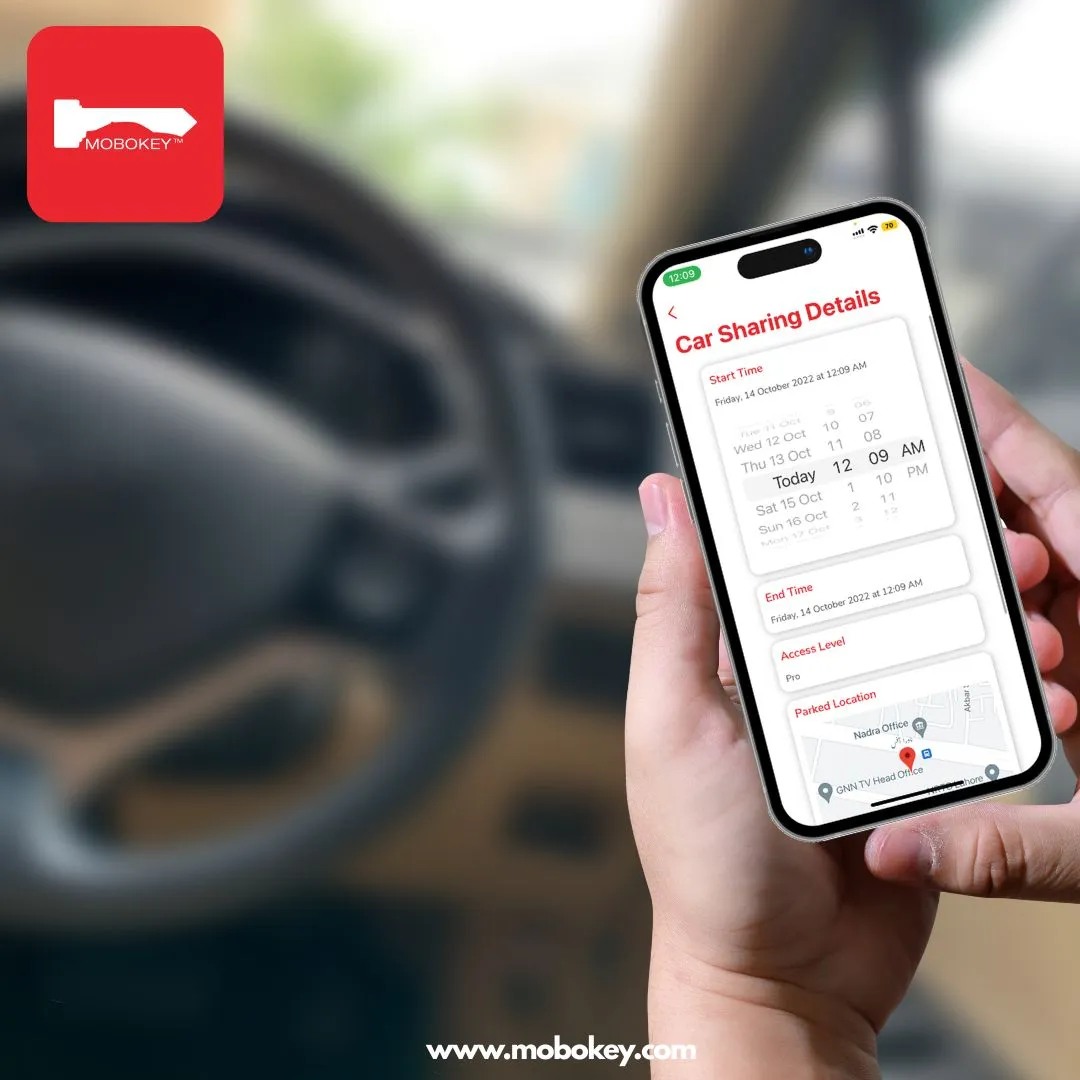
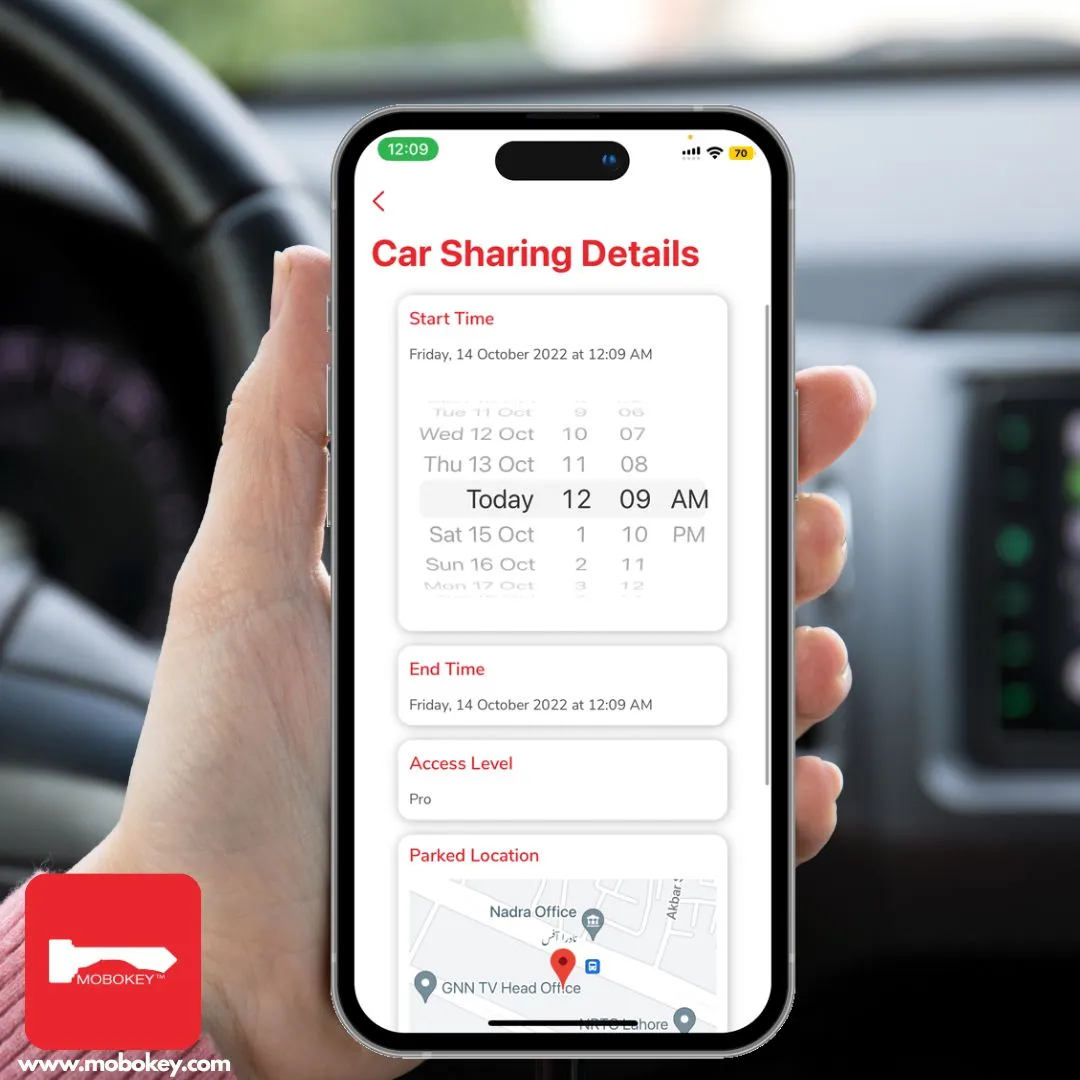
Furthermore, parked location tracking reduces time spent locating vehicles between bookings. Less time searching means fewer delays between rentals. More rentals per vehicle per month means a better utilization rate and more revenue at the same price point.
Investopedia notes that pricing is one of the most direct levers on business profitability. In car sharing, the right price balances cost coverage, market rates, and platform fees. Hardware details are at MoboKey Shop. The device pays for itself through the cost savings it creates over time.
Car sharing business pricing is not guesswork. Build it from your costs, test it against the market, and choose a low-cost platform that keeps the math in your favor.
Ready to go keyless? Visit mobokey.com or contact us today to get started.