Direct answer
There are five main types of car kill switches: fuel pump switch, ignition switch, battery disconnect switch, hidden relay switch, and remote kill switch. Each type interrupts a different part of the vehicle’s electrical or fuel system. A fuel pump switch stalls the engine after it starts. An ignition switch prevents the engine from cranking at all. A remote kill switch adds full smartphone control from any distance. The right type depends on your vehicle, your budget, and how much control you need.
New to the topic? Start with the complete kill switch for a car guide.
Not every kill switch works the same way. In fact, choosing the wrong type can leave real gaps in your protection. Understanding how each type works helps you pick the right one for your vehicle.
What are the main types of car kill switches?
Five types of car kill switches suit most vehicles on the market today. Each one cuts a different part of the vehicle’s electrical or fuel system. As a result, each type stops theft in a slightly different way.
Fuel pump kill switch
Cuts power to the fuel pump relay. Without fuel delivery, the engine starts briefly and then stalls. This confuses thieves, because the car appears to start normally. Furthermore, most thieves will not immediately diagnose a fuel system problem and tend to give up quickly.
Ignition kill switch
Cuts the ignition circuit directly. When the switch is off, the engine will not crank at all. This is the simplest type to install yourself. However, it makes the fault obvious to an experienced thief immediately.
Battery disconnect switch
Cuts all power from the battery. It also resets the radio, clock, and ECU memory each time you use it. Therefore, it works best for stored or rarely-driven vehicles such as classic cars. For daily-driven cars, the constant memory reset makes this type impractical.
Hidden relay kill switch
Connects a relay to a critical circuit (ignition, fuel pump, or starter). A hidden toggle inside the cabin activates the relay. Only the driver knows where to find it. As a result, a thief has no visible clue about what prevents the start.
Remote kill switch
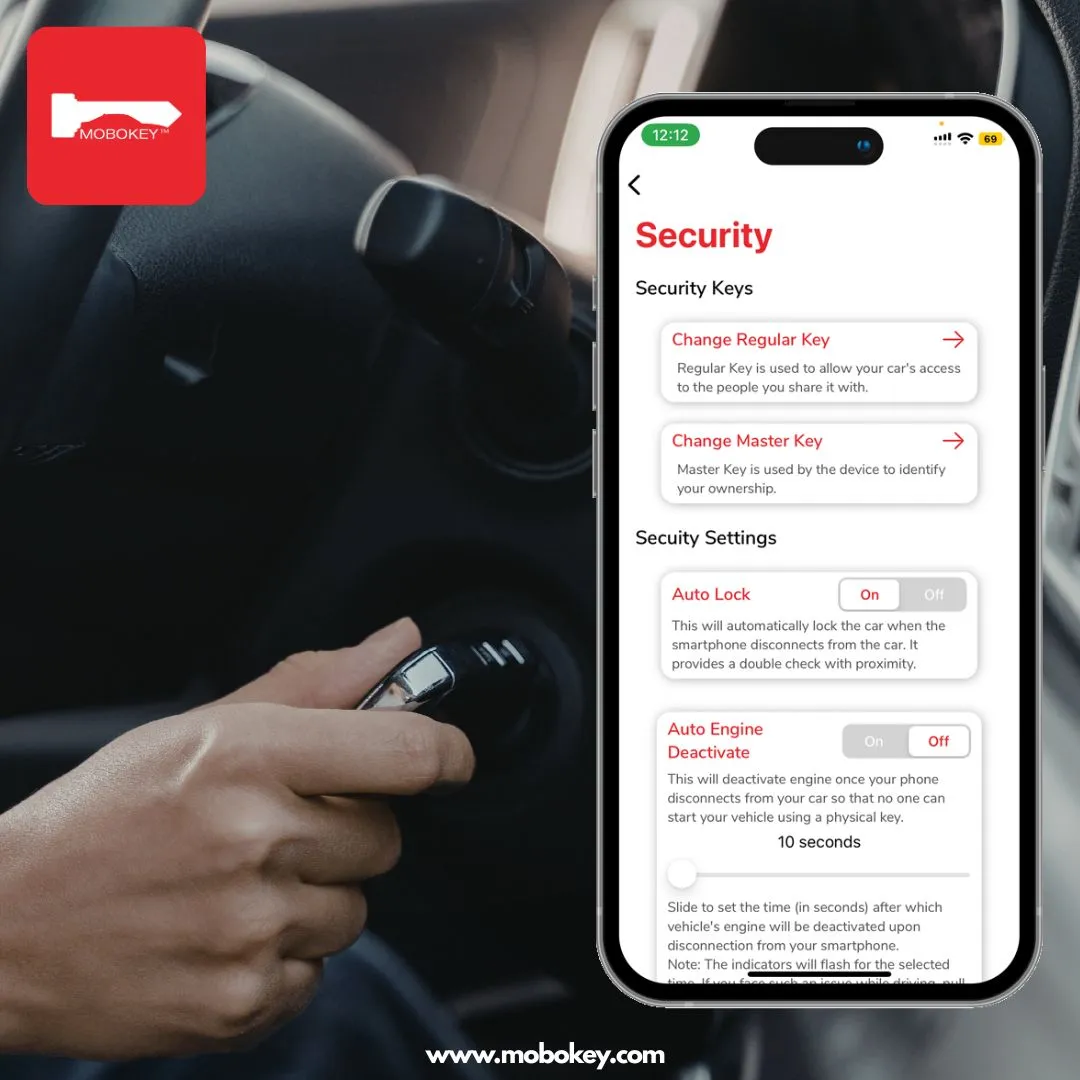
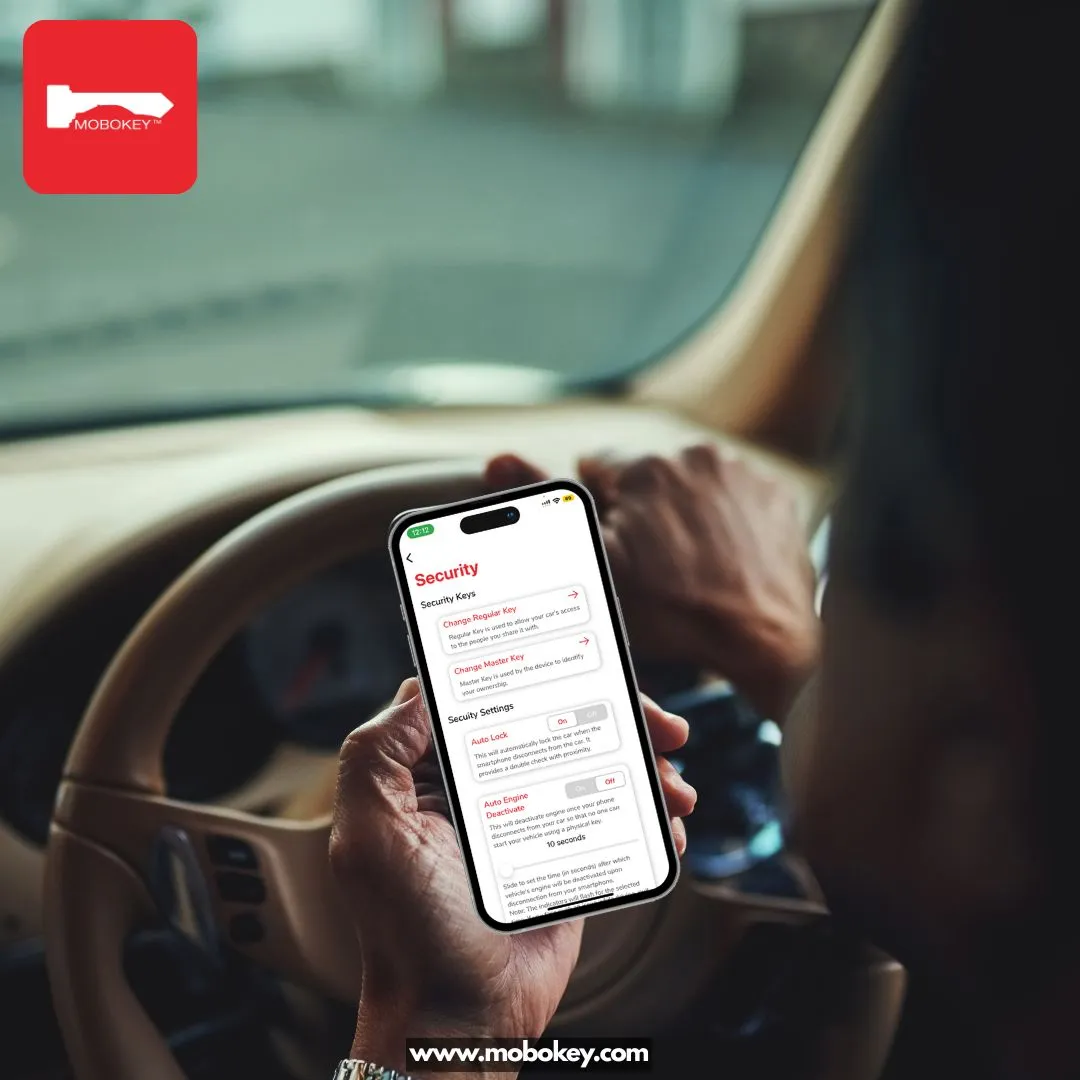
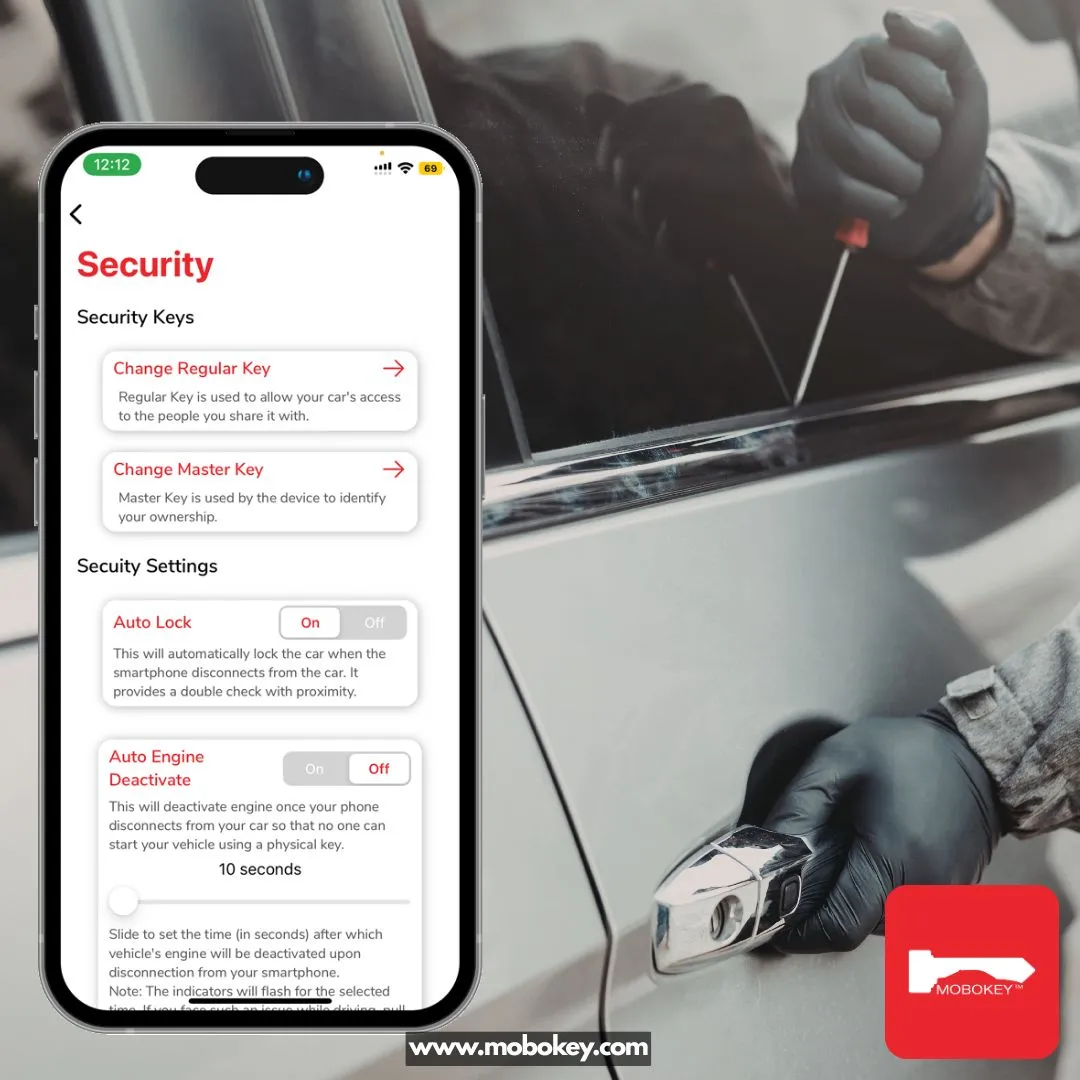
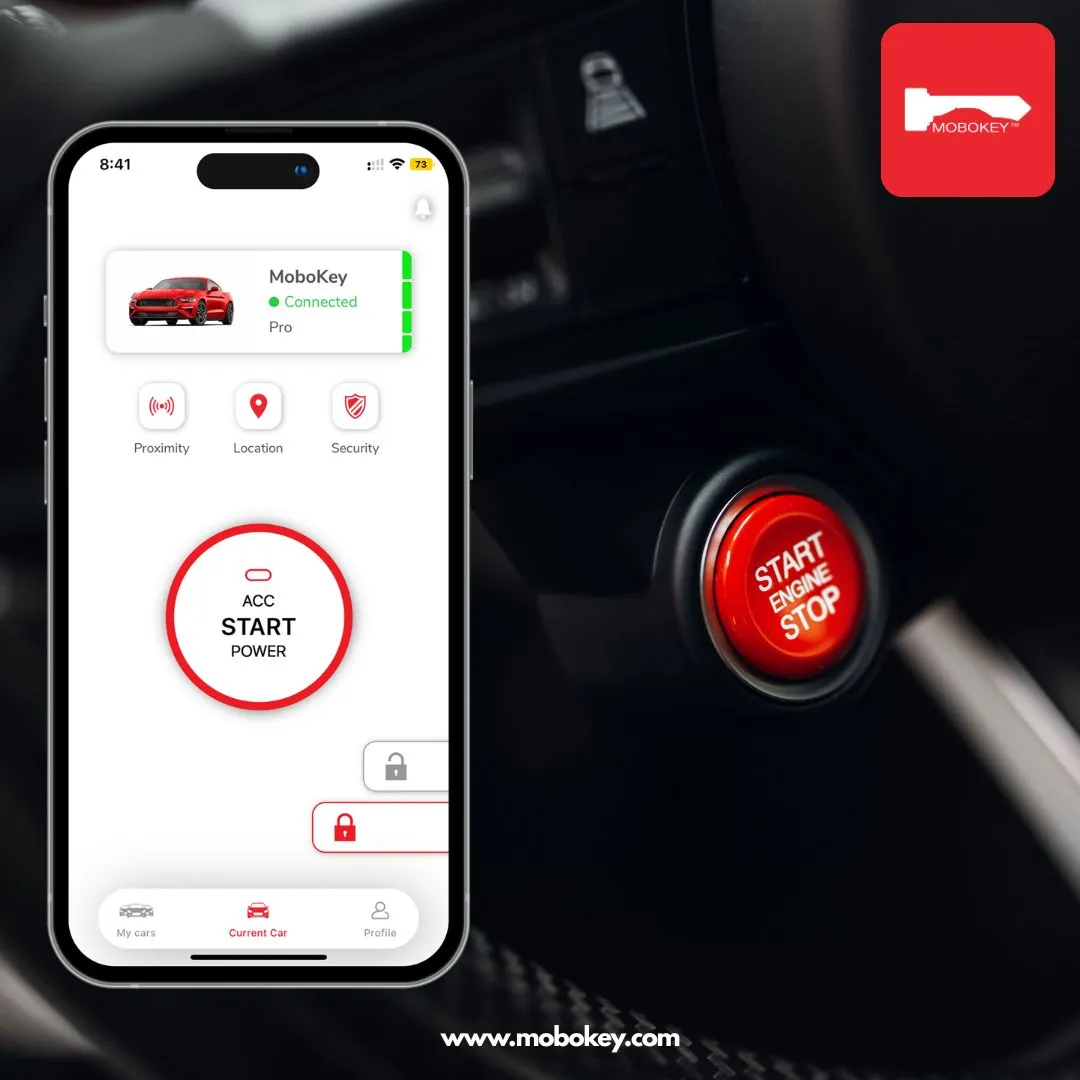
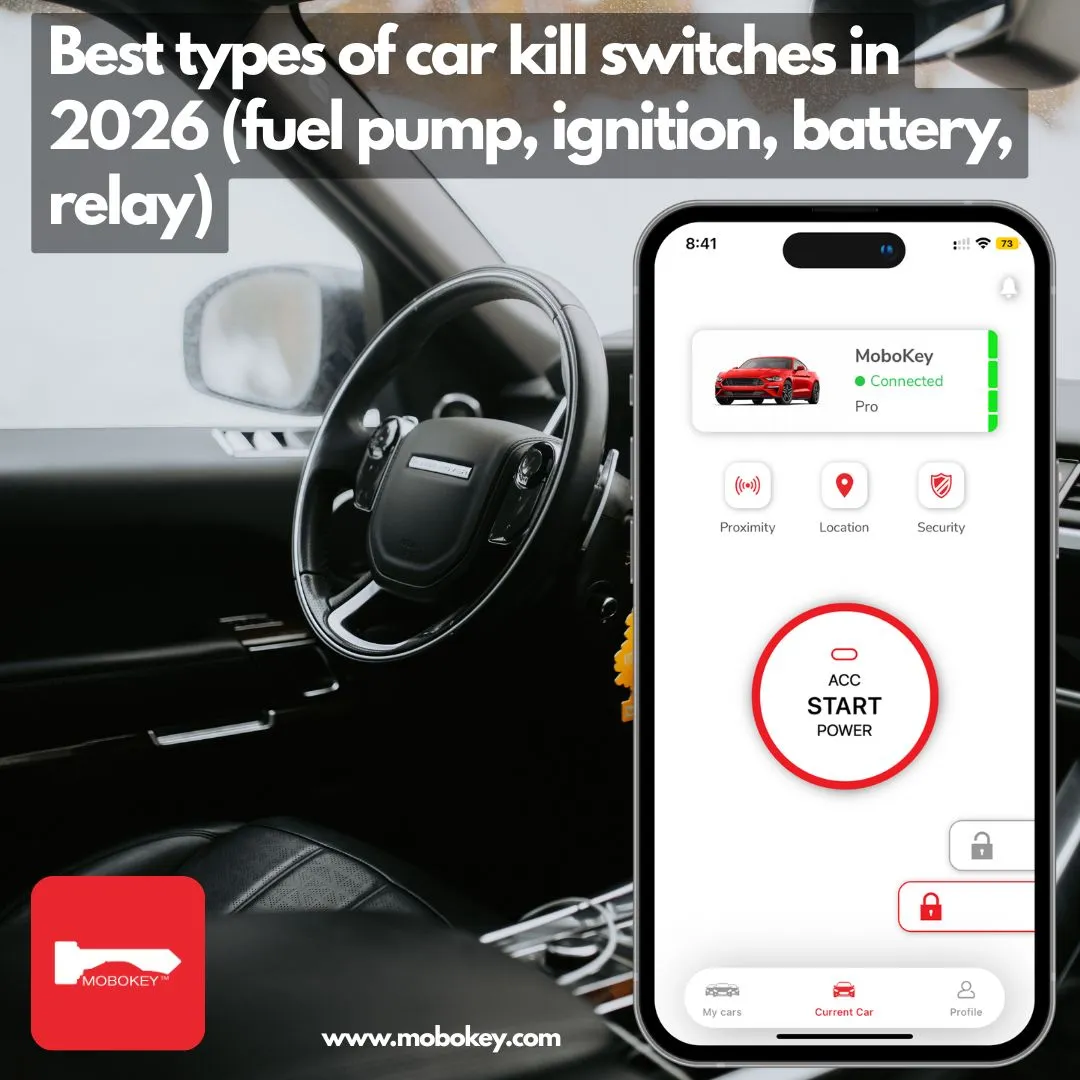
Combines relay-based interruption with smartphone control. The driver enables or disables the engine from an app. For example, MoboKey operates via Bluetooth within 100–350 feet. Additionally, the driver can disable the engine from any location when connected to the internet.
How do the different types of car kill switches compare?
| Type | Prevents start? | Confuses thief? | Remote control? | Monthly cost | Best for |
|---|---|---|---|---|---|
| Fuel pump | Yes (stalls) | Yes — appears normal | No | None | Daily drivers |
| Ignition | Yes (no crank) | No — obvious fault | No | None | DIY installs |
| Battery disconnect | Yes (all power) | Partially | No | None | Classic / stored cars |
| Hidden relay | Yes | Yes — nothing visible | No | None | Most vehicles |
| Remote (MoboKey) | Yes + stops mid-theft | Yes — no physical switch | Yes — via app | None | Fleets, rental, sharing |
In contrast to manual types, a remote kill switch gives you control even after a theft has begun. However, a hidden relay switch costs less upfront and still stops most opportunistic theft. A remote kill switch costs more to install but gives you a level of control that no manual switch can match.
Which type of kill switch is most effective against car theft?
A hidden relay switch is the most effective manual option available. Because the switch is completely concealed, a thief has no visual clue to work from. On top of that, without knowing where the switch is, they cannot start the vehicle at all.
A fuel pump switch adds confusion on top of strong prevention. The engine appears to start normally, so the thief wastes time diagnosing the wrong system before giving up.
A remote kill switch is the most effective option overall. The engine cannot start without the driver enabling it from the app. Moreover, if the vehicle moves without authorization, MoboKey’s proximity engine kill stops it before it travels far.
Which type of car kill switch is right for you?
When you are ready, here is how to install a kill switch step by step. For most private vehicle owners, a hidden relay switch is the best starting point. It adds strong protection at a low one-time cost with no ongoing fees.
For classic car owners and long-term storage situations, a battery disconnect switch is the more practical choice. It cuts all power and protects the battery during extended time off the road.
For fleet operators, rental businesses, and car sharing services, a remote kill switch is the only practical solution. It gives you full engine control across every vehicle from a single app. Furthermore, MoboKey adds digital key sharing, parked location tracking, and hands-free unlock alongside the kill switch function — all with no monthly subscription.
According to the National Insurance Crime Bureau, most vehicle thefts involve opportunistic thieves who move on quickly when a car does not start. Any of the types of car kill switches above removes that opportunity entirely.
MoboKey installs as a remote kill switch on over 90% of vehicles. For compatible vehicles and hardware details, visit MoboKey Shop. To learn more, visit mobokey.com.
Ready to go keyless? Visit mobokey.com or contact us today to get started.
Frequently asked questions: types of car kill switches
The five main types are the fuel pump switch, ignition switch, battery disconnect switch, hidden relay switch, and remote kill switch. Each one interrupts a different part of the vehicle’s system. A remote kill switch is the most advanced option and gives the driver full engine control from their phone.
For most private drivers, a hidden relay switch offers the best balance of protection and simplicity. For fleet operators and car sharing businesses, a remote kill switch is the better choice. It adds smartphone engine control with no monthly fees and no annual subscription.
A fuel pump switch lets the engine crank but stalls it immediately by cutting fuel. An ignition switch stops the engine from cranking at all. The fuel pump type confuses thieves more effectively because the car appears to start normally at first.
A hidden relay switch is the hardest to find because no switch is visible inside the cabin. A remote kill switch is even harder to bypass because there is no physical switch at all. The driver enables engine power from the app, and nothing inside the vehicle reveals how to override that.
Yes. All five types work on modern vehicles. However, some modern cars have redundant circuits that need a more precise installation. A certified installer knows which circuit provides the most reliable interruption for your specific model. Truck owners should also read the kill switch for trucks guide — diesels use a different interrupt method.
Standard manual kill switches do not stop a vehicle in motion. However, MoboKey’s proximity engine kill prevents the engine from restarting after the vehicle leaves a set range. This stops a thief from driving the vehicle far from its parked location without authorization.