The car rental industry is undergoing a rapid evolution. Contactless car rental services are becoming the standard. Traditional operations that rely on manual key handovers or physical offices do not scale efficiently. They create bottlenecks for both operators and customers. By replacing physical keys with secure, app-based digital keys, businesses can now offer a completely remote, 24/7 rental experience.
The Demand for Contactless Service
Modern travelers increasingly prioritize speed and ease of use, making a “skip the counter” experience a high expectation rather than a luxury.
-
Convenience and Speed:
Contactless solutions allow customers to bypass long queues at rental counters and proceed directly to their vehicle. -
24/7 Availability:
Digital keys enable around-the-clock pickups and drop-offs, even outside of standard business hours or on holidays. -
Safety and Trust:
Digital trust is built on transparency, as all required documentation is digitized. And secure identity verification is performed well in advance.
The Customer Journey: From App Booking to Unlocking
The workflow of a contactless rental is designed to be frictionless, moving the entire process onto the customer’s smartphone.
-
Booking and Registration:
Customers choose their car model and dates online or via a mobile application from home. -
Digital Verification:
Renters upload their driver’s license and a selfie for AI-powered identity verification. -
Digital Agreement and Payment:
The customer signs a legally binding rental contract and completes payment securely on their own device. -
Locating the Vehicle:
Once verified, the app provides instructions or a map to locate the parked vehicle at a predetermined location. -
Unlocking and Driving:
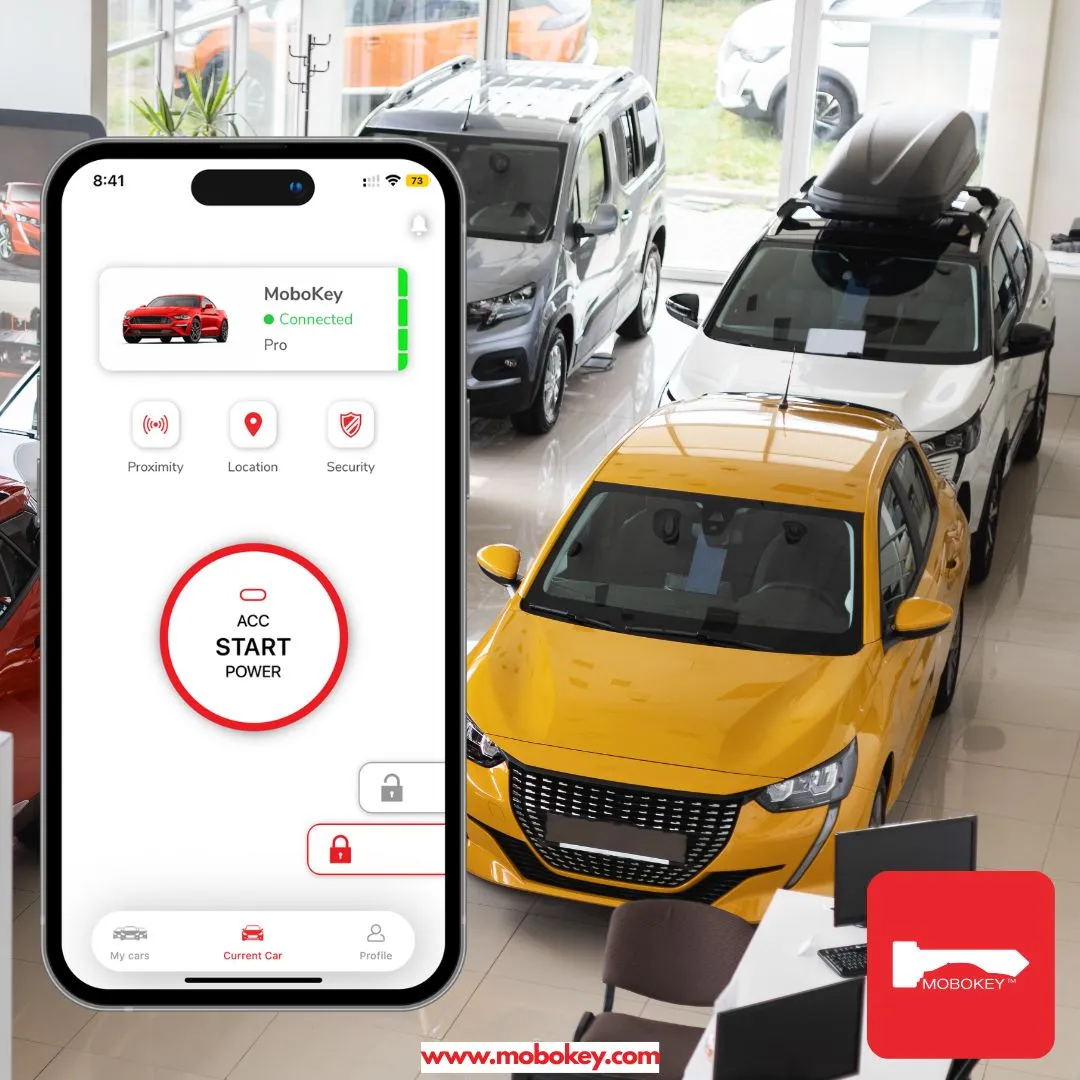
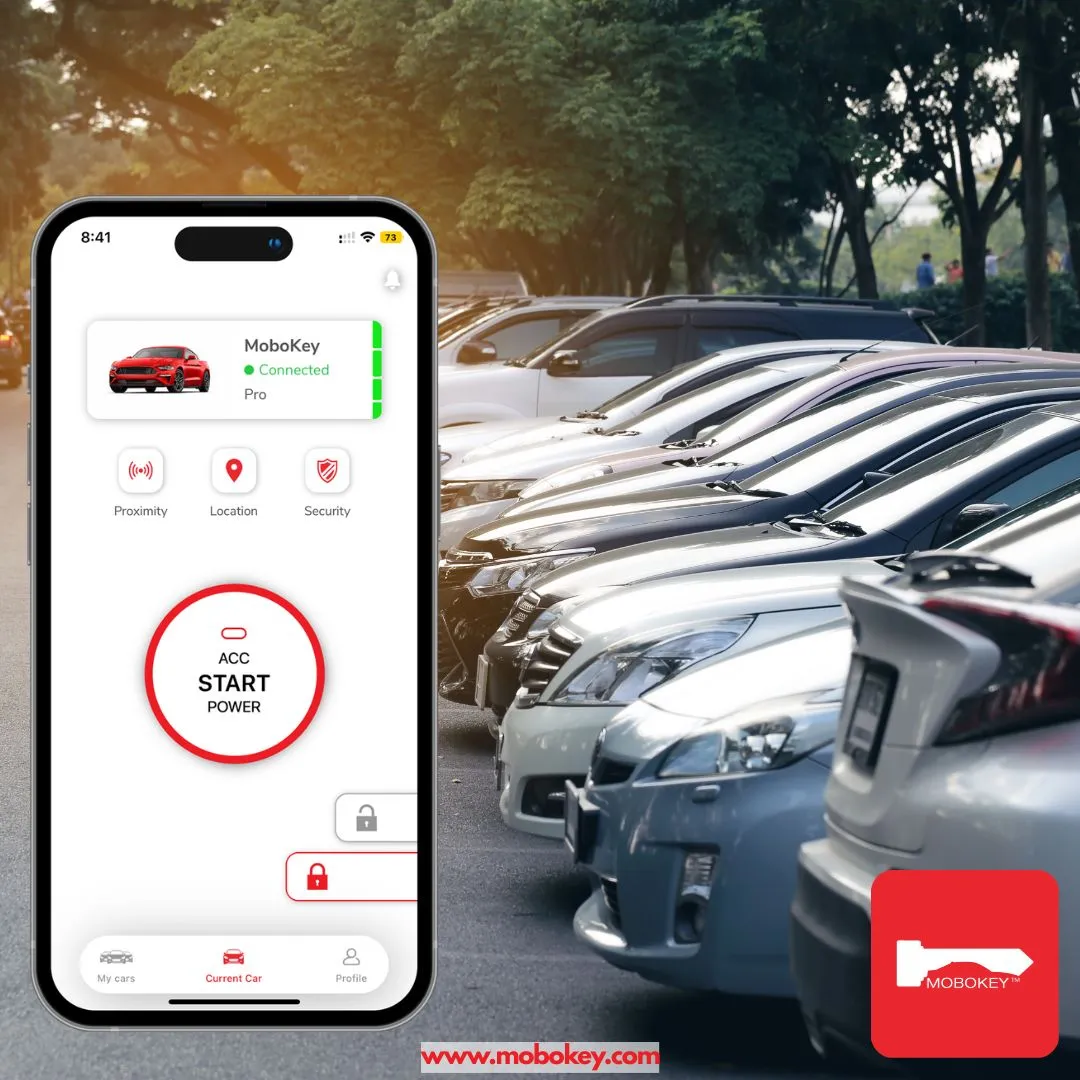
The customer uses the app on their smartphone as a secure digital key to unlock the car and activate the push-button start.
Technology Stack: App, Cloud, and Vehicle Hardware
A successful contactless rental system requires an integrated ecosystem of connected technologies.
-
In-Car Hardware:
A specialized device or telematics unit is installed in the car to digitize its functions and usage data. -
Encrypted Communication:
The mobile app communicates with the vehicle hardware using encrypted signals, typically via Bluetooth Low Energy (BLE) or NFC. -
Cloud-Based Management:
A centralized cloud platform acts as the “brain,” managing access authorizations, automated scheduling, and fleet health monitoring.
Operational Benefits of Unattended Pickups
For fleet operators, the shift to unattended pickups unlocks new levels of efficiency and scalability.
-
Reduced Overhead:
Eliminating physical counters and manual key handovers significantly reduces labor and administration costs. -
Increased Fleet Turnover:
Automating check-ins and check-outs allows for higher vehicle utilization rates and faster turnover between rentals. -
Spontaneous Assignments:
Cloud software enables the spontaneous mobile assignment of access authorizations. Hence, making it easier to manage city-wide car-sharing networks.
Overcoming Security Concerns in Contactless Rentals
Contrary to initial hesitation, digital keys often provide enhanced security compared to traditional physical fobs.
-
Protection Against Relay Attacks:
Modern systems use technologies like UWB (Ultra-Wideband) with time-of-flight measurements to ensure the physical proximity of the key, making relay attacks nearly impossible. -
Remote Immobilization:
Fleet managers can instantly revoke access or use a remote engine kill feature to prevent unauthorized use or recover missing vehicles. -
Biometric Authentication:
Access is tied to the driver’s smartphone, which is typically protected by biometric security (FaceID or fingerprint), reducing the risk of key duplication or loss.
Upgrade your rental fleet to contactless today. Contact us for a consultation.